
In 2024, an estimated 2.2 million adults in the United States attempted suicide, according to the Centers for Disease Control and Prevention. Suicide is a serious, complex issue that often arises from a combination of emotional, psychological and environmental factors. Understanding common risk factors and warning signs plays a critical role in prevention, allowing intervention before a crisis escalates. Knowing what isn’t a risk factor matters too, since it helps focus attention where it counts.
This article explores common risk factors, warning signs and resources for ongoing suicide prevention. It also offers guidance on how to respond with compassion and care to help someone through a difficult time.
Understanding the Complexity of Suicide Risk
Suicide is a global public health crisis affecting individuals of all ages. The CDC reported 48,824 deaths by suicide in the United States in 2024, roughly one death every 11 minutes. Rates rose substantially from 1999 through 2022, then declined slightly in 2023 and again in 2024. Suicide risk rarely stems from a single cause but rather involves a mix of psychological, biological and social factors.
For example, certain mental health conditions can increase vulnerability, especially when combined with overwhelming life stressors. These include relationship issues, financial hardship or trauma. Biological influences, such as genetic predisposition, can also play a role.
Additionally, access to lethal means, lack of social support and limited mental health resources can intensify risk. Because these elements interact differently for each person, suicide prevention requires a holistic approach that addresses mental health needs, fosters positive social connections, reduces stigma and ensures access to help.
Common Risk Factors and Warning Signs of Suicide Risk
Recognizing common risk factors and warning signs can encourage intervention before a crisis escalates. Here’s a detailed breakdown of what to look for to help a loved one in need.
Risk Factors
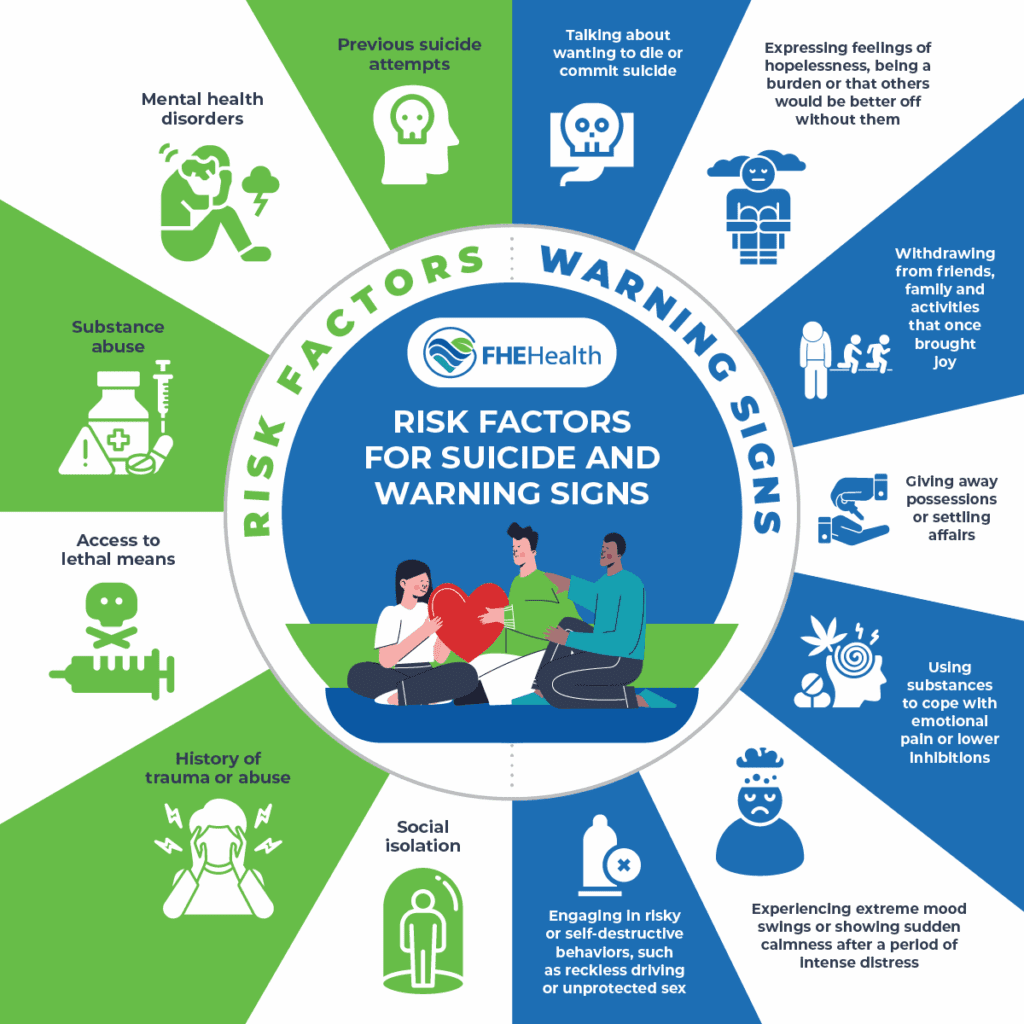
The presence of one or more risk factors doesn’t necessarily mean someone will attempt suicide. However, it can increase vulnerability, especially when multiple factors overlap. The strongest single predictor is a previous attempt. Common suicide risk factors include:
- Mental health disorders. Conditions such as depression, anxiety, schizophrenia and bipolar disorder can elevate suicide risk, especially when left untreated.
- Previous suicide attempts. A lifetime history of attempted suicide is the single greatest risk factor for a future attempt.
- Substance use. Alcohol and drug misuse can lower inhibitions, impair judgment and intensify feelings of hopelessness. These effects can influence reckless decisions such as suicidal or self-harming behaviors.
- History of trauma or abuse. Experiencing a traumatic event or abuse, especially in childhood, can have long-term effects on emotional well-being and contribute to suicidal ideation.
- Social isolation. Loneliness and lack of supportive relationships can contribute to feelings of hopelessness and disconnection.
- Access to lethal means. Easy access to firearms or other lethal means can increase the likelihood of acting on suicidal thoughts.
Risk also varies across demographic groups. CDC data for 2024 shows:
- People aged 80 and older have the highest suicide rate of any age group
- Males die by suicide at substantially higher rates than females
- Non-Hispanic American Indian and Alaska Native people have among the highest rates of any racial or ethnic group
Sudden, difficult life changes that affect a person’s self-esteem or sense of purpose can also raise risk when other factors are already present. Job loss or the death of a loved one may contribute to suicidal thoughts in some individuals.
Warning Signs
Warning signs can be subtle or direct, often emerging when a person feels hopeless, overwhelmed or disconnected from support. While the following signs don’t guarantee someone will attempt suicide, they can indicate significant emotional distress and an increased risk of harm. Common warning signs include:
- Talking about wanting to die or die by suicide, even when it sounds like a joke
- Expressing feelings of hopelessness, being a burden or that others would be better off without them
- Withdrawing from friends, family and activities that once brought joy
- Experiencing extreme mood swings, angry outbursts or sudden calmness after a period of intense distress
- Using substances to cope with emotional pain or lower inhibitions
- Giving away possessions or settling affairs
- Saying goodbye to people or making unusual farewells
- Engaging in risky or self-destructive behaviors, such as reckless driving or unprotected sex
Not everyone considering suicide shows warning signs, and it isn’t always possible to tell how someone is feeling. Many people appear happy or manage to outwardly present a good life while struggling inside. If someone close to you was suicidal and you missed the signs, don’t blame yourself.
Protective Factors
Risk isn’t the whole picture. Protective factors buffer against suicidal thoughts and behaviors, and strengthening them is as much a part of prevention as reducing risk. Key protective factors include:
- Prompt, effective behavioral health care
- A strong support network
- Good problem-solving and coping skills
- Strong self-esteem
- A sense of purpose in life
How to Approach and Support a Loved One at Risk
If you’re concerned a loved one may be at risk, it’s important to show compassion, patience and a willingness to listen without judgment. Your role isn’t to fix everything but to help that person feel heard and supported. When someone does open up, this isn’t the moment to try to solve the problem. Listening is the work.
If you’re worried, ask directly. Speaking openly about suicide can make it easier for a person to name how they’re feeling and seek help. If they say they aren’t suicidal, remind them you’re there to listen, and check in again later.
Positive ways to assist your loved one include:
- Learning about the risk factors and warning signs of suicide
- Creating a safe, nonjudgmental space that encourages open communication
- Expressing genuine concern without criticizing or minimizing their pain
- Having an honest conversation about their suicidal thoughts and what triggers them
- Securing or removing any items that could contribute to a suicide attempt
- Checking in regularly to show they’re not alone and that you’re available to help
- Encouraging professional help, such as a therapist, counselor or crisis line
- Calling emergency services or the 988 Lifeline if a crisis occurs
Need Help?
Treatment can begin quickly and discreetly, get started now
When to Seek Professional Help
Seek professional help if you’re having suicidal thoughts and think you might act on them, or if someone close to you is going through a mental health crisis. When one or more key risk factors are present, working with a mental health care provider can help manage the underlying condition and reduce the chance of suicidal ideation progressing to more severe stages.
If someone is in an active crisis, stay with them until they’re feeling safer, if possible. Encourage them to seek professional care through a residential program offering psychiatric services, or by calling or texting the 988 Suicide & Crisis Lifeline. Once the immediate crisis has passed, offer practical support if you’re able to.
Resources for Ongoing Suicide Prevention and Support
Witnessing a loved one experiencing a suicidal crisis can be scary and overwhelming. Fortunately, there’s a range of supportive resources and lifestyle choices that can help reduce the risk of suicide. Prevention starts with fostering open, honest communication and ensuring access to professional support. The following resources can help:
- 988 Suicide & Crisis Lifeline. Call or text the 988 Lifeline to connect with trained counselors for free, confidential support in times of emotional distress. Counselors are available 24 hours a day and can identify resources for ongoing mental health or substance use treatment.
- Crisis Text Line. Contact the Crisis Text Line to receive immediate crisis counseling from trained volunteers for a range of mental health concerns.
- SAMHSA National Helpline. Call the SAMHSA National Helpline at 1-800-662-HELP (4357) for free, confidential, 24-hour treatment referral and information on mental health and substance use disorders.
- Veterans Crisis Line. After calling 988, press 1 to connect with the Veterans Crisis Line for confidential crisis support or referrals to ongoing treatment. You don’t have to be enrolled in VA benefits to connect.
How FHE Health Can Help
At FHE Health, we offer psychiatric care for people experiencing suicidal thoughts, with experience treating substance use disorders, mental health conditions and other suicide risk factors.
We provide residential care for people who need round-the-clock, live-in treatment, and outpatient options for those who need a lower level of care and may prefer more flexibility.
Our team includes doctors, therapists, counselors and other physical and mental health professionals who work together to identify underlying mental health conditions, co-occurring disorders and the root causes of suicidal thoughts. With that understanding, we help patients manage their symptoms and build coping tools for the long term.
Frequently Asked Questions
Seek Ongoing Support at FHE Health
If you or a loved one is struggling with suicidal thoughts, seek help now. At FHE Health, our clinical team can address the underlying mental health conditions driving those thoughts and connect you with the right level of care. Reach out today to discuss treatment options and build a fulfilling life.