FHE Health offers residential mental health treatment in Deerfield Beach, FL, with round-the-clock support built around your specific care plan.
If you’re researching residential mental health treatment, you’re likely trying to figure out whether this level of care fits your situation. Residential mental health treatment gives you 24-hour support in a live-in setting, with structure and intensive therapy that outpatient visits can’t match.
While many people search for “inpatient mental health treatment,” FHE Health’s program is designed as a supportive residential treatment environment rather than an acute locked psychiatric hospital. Patients receive structured, intensive care in a voluntary setting focused on stabilization, support and recovery.
At FHE Health, our clinical team builds your treatment plan around your specific needs from day one.
What Is Residential Mental Health Treatment?
Residential mental health treatment means you live at a treatment facility for a set period while you focus fully on recovery. You get round-the-clock support from clinical staff, along with intensive therapy in a setting that isn’t locked. The environment aims for stabilization and structure, and many of the therapies mirror what a hospital offers, minus the restrictive setting.
Residential vs. Inpatient Hospitalization
People often use these terms interchangeably, but they mean different things. Inpatient hospitalization treats an acute psychiatric crisis, usually when someone poses an immediate safety risk to themselves or others. It happens in a locked hospital setting, and stays run short, often just three to seven days.
Residential treatment is voluntary, less restrictive and built around therapy, skills and daily structure rather than crisis stabilization alone. For some patients it’s the next step after a hospital stay. For others it’s the starting point, based on what their assessment shows.
Residential vs. Partial Hospitalization (PHP) vs. Intensive Outpatient (IOP) vs. Outpatient
Residential treatment sits above the rest of the care continuum in terms of intensity. Here’s how the levels compare:
- Residential treatment provides 24-hour, live-in support for symptoms that need daily, hands-on care
- Partial hospitalization (PHP) offers a full day of programming, while you return home or to a supportive living space at night
- Intensive outpatient (IOP) reduces the weekly hours further, giving you more flexibility as you stabilize
- Standard outpatient therapy involves regular sessions on a lighter schedule, for ongoing support once you’re stable
Who Benefits from Residential Mental Health Care?
Residential care works well for people whose daily life has become hard to manage because of a mental health condition. It also helps people facing medical complications tied to their mental health or those who can no longer keep up with everyday responsibilities.
Conditions We Treat
Our team treats a wide range of diagnosed and undiagnosed conditions, including:
Signs You May Need This Level of Care
A few patterns tend to signal that outpatient support alone isn’t enough anymore.
- Your symptoms make it hard to work, attend school or care for yourself
- Outpatient therapy hasn’t led to real improvement
- You feel unsafe or unstable in your current environment
- A recent hospitalization left you stable but not ready for daily life
- Substance use is complicating your mental health symptoms
Start the admission process
100% free and confidential insurance verification with a counselor
What to Expect in Residential Treatment
From the day you arrive to the day you’re ready to leave, residential mental health treatment moves through the same few stages, so you always know what comes next.
Admission and Assessment
Your stay begins with a full psychological and medical assessment. Our clinical team uses validated screening tools and standardized level-of-care criteria to understand your symptoms, safety needs and overall health, so your placement reflects what you actually need rather than a one-size-fits-all program. If substance use is part of the picture, detox happens first, always under medical supervision.
A Typical Day
Your days follow a structured schedule that mixes individual therapy, group sessions and time for rest. Mornings often start with a health check and a group session, followed by individual therapy, meals and additional programming. Evenings usually leave room for reflection, journaling or connecting with peers before a set bedtime routine.
Schedules and hours described here are examples only. FHE Health’s actual programming varies by patient and program. Consult with admissions for current schedules.
Length of Stay
Most residential mental health stays at FHE Health run 30 to 90 days, or longer when clinically appropriate. Your exact length of stay depends on your symptoms, progress and treatment goals. Unlike inpatient hospitalization, which typically lasts only a few days, residential care gives you time to build skills and stability. Our team reassesses your progress regularly and adjusts your plan as needed.
Rules, Phones and Visitors
Structure plays a real role in recovery, so residential treatment comes with guidelines around phone use, visiting hours and daily schedules. These rules exist to reduce outside stress and distraction while you focus on healing. Your care team will walk you through the specifics before you arrive, so nothing catches you off guard.
What to Bring
Packing light and simple works best. Bring comfortable clothing for both therapy sessions and downtime, toiletries, any prescribed medications in their original containers and personal items that support your comfort, like a journal or photos of loved ones. Our admissions team can send you a full packing list ahead of your stay.

Residential Treatment Services We Offer
Your residential mental health treatment plan draws from a mix of therapies and support services, tailored to your diagnosis and goals.
Individual and Group Therapy
One-on-one sessions give you space to work through your specific challenges with a therapist. In group therapy, you sit with peers facing similar struggles, and hearing their experiences often opens up things you hadn’t said out loud yet. Both formats run throughout your stay, and what comes up in one often carries into the other.
Psychiatric Care and Medication Management
Our onsite psychiatric team evaluates your symptoms in a controlled setting, which supports a more accurate diagnosis. When medication becomes part of your plan, we monitor your response closely and adjust your regimen as your treatment continues.

Neurorehabilitation
Our neuro rehab services include qEEG brain mapping, a noninvasive method that measures brain activity through a cap fitted with electrodes. This gives our clinical team a more objective look at how your brain responds, which helps target treatment for conditions like depression, anxiety and co-occurring substance use. Results vary by person, and this approach works best as part of a broader plan rather than on its own.
Medical Support
A full team of medical doctors and nurses stays available throughout your residential stay. If a health concern comes up, whether it’s new or an underlying issue tied to your mental health, our medical team addresses it directly.
Family Involvement
Mental health struggles affect the whole family, not just the person in treatment. Family therapy gives your loved ones a structured way to participate in your recovery, repair strained relationships and learn how to support you after you leave residential care.
Integrated Treatment for Co-Occurring Conditions
Many people in residential mental health care also use drugs or alcohol to cope with their symptoms. In other cases, substance use itself leads to a mental health condition over time. According to SAMHSA’s 2024 National Survey on Drug Use and Health, about 21.2 million U.S. adults (8.1%) had both a mental illness and a substance use disorder in the past year.
Either way, treating only one side rarely works. Co-occurring disorder treatment lets our team treat your mental health condition and any substance use together, through one coordinated treatment plan.
Specialized Programming for First Responders and Veterans
If you’re a first responder, Shatterproof FHE Health offers a peer-support model of care built around the pressures of the job, including treatment for patients whose primary need is mental health. Veterans and military members can learn about our dedicated military and veteran programming.
Our Campus and Facilities
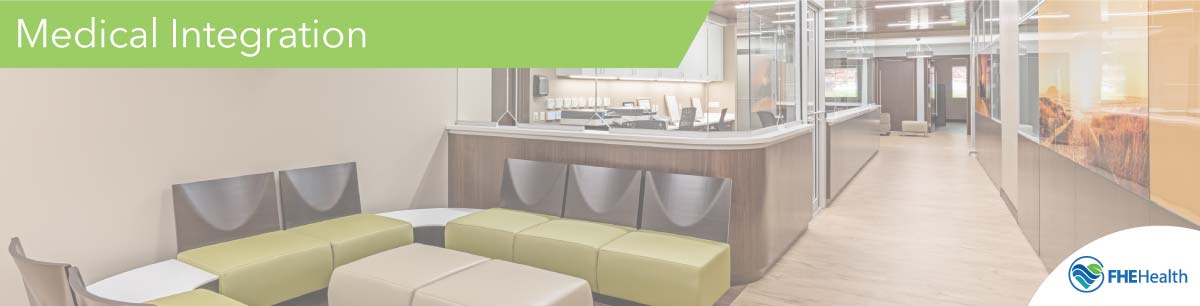
Our residential campus sits on five acres, about a mile from the beaches of Deerfield Beach. The setting gives you room to focus on recovery away from daily stress, with both private space and shared areas that support peer connection.
Patients stay in semi-private housing designed for comfort. Around the clock, over 30 nurses, medical doctors and clinical staff stay on hand to support you.
Accredited, Licensed Care in South Florida
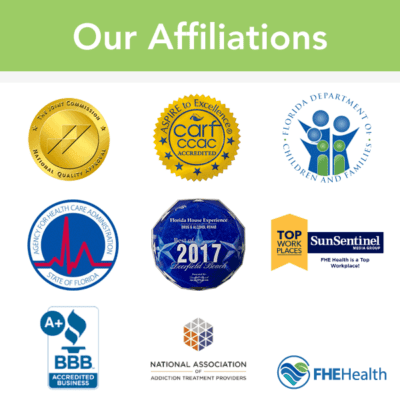
FHE Health holds dual accreditation from The Joint Commission and CARF and is licensed by the Florida Department of Children and Families (DCF) and the Agency for Health Care Administration (AHCA). We’ve provided care in Deerfield Beach for approximately 25 years.
Insurance and Paying for Residential Treatment
Most major insurance plans cover some portion of residential mental health treatment, though your exact coverage depends on your specific plan and provider. Our admissions team offers free, confidential insurance verification, so you know what’s covered before you commit to a program. For a broader look at costs, see our guide to the cost of mental health treatment in Florida.
If you don’t have insurance, ask our admissions team about self-pay options.



Continuum of Care and Discharge Planning
Your care doesn’t end the day you leave our residential program. Before you go, your care team builds a discharge plan that covers your next level of care, follow-up appointments and a plan for managing triggers or setbacks. That plan carries directly into the outpatient support described below, so nothing falls through the cracks between levels of care.
Stepping Down to Outpatient
After residential treatment, most patients transition to outpatient care, often with the same case managers and therapists you worked with during your stay. This continuity gives you steady support as you return to daily life. Learn more about our full continuum of care.
Aftercare and Alumni Support
Beyond outpatient care, our alumni program connects you with a lasting recovery community. Regular meetings and events give you an ongoing support network long after your formal treatment ends.
Is Residential Mental Health Care Right for Me?
Our clinical team works with you to determine the right level of care for your circumstances. Residential treatment tends to fit best if you need:
- More support than typical outpatient sessions provide
- 24-hour access to clinical staff
- Distance from triggers at home that could worsen your condition or lead to relapse
Frequently Asked Questions
Taking a Step Toward a Better Life
Most people need more than willpower to get through a mental health condition on their own. Trauma, stress and strained relationships at home tend to follow you into every attempt at healing. Residential mental health treatment puts real distance between you and those pressures, so your recovery gets the room it needs.
Contact FHE Health today to learn more about residential mental health treatment in Deerfield Beach, FL. Our team is ready to answer your questions and help you figure out the right next step.


Footer

© 2026 FHE Health
Deerfield Beach, Florida 33441
1-833-596-3502
Open 24 Hours Daily