
The public perception of psychotherapy primarily exists as a personal, one-on-one event, but this is only one option. In mental health programs and addiction rehabilitation, group therapy can be a powerful tool. Available alone or in conjunction with individual therapy, group therapy provides a safe space in which to discuss challenges, ideas and experiences with others going through similar circumstances.
At FHE Health, we embrace group therapy for addiction as a key part of our rehabilitation programs in Deerfield Beach, South Florida. Our addiction medicine professionals encourage group experiences to help you progress toward a healthy, strong and stable future. Learn more about how group therapy works at FHE Health and how it can support people in addiction recovery.
The Evidence Behind Group Therapy
It’s normal to feel skeptical about group therapy if you’ve never experienced it before, particularly if you assumed one-on-one sessions would be more effective. Research doesn’t bear that assumption out. Across multiple meta-analyses, group therapy has been found comparably effective to individual therapy for depression and several other conditions, with any short-term advantage for individual therapy disappearing over longer follow-up periods.
The need for effective treatment options is substantial. An estimated 48.4 million Americans age 12 or older met the criteria for a substance use disorder in 2024. Group therapy can play an important role in meeting that need by allowing multiple people to receive professional guidance, build coping skills and learn from others within the same therapeutic setting.
What to Expect in Group Therapy for Addiction
Unlike individual therapy, which generally involves one therapist and one patient, group therapy brings several patients together under the guidance of one or more psychologists. Groups often include anywhere from five to 15 patients, though the ideal size can vary based on the program and participants’ needs. Some people find that larger groups reduce anxiety about speaking and provide more opportunities to learn from others, while others feel smaller groups give each member more time to speak and focus on specific concerns. In general, smaller groups are typically better suited to creating a comfortable, inclusive environment where everyone can participate.
Group therapy sessions typically last anywhere from 30 to 90 minutes, with most taking around an hour. This provides enough time for all members to share as needed without resulting in a loss of interest.
Group sessions can be open or closed. In an open group, new members can join at any time, while in a closed group, all members begin and end a course of therapy at the same time. At FHE Health, our groups are generally open to accommodate new members in our programs.
What Happens During Group Therapy?
Most groups exist to target a specific problem, such as learning about the disease of addiction and overcoming harmful patterns of substance use. They can also form part of a mental health program, targeting conditions like depression, anxiety, panic disorders and bipolar disorder. Meeting structures vary but often include discussion on a topic related to the group’s purpose. All participants are encouraged to play an active role by sharing, providing feedback and remaining engaged in discussion.
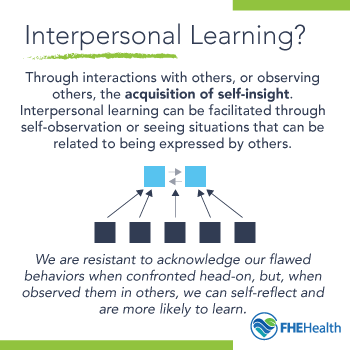
The principles of group therapy are similar from one format to another. Group members often have similar experiences to share, offering interpersonal learning and social opportunities. Through regular group work, participants are exposed to a range of perspectives and ways of thinking, allowing them to learn new coping strategies and grow together.
The Structure of Group Therapy
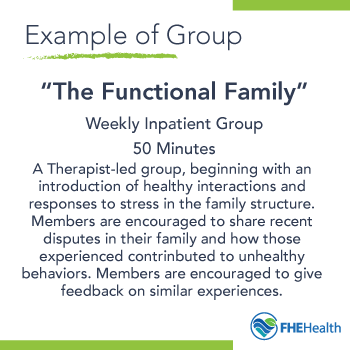
In a typical group therapy session, the psychologist leading the group begins by introducing the day’s topic. This theme is often related to the course of treatment, such as feelings of remorse after drug use or exploring the causes of addiction. To start a discussion, the therapist will likely ask a question, such as a request for particular experiences, and encourage group members to share. This information can then lead to additional conversations.
Some groups move from one topic to another organically, while others are encouraged to stay close to a particular day’s topic or theme. Less structured groups may not have a topic and instead ask that members talk about thoughts, feelings or attitudes that they wish to share or discuss.
Certain group members are usually more inclined to share than others, which is natural. To keep all group members involved, psychologists may ask questions directly of participants. Members of a group are encouraged to be as open as possible; although sitting quietly and listening to others’ stories can still be beneficial, active participation is the ultimate goal.
Benefits of Group Therapy
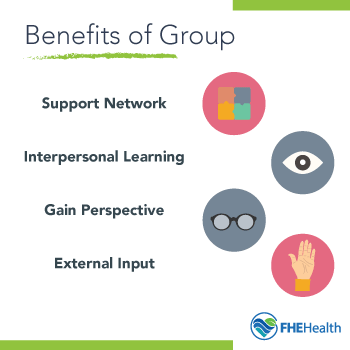
When starting rehabilitation, you might feel uncomfortable, stressed or anxious. The idea of participating in a group setting may exacerbate these feelings, at least initially, but there are many benefits of group therapy:
- Shared understanding and support: Discussing challenges with people who understand what you’re going through can provide reassurance and remind you that you’re not alone in facing setbacks or roadblocks during recovery.
- New coping strategies: Hearing how others handle similar challenges can introduce you to different coping strategies, solutions and approaches you may be able to apply to your own recovery.
- Greater perspective: Listening to other people’s experiences, thoughts and challenges can help you view your own circumstances from a different perspective.
- Exposure to diverse viewpoints: Group members from different cultures, races and backgrounds may approach problems and recovery in different ways, exposing you to ideas you might not encounter otherwise.
In a rehabilitation setting, trained mental health professionals lead group therapy sessions and provide structure, facilitate discussions and teach evidence-based coping strategies that support progress in recovery. At FHE Health, our groups feature licensed clinicians who guide conversations toward lasting progress.



Overcoming Anxiety in Group Learning
Anxiety often holds people back from seeking help. The stress of potentially being judged, facing critiques from peers or simply opening up about sensitive subjects can make many people uncomfortable. This is part of why so many people who could benefit from treatment never seek it out. In 2024, the Substance Abuse and Mental Health Services Administration (SAMHSA) reported that only about one in five people (19.3%) who needed substance use treatment actually received it, highlighting the significant gap between the need for treatment and its use.
Group settings in particular can be overwhelming by nature, especially for those with a dual diagnosis or who are embarrassed, ashamed or stressed about being in a treatment program. Patients experiencing severe distress often feel unique and isolated in their despair.
At the same time, group therapy can help you overcome anxiety surrounding treatment, make progress in recovery and gain support from people who understand your feelings and experiences. Spending time in group therapy can provide reassurance that you’re not alone. In fact, patients often discover how similar their stories and experiences are to those of their peers in treatment. While no two people have exactly the same story, their lives often follow similar paths. Working toward recovery together may help relieve any anxiety you feel about discussing addiction and embracing treatment.
Dr. Nelson has seen that initial hesitation fade as patients become more comfortable with the group therapy process. “Some clients may feel hesitant to open up in group, but this goes away as clients experience our groups, which are led by professionals that help them see the benefits,” he explains.
Settings for Group Therapy
Group psychotherapy can take place in many settings within the continuum of care at FHE Health and beyond. The most common include:
- Residential: In residential programs, participants meet in groups one or more times a day to discuss topics related to the course of treatment, personal feelings about living on campus during treatment and other topics to support successful recovery. At our Deerfield Beach campus, group therapy in a residential setting can lead to tight bonds between group members living and participating in therapy together.
- Outpatient: Group therapy is at the center of outpatient programs, keeping those who have completed residential treatment engaged with the recovery community. Partial hospitalization programs (structured daytime treatment without an overnight stay) may have two long group sessions per day of treatment, while intensive outpatient programs (flexible treatment that accommodates work, school or other daily responsibilities) may have just one.
- Aftercare: The end of a structured rehabilitation program isn’t necessarily the end of group therapy. FHE Health has our own alumni nights that include community events and meetings. We also host a number of open, weekly groups on our South Florida campus that are available after formal treatment has ended. Many members of the recovery community also choose to continue with other forms of group therapy, such as Alcoholics Anonymous.
Types of Group Therapy
SAMHSA identifies five common group therapy models used during substance use disorder treatment. Each model approaches recovery from a different angle, whether that’s reshaping thought patterns, building practical skills or simply offering peer support. Understanding these differences can help you know what to expect and why a particular group might be recommended as part of your treatment plan. In many cases, groups combine more than one model depending on the participants’ needs.
Cognitive Behavioral/Problem-Solving Groups
Cognitive behavioral therapy (CBT) is an effective therapy used to help change unwanted behaviors, particularly early in the treatment process. CBT uses a range of techniques to reframe negative self-talk and thought patterns that lead to substance use. In these sessions, patients can develop the coping skills they need to recover from addiction. They set short-term and long-term goals and monitor their thoughts and behavior to replace unhelpful strategies with positive tools for health and wellness.
Interpersonal Process Groups
Interpersonal therapy promotes change and healing from a psychodynamic point of view. This theory suggests that behavior is determined by several internal mental conflicts, driven by our early experiences and perceptions. As group members interact with one another and discuss the given topics, individuals work with the facilitator to identify thought and behavior patterns that contribute to substance use disorder. This model is appropriate for various stages of recovery and group demographics.
Psychoeducational Groups
This type of group therapy involves learning about the physical, medical, mental and behavioral impacts of substance use. Psychoeducational group therapy is most appropriate for people with limited knowledge or understanding of the potential consequences of substance use. This approach can also help patients become ready to seek treatment for addiction and educate families about substance use disorder.
Skills Development Groups
In skills development groups, therapists teach people the skills they need to achieve and maintain a substance-free lifestyle. For example, group members may learn how to relax and handle stress, manage anger, deal with cravings and stay away from substance use triggers. During each group session, members role-play with each other and get a chance to put these skills into practice. Most patients can benefit from learning these skills, but the therapist may assess the group first to determine the most helpful strategies.
Support Groups
Peer support groups are another model used in substance use disorder treatment, although they differ from clinician-led group psychotherapy. They provide guidance during the major lifestyle changes required for recovery, as well as a valuable community. Group members develop improved self-confidence and practice interpersonal skills as they discuss practical concerns about sober living and other aspects of recovery.
While support groups can be effective at any stage of substance use disorder treatment, they’re especially helpful for people who are new to addiction therapy. A nationally representative study found that 41.4% of U.S. adults who resolved a substance use problem had attended a 12-step support group like AA or NA at some point in their recovery, underscoring the role peer support groups can play in the recovery process.
Group Therapy for Addiction at FHE Health
At FHE Health in South Florida, we provide compassionate, evidence-based addiction care to a diverse range of patients. All programming, both residential and outpatient, incorporates substantial exposure to group therapy delivered alongside other clinically proven treatments.
Our programs are dual-accredited by The Joint Commission and the Commission on Accreditation of Rehabilitation Facilities (CARF) and combine mental health and addiction support. We address the social, biological and psychological causes of substance misuse while managing symptoms. This holistic approach treats the whole person, delivering individualized care designed to support lasting recovery.
Ready to Take the Next Step?
When you choose FHE Health, our interdisciplinary team will work with you to determine the most appropriate treatment pathway for your needs. The FHE Health team includes licensed therapists, board-certified psychiatrists and other highly trained professionals who work collaboratively to deliver responsive care for every patient, right here on our Deerfield Beach campus.
If you or someone you know is considering seeking help for addiction or mental health challenges, we are here to help. Contact FHE Health to learn more about our approach to group therapy for addiction or for admissions information.