Treatment options for mental health challenges come in many forms, including outpatient care. A gradual step down from residential treatment, an outpatient program provides increased freedom and flexibility while still maintaining a rigorous course of care that can provide support and stability during a difficult time. During outpatient treatment, participants do not have to live in a residential setting and are permitted to attend therapy sessions and programming from home or outpatient housing.
At FHE Health, we are committed to helping people no matter where they are on their personal journey. Our mental health outpatient programs in Florida are intended to help those living with mental illness manage symptoms, receive a medical treatment plan, and take strides toward a healthy, happy way of life.
- Outpatient care offers structured treatment without the residential commitment of residential programs
- FHE Health offers two outpatient levels — Partial Hospitalization (PHP) and Intensive Outpatient (IOP) — plus sober living support
- Our Behavioral Health IOP meets Monday–Friday, 1:00–4:00 PM on our Deerfield Beach campus
- Three pathways are available: step-down from FHE Health or Restore Mental Health, step-down from an external PHP, or commuter participation from the community
- On-campus housing (with or without meals) or off-campus living options are available
- Outpatient clients have full access to FHE’s medical, neuro-rehab, and holistic services
What Is Outpatient Mental Health Treatment?
If you’re wondering, “What is outpatient mental health treatment?” you’ve come to the right place. Just as the first step in feeling better is admitting you have a problem, the next step is seeking help. So congratulations — just by learning more about the process of mental health treatment and how it can help you or your loved one, you’re already two steps in on a path toward healing and living a healthy, sober life.
Many studies have been conducted measuring the success of intensive outpatient therapy for mental health and addiction treatment. The research finds that partial hospitalization treatment and outpatient treatment can be comparable in their results, depending on the individual. Both levels of care have been shown to significantly help resolve mental health disorders, reduce substance use, and improve participants’ personal health and social outcomes.
Outpatient therapy for mental health involves continuing your work with a therapist to assess your past, present, and future to help you achieve the life you want. The benefits of having a trained professional as your advocate can’t be overstated. Through working one-on-one and in group sessions to learn strategies for coping without unhealthy substance use, you’ll find that the load you carry will get easier as your mind and body recover.
Choosing a Course of Care
Rehabilitation can be an important step for those living with mental health conditions, particularly for individuals who are unable to hold down a steady job, care for themselves or others, or maintain normal relationships due to the side effects of illness. While normally thought of as an option for people with substance use disorders, long-term care for mental disorders can be highly beneficial in supporting the management of symptoms and mitigation of side effects. Yet according to the most recent SAMHSA National Survey on Drug Use and Health, only about 1 in 5 people aged 12 or older who need substance use treatment actually receive it — a gap that often widens for those whose addiction is tied to an underlying mental health condition.
At FHE Health, we provide two distinct courses of care for those seeking opportunities with us: residential and outpatient rehabilitation. Residential treatment is typically the initial stage of treatment, offering a highly structured environment where patients receive the intensive support and resources needed to achieve lasting change. Ranging from several weeks to a month or more, residential treatment offers the stability necessary to build a foundation of healthy habits to carry forward.
Outpatient care is generally considered the next step in our continuum after the successful completion of residential rehabilitation. Once patients demonstrate that they are healthy and stable enough to move on from a residential facility, they are permitted to transition into outpatient care, a less regulated and monitored form of treatment. Our outpatient mental health services take several forms and allow participants to continue care utilizing a step-down approach to ensure ongoing progress.
It’s important to note that residential care isn’t necessarily the preferred step for everyone. Outpatient programming at FHE Health is intended to follow our residential opportunities but can stand alone for those who don’t feel comfortable leaving behind a family or other obligations to enter into long-term care. Further, our outpatient programs are an option for individuals who have already completed residential treatment at other facilities and are looking for a comprehensive experience through which to continue treatment.
What to Look For in an Outpatient Program
Not all outpatient programs are equal. When researching options, three things matter most.
First, confirm the facility is accredited. Accreditation distinguishes treatment programs as meeting high standards of ethical practices, provider qualifications, and patient outcomes.
Second, ask about the qualifications of the mental health care professionals on staff. Some states have lax guidelines regarding who can provide mental health services, making it especially important to ask about factors such as level of education and clinical experience.
Third, find out what kind of follow-up care is available after intensive treatment ends. Quality programs not only provide robust care while the individual is in treatment, but they also have step-down programming that encourages independence without leaving clients to figure out their own path.



Outpatient Levels of Care
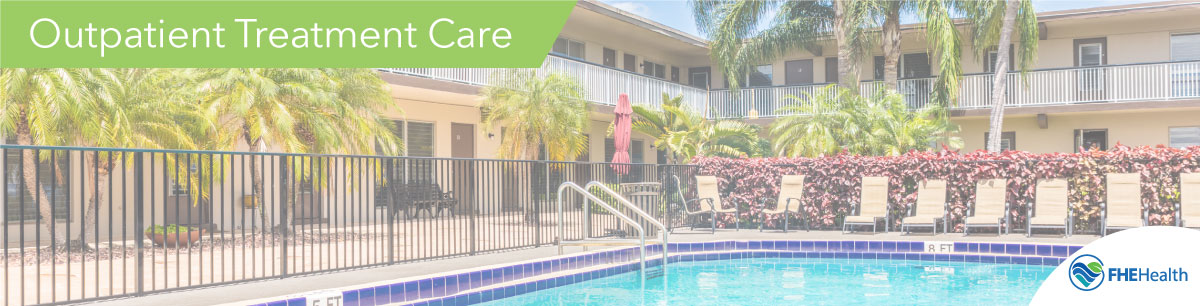
All outpatient services are not equal, and this includes the opportunities available at FHE Health. We offer several levels of outpatient care, including partial hospitalization and intensive outpatient programs.
Partial Hospitalization Programs
Partial hospitalization programs, also known as PHP, are a step down from residential treatment that combines the demanding nature of residential rehabilitation with an outpatient environment. Participants aren’t required to live in a particular place, but do spend most of the day, often around 7 AM to 3 PM, five days a week, engaged in recovery activities. This includes group sessions, medication management, and individual counseling to aid in ongoing dedication to good health.
Schedules and hours described here are examples only. FHE Health’s actual programming varies by patient and program — consult with admissions for current schedules.
It can be a challenge to balance a job, school, or family obligations with a PHP, as rehabilitation takes up 25 to 30 hours a week. However, this is the point: Partial hospitalization is intended to be your first and, ideally, only priority during this stage in the treatment process. While easing back into normal life will come in time, PHP is a time to learn how to remain healthy and happy while not under the strict oversight provided by a residential program. Participants have the ability to see loved ones and operate with increased autonomy, but are still held to a routine for a majority of the week.
Mental Health IOP at FHE Health
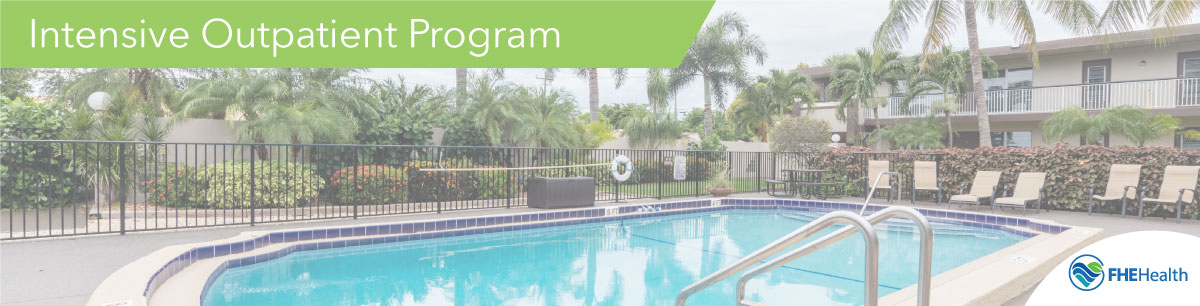
Our Intensive Outpatient Program is designed to provide consistent, structured behavioral health treatment while supporting increasing independence and real-world functioning. The program runs Monday through Friday, 1:00 to 4:00 PM on our Deerfield Beach campus and serves a mixed-gender population with mental health and co-occurring substance use needs.
Schedules and hours described here are examples only. FHE Health’s actual programming varies by patient and program — consult with admissions for current schedules.
Treatment focuses on building and applying coping skills, strengthening emotional regulation, and reinforcing routines that support long-term mental health and recovery. Services include weekly individual therapy, case management support, structured group programming focused on recovery and wellness, and family therapy as clinically indicated.
Participants can join through several pathways: stepping down from FHE Health’s substance use programs or Restore Mental Health higher levels of care, stepping down from a Partial Hospitalization Program at another facility, or attending as commuters from the community. On-campus housing (with or without meals, at additional cost) and off-campus living options are both available.
IOP participants may also elect to explore FHE Health’s neuroscience-based services, including qEEG-guided neurotherapy, Transcranial Magnetic Stimulation (TMS), and Ketamine-Assisted IV Therapy. Some services may be covered by insurance; others are available through self-pay. Our admissions team can walk through individualized options based on insurance coverage and clinical appropriateness.
Note: Our Shatterproof first responders program includes its own morning IOP track, separate from the afternoon Behavioral Health IOP described here.
Sober Living in Outpatient Care
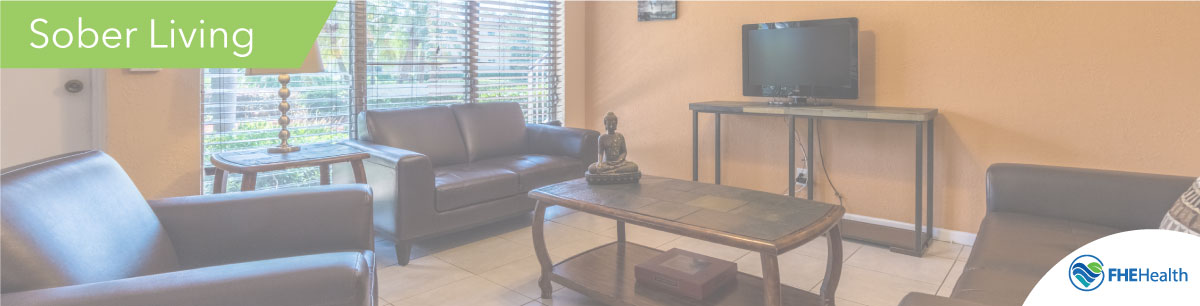
The term sober living can be off-putting for those working through mental illness as it implies addiction, but this doesn’t have to be the case. A sober living house isn’t necessarily related explicitly to addiction; instead, it’s just a transitory destination for those who have completed a residential program but are not yet prepared to move back home or who do not live locally.
Sober living houses are frequently recommended to those in outpatient treatment to relieve the pressure that can accompany moving back to a destination that may have worsened mental health. In a sober living facility, residents are held to rules related to responsibilities within the home, curfews, and monitoring that ensure good behavior and a more supportive approach to therapy. While less restrictive than a residential facility, sober living puts boundaries in place that can reduce the risk of relapse or a reversal in progress. Sober living houses aren’t right for everyone, but they can greatly aid in establishing independence without compromising the results of outpatient mental health care.
Pros and Cons of Outpatient Mental Health Care
Outpatient care isn’t right for everyone. Knowing what it offers — and where it falls short — can help you decide whether it’s the right fit for your situation.
- Lifestyle flexibility. Continue work, school, or family obligations while in treatment.
- Affordability. Outpatient care typically costs less than residential treatment.
- Different levels of care. Step up or down based on your needs.
- Build community. Establish lasting relationships in a local network.
- Limited supervision. No 24-hour monitoring may not suit those in crisis.
- Requires stable home life. An unstable environment can stall recovery.
- Exposure to triggers. Higher risk of encountering drugs, alcohol, or stressors.
- Less immediate access to staff. Support is scheduled, not always on-call.
Who Provides Outpatient Mental Health Care
Mental health care professionals diagnose mental health conditions and provide treatment. Several types of providers may be involved in your care, often working together as a team.
Psychiatrist. A physician who specializes in mental health. Psychiatrists can diagnose and treat mental illnesses, prescribe medication, and provide counseling.
Psychologist. Focuses on thoughts, behaviors, and emotions. Most psychologists hold doctoral degrees (Ph.D. or Psy.D.) and can diagnose conditions and provide individual or group counseling. Depending on licensing, they may not be able to prescribe medications, but they often work with a provider who can.
Psychiatric-Mental Health Nurse. A registered nurse with specialized training in mental health, holding at least a master’s degree. Depending on state law, they may also be able to prescribe medications.
Licensed Clinical Social Worker. Holds a master’s or doctoral degree in social work and is able to provide assessments, diagnose conditions, and administer counseling. LCSWs are not licensed to prescribe medication.
Licensed Professional Counselor. Generally holds a master’s degree with clinical experience. LPCs can diagnose conditions and provide counseling but cannot prescribe medication.
The Benefits of Our Campus
Outpatient programs at FHE Health come with one major advantage: our campus. As a comprehensive resource for recovery from both mental health and addiction, we’re able to offer a professional approach to care that guides those seeking rehabilitation through an entire continuum, from detox to alumni resources.
Those who attend outpatient rehabilitation through FHE have access to all the opportunities available on our campus. That includes medical resources, behavioral health programming, women’s health support, advanced diagnostics, holistic services like fitness, and spiritual guidance. As our property hosts a large patient population and numerous licensed medical professionals, we are able to provide a wonderful environment for those in pursuit of recovery.
We believe that the unique nature of our facility makes our outpatient programming a valuable opportunity for those at all stages of recovery, offering access to models of care that aren’t necessarily available anywhere else. Those on our campus also work in close proximity to our alumni community, which can provide insight into what lies ahead after successful outpatient program completion.
Benefits of Outpatient Mental Health Care
Outpatient mental health care is often a more affordable and more convenient choice when seeking rehabilitation from mental health disorders and co-existing substance use. You’ll still receive the important therapy and group sessions needed for recovery, while also having independence, the ability to live wherever you want, and the freedom to hold a job. Outpatient care won’t require all your attention like residential treatment does, but it’ll keep you on the right path to taking care of yourself.
By participating in an outpatient mental health care program, you’ll continue to learn strategies to avoid triggers and work through the unresolved issues that led to poor mental health, unintended consequences, and addiction — including dual diagnosis situations where a mental health condition occurs alongside a substance use disorder. You’ll also have access to experts in mental health and addiction medication to help you manage your symptoms, including conditions like anxiety and depression, and avoid illicit substances and alcohol that could end up making your symptoms worse.
Medical Integration
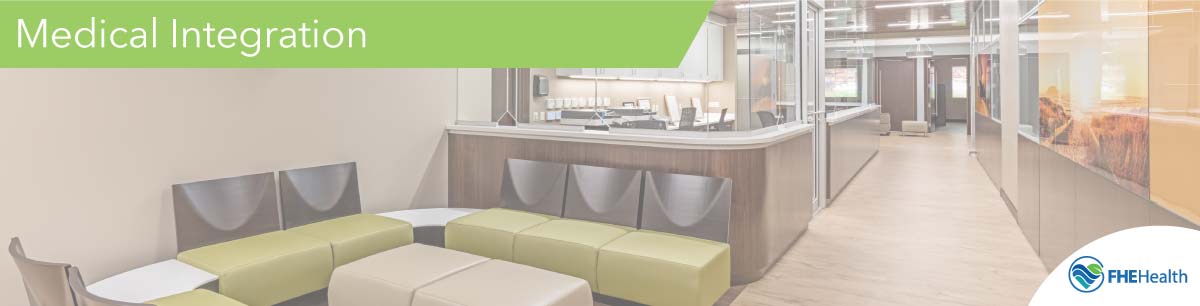
At FHE Health, we realize that medical management can be a valuable part of working to stabilize mental health. The use of medications is encouraged for those who are in need of such care, and it’s our goal to support the use of medication to maintain mental wellness as long as necessary.
For those who began treatment with the use of medication during residential care, we’re able to continue routines that have already been established, whether they were with us or not. Our neuro-rehab services can continue to be used during our outpatient level of care, ensuring that support carries forward without interruption.
Getting the Most From Outpatient Care
Outpatient mental health care is an effective way to get intensive help while still fulfilling your day-to-day responsibilities. Three habits set successful clients apart.
Do the Research
Some outpatient programs have daily therapy sessions while others meet two to three days per week. If a program’s schedule is too demanding for you or requires too much travel, you’re less likely to stick with the plan. Doing the research into what a program entails, where sessions are located, and what the overall cost will be is vital for long-term success.
Trust the Process
Healing from a mental illness can feel like two steps forward and one step back. Some weeks may feel easy and symptoms may be mild. Other times, lasting mental health may feel out of reach. It’s important to continue following your treatment plan and trust the process, especially if you’ve started to see progress.
Stay Invested
After spending some time in outpatient care, many individuals begin to experience more control over their mood, actions, and emotions. As they begin to feel better, it can be tempting to become lax with continuing treatment. To get the most out of outpatient care, keep taking your medication, keep scheduled visits with your counselor, and practice the skills you’ve learned — regardless of how good you’re feeling.
Seeking Help from FHE
Making the decision to get help for mental health issues isn’t easy. Many individuals are reluctant to admit a need for assistance to friends and family, while others believe there’s a way to improve alone in time. At FHE Health, we are committed to supporting our patients’ personal journeys to recovery in whatever form that may take. Whether an individual begins in our residential program or starts care with our outpatient treatment programs, we are able to offer the right opportunity for everyone.
If you or someone you love is considering treatment for mental health disorders, FHE Health provides dedicated care opportunities in both residential and outpatient settings. Please contact us today or learn more about our admissions process to get started with mental health services and rehabilitation, including partial hospitalization and intensive outpatient programming.