
Living with schizophrenia can feel confusing or isolating, especially if your symptoms make it difficult to work, go to school or maintain positive relationships. In the U.S., an estimated 0.25% to 0.64% of people live with schizophrenia or a related psychotic disorder. The good news is that it’s treatable, and many people go on to build rewarding lives with the right treatment and support. Schizophrenia is one of the mental health conditions we treat at FHE Health in South Florida, where we combine evidence-based therapies with compassion and kindness. Here’s what treatment with us looks like.
Understanding the Types of Schizophrenia and Its Causes
 Previously, schizophrenia was classified into several subtypes. Although the Diagnostic and Statistical Manual of Mental Disorders, 5th Edition (DSM-5) no longer uses these subtypes, it’s helpful to understand how schizophrenia can present in more than one way.
These are the original five subtypes, along with their most prominent symptoms.
- Paranoid: Persistent delusions and/or hallucinations
- Catatonic: Changes in movement (e.g., rigidity, complete immobility, excessive movement)
- Disorganized: Incoherent speech, disorganized behavior, giggling at inappropriate times
- Residual: Lingering symptoms after the primary psychotic symptoms have improved
- Undifferentiated: A mix of symptoms (e.g., hallucinations with incoherent speech and excessive movement)
Clinicians now view schizophrenia as a spectrum that affects how you think, feel and behave. This means that it represents a broad syndrome rather than a single disease. Schizophrenia is typically diagnosed between the late teens and early thirties, and it tends to emerge earlier in men than in women.
Scientists don’t know what causes schizophrenia, but they believe it may develop due to chemical imbalances, problems with brain development or loss of the connections between different parts of your brain. You may have an increased risk of schizophrenia due to the following:
- Genetics: You’re more likely to have schizophrenia if an immediate family member has it.
- Substance use: Frequent substance use, especially during the teen and young adult years, has been associated with the development of schizophrenia.
- Environmental exposure: Some people develop schizophrenia after being exposed to malnutrition or viruses before they’re born.
Common Treatment Approaches for Schizophrenia
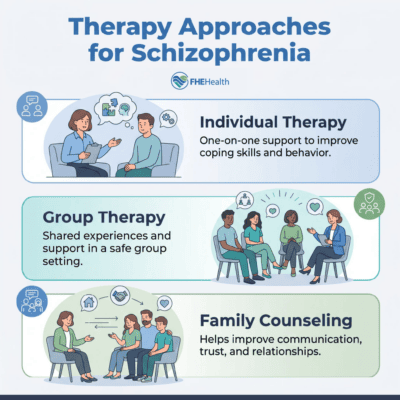 Therapy is central to how we treat schizophrenia at FHE Health. As part of our mental health care, we use several types: individual, group and family therapy, and tailor the mix to each person. At FHE Health, schizophrenia is treated within our broader mental health care, from residential mental health treatment through outpatient services, so support scales to what you need.
Individual Therapy
Individual therapy involves working one-on-one with a licensed mental health professional. Many therapists use cognitive behavioral therapy (CBT), which may help improve your coping skills, shift your thinking and change your behavior. FHE therapists choose an approach based on your unique needs, such as your symptoms and personal goals.
Group Therapy
Group therapy gives you a safe, supportive environment to share your thoughts and feelings. Participating in this can reduce feelings of isolation, and it’s often helpful to hear about what’s working for other people with schizophrenia. At FHE, trained counselors lead group therapy sessions to ensure they stay on track.
Family Counseling
The symptoms of schizophrenia can interfere with your ability to maintain relationships. Family counseling gives you a chance to talk to your loved ones in a neutral environment. An FHE therapist can help you resolve conflicts, build trust and address family challenges in a productive way.
Medication Options for Schizophrenia
 When medication is part of your plan, our onsite psychiatric team manages it alongside therapy and adjusts it as your needs change. These are the medication types most often used in treating schizophrenia.
Antipsychotics
Antipsychotics treat the delusions, hallucinations and disorganized thinking that sometimes accompany schizophrenia. First-generation antipsychotics target dopamine only, while second-generation antipsychotics target both dopamine and serotonin. Dopamine and serotonin are neurotransmitters (chemicals that help the nerve cells communicate with each other).
Examples of antipsychotics include:
- Haloperidol
- Quetiapine
- Aripiprazole
Antidepressants
Some people with schizophrenia take antidepressants to manage depression, lack of motivation and other related symptoms. FHE clinicians will review your history and determine if it might be helpful for you to take a tricyclic antidepressant, a selective serotonin reuptake inhibitor (SSRI) or another antidepressant medication.
Examples of antidepressants include:
- Sertraline
- Fluoxetine
- Bupropion
- Paroxetine
- Amitriptyline
Mood Stabilizers
Mood stabilizers may be helpful for managing mood swings. In people with schizophrenia, mood swings sometimes occur along with paranoia or other symptoms. Mood stabilizers prevent racing thoughts, sleep difficulties and rapid changes in behavior.
Examples of mood stabilizers include:
- Lithium
- Valproic acid
- Lamotrigine
Natural Options for Schizophrenia Treatment
Not everyone wants to take prescription medications for schizophrenia. That’s okay. We’ll work with you to identify safe alternatives. For example, you may benefit from stopping alcohol use, taking B vitamin supplements or eating more whole foods.
Can Schizophrenia Be Cured?
Scientists haven’t found a cure for schizophrenia, but that doesn’t mean there’s no hope for those who have it. With therapy, medications and/or lifestyle changes, it’s possible to manage many of your symptoms. Schizophrenia requires ongoing treatment to prevent serious symptoms from returning.
Living with Schizophrenia
“The mental health program they have here is among the top in the whole country!” – Kevin C.
It’s possible to live a full, rewarding life with schizophrenia. Once we help you find the right treatment, there are a few things you can do to improve your quality of life.
Start by building a strong support network. If your symptoms flare up, it’s helpful to have family members and friends who can step in and help with household chores, rides to medical appointments and other critical tasks.
We also recommend that you attend support group meetings in your community. Once you finish group therapy at FHE, attending meetings at home can help you strengthen peer connections and avoid social isolation.