
• Skip to primary navigation
  • Skip to main content
  • Skip to primary sidebar
  • Skip to footer

FHE Health | Residential Rehab & Mental Health Center in Florida Homepage

Drug, Alcohol and Mental Health Treatment

ContactCareers

Call for Immediate Help (833) 596-3502

  • About
        • About FHE Rehab
          • About FHE Health
          • Our Staff
          • Testimonials
          • #FHE25
        • Our Campus
          • Gallery
          • Our Videos
          • Our Services
          • Health & Wellness Center
        • Careers at FHE Health
          • Employment Opportunities
        • Our Expertise
          • Accreditations
          • Educational Opportunities
          • Community Impact Award
          • First Responder Families Podcast
          • First Responder Paws
          • Education Scholarship
  • Addiction
        • Treatment Programs
          • Alcohol Addiction
          • Addiction Treatment
          • Behavioral Addiction
        • Levels of Care
          • Continuum of Care
          • Addiction Detox
          • Residential Addiction Treatment
          • Outpatient Addiction Treatment
        • What We Treat
          • Alcoholism
          • Amphetamines
          • Benzodiazepines
          • Cocaine
          • Heroin
          • Opioids
          • Sedative
  • Mental Health
        • Mental Health Rehab
          • Mental Health Services
          • Onsite Psychiatric Care
          • Dual Diagnosis
        • Levels of Care
          • Residential Mental Health Care
          • Outpatient Mental Health Care
        • What We Treat
          • ADD & ADHD
          • Anxiety Disorders
          • Bipolar Disorder
          • Depression
          • Eating Disorders
          • Personality Disorders
          • PTSD
          • Schizophrenia
          • Trauma
  • Programs
        • FHE Programs
          • Specialty Program Overview
          • Restore (Mental Health)
          • Shatterproof FHE Health
            (First Responders & Veterans)
          • Empower! (Women's Substance Use)
          • Compass (Men's Substance Use)
        • Support Programs
          • Alumni
          • Family Support
        • Therapies
          • Acupuncture
          • Breathwork Therapy
          • CBT (Cognitive Behavioral Therapy)
          • DBT (Dialectical Behavioral Therapy)
          • EMDR Therapy
          • Expressive Arts Therapy
          • Individual Therapy
          • Group Therapy
          • Gambling Therapy
        • Medical Care
          • Medical Integration
          • Ketamine Infusion
          • IV Vitamin
          • Fitness & Nutrition
          • Medication-Assisted Treatment
          • Medication Management Services
          • Transcranial Magnetic Stimulation (TMS)
        • NeuroRehab Services
          • Neuro Rehabilitation
          • Neurofeedback Training
          • Neurostimulation Therapy
          • qEEG Brain Mapping
          • Insomnia Treatment for PTSD
  • Resources
        • FHE Guides
          • Understanding Drug Abuse
          • Signs of Addiction
          • The Disease of Addiction
          • Confronting Addiction
          • Staging an Intervention
          • Rehab Success Rate – Does It Really Work?
          • Withdrawal Timelines
          • Life After Rehab
          • LGBTQ+ Community Resources
          • Veteran Resources
          • Remote Resources Toolkit
        • FHE Health Resources
          • FHE Podcasts
          • Our Surveys
          • FHE News
          • All Articles
  • Admissions
        • Insurance
          • Will Insurance Cover Treatment?
          • Blue Cross Insurance
          • Beacon Health / Value Options Insurance
          • Cigna Insurance
          • Humana Insurance
          • TRICARE Insurance
          • VA Community Care
        • Admissions
          • Admissions
          • Steps to Addiction Help
          • Self-Pay Rehab
        • FAQ
          • Frequently Asked Questions
          • Keeping Your Job in Rehab
          • Example Day in Rehab
        • Contact Admissions
          • Contact Us
          • Secure Payment Form
  • Contact
  •  
Home > Learning > Behavioral & Mental Health > Treating Co-Occurring Disorders to Help Prevent Suicide

By: Chris Foy | Last Updated: August 2, 2026

Treating Co-Occurring Disorders to Help Prevent Suicide

Treating Co-ocurring disorders to help prevent suicide
If you or someone you know is struggling with suicidal thoughts, call or text 988 to reach the 988 Suicide & Crisis Lifeline. Support is free, confidential and available 24 hours a day. Call 911 if there is an immediate threat to safety.

Substance use and mental health conditions affect people of all ages, and they frequently occur together. According to the Substance Abuse and Mental Health Services Administration’s research into co-occurring disorders, an estimated 21.2 million American adults had both a mental illness and a substance use disorder in 2024.

When these conditions occur together, suicide risk rises substantially. This article explains why that happens, what warning signs to watch for and how integrated treatment addresses both conditions at once.

What Are Co-occurring Disorders?

Co-occurring disorders, sometimes called dual diagnosis, means a person has both a mental health condition and a substance use disorder at the same time. This is common, and in many cases different care providers diagnose and treat each condition in isolation without recognizing how they interact.

At FHE Health, we have extensive experience treating co-occurring disorders, managing both sets of symptoms together rather than in sequence.

Common Co-occurring Combinations

Several mental health conditions appear frequently alongside substance use disorders:

  • ADHD
  • Anxiety
  • Bipolar disorder
  • Depression
  • Eating disorders
  • Obsessive-compulsive disorder (OCD)
  • PTSD
  • Schizophrenia
  • Trauma

How Co-occurring Disorders Raise Suicide Risk

A case-control study published in Addiction Science & Clinical Practice found that the risk of death by suicide increases 5.8 times for people with alcohol use disorder, 8.1 times for people with alcohol and drug use disorders, and 11.2 times for people with alcohol, drug and tobacco use disorders. Risk varies by substance, with sedative use carrying a particularly high association.

Mental health conditions layered on top of substance use raise that risk further. According to the Department of Veterans Affairs National Center for PTSD, about 38% of veteran suicide cases involved a recent diagnosis of depression, and around 27% involved PTSD.

Several factors help explain the connection. Substance use and mental health conditions both affect judgment, impulse control and emotional regulation. Each can deepen social isolation. And when the two are treated separately, or one goes undiagnosed, symptoms of both tend to worsen.

Why Integrated Treatment Matters

According to the Centers for Disease Control and Prevention, suicide was responsible for 48,824 deaths in the United States in 2024. Rates rose substantially from 1999 through 2022, then declined slightly in 2023 and again in 2024. In 2024, an estimated 14.3 million adults seriously thought about suicide and 4.6 million made a plan.

Those numbers matter because the opportunity to intervene is often there. Research published in the Journal of General Internal Medicine found that about half of people who die by suicide had contact with a health care provider in the month before their death. Recognizing co-occurring conditions during those contacts is part of what makes intervention possible.

Integrated treatment addresses both conditions in one plan rather than handing a patient between separate providers. Treating them separately makes symptoms harder to control, because one condition tends to aggravate the other. Someone whose depression goes untreated may keep returning to alcohol to manage it; someone whose drinking goes unaddressed may find their depression never fully lifts.

At FHE Health, integrated care combines individual and group therapy, medication where appropriate and ongoing support after the initial phase of treatment. Aftercare matters here — it gives patients something to return to if symptoms resurface.

Warning Signs of Co-occurring Disorders and Suicide Risk

Signs that substance use and a mental health condition may be feeding each other include:

  • Turning to drugs or alcohol to manage mental health symptoms
  • Mental health symptoms visibly worsening during or after substance use
  • Previously manageable substance use escalating during periods of poor mental health
  • Reluctance or inability to seek treatment for both conditions
  • Withdrawal from friends, family and activities that once brought enjoyment
  • Expressions of hopelessness or of being a burden to others

Finding a provider who understands both mental health and substance use can be difficult, but accurate diagnosis of both conditions is what makes effective treatment possible.

Need Help?

Treatment can begin quickly and discreetly, get started now

Contact Us

What Integrated Treatment Includes

Mental Health Comes First

The first step in integrated treatment is identifying any underlying mental health condition. Addiction is often driven by an untreated mental health condition, and mental health symptoms can be worsened by substance use, which is how the cycle sustains itself. A psychiatric evaluation helps the patient and care team build a plan around individual needs rather than a standard protocol.

Building Healthy Coping Skills

Most patients arrive without practical tools for handling triggers, old trauma and everyday stressors. Two approaches do much of this work.

Cognitive behavioral therapy, or CBT, is a short-term psychotherapy focused on problem-solving. It emphasizes developing new coping strategies and changing unhelpful thought patterns rather than revisiting old problems at length.

Dialectical behavior therapy, or DBT, addresses both conditions at once through mindfulness and emotional regulation skills. It supports stress management, reduces impulsivity and works to replace self-destructive behaviors with healthier responses.

De-stigmatizing Medication
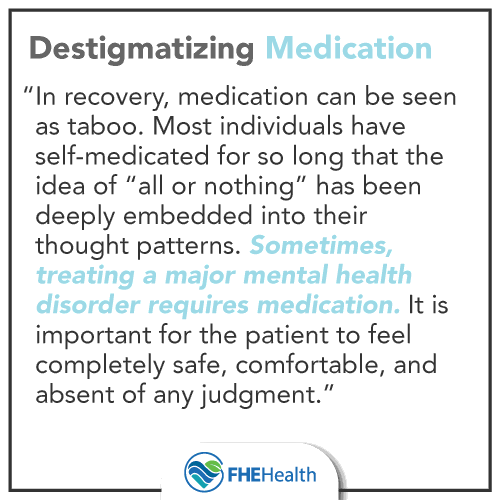
Pull quote about destigmatizing medication in recovery

In recovery, medication can be seen as taboo. Many people have self-medicated for so long that an all-or-nothing view of substances becomes deeply embedded in how they think. Treating a serious mental health condition sometimes requires medication management, and patients should be able to discuss that option feeling safe, comfortable and free of judgment.

Individual and Group Therapy

Patients in treatment can receive individual and group therapy daily, with the mix determined by individual needs. Options may include psychotherapy, trauma therapy, EMDR, interactive group therapy, DBT, family therapy and grief therapy.

Trauma therapy has a particular role in co-occurring treatment. It begins by creating a safe environment for a patient to identify and share difficult experiences. From there, the therapist introduces tools for processing those experiences, examining the beliefs that formed around them and supporting recovery.

Suicide Prevention

Safety, support and connection are the core components of suicide prevention. Treatment programs for co-occurring disorders are not limited to substance use, and many include specific suicide prevention work. Mental health professionals can provide support to someone experiencing hopelessness or suicidal thoughts, and can help identify the right level of care. Several therapies for suicidal thoughts are used in this setting.

Whole-Person Healing

Many programs also address physical and emotional wellbeing alongside clinical treatment. Exercise, meditation, healthy eating and 12-step programs can help patients build balance and a foundation for long-term recovery.

Mindfulness takes several forms. Stepping back, taking an objective view and accepting circumstances as they are is the core of the practice. Mindful eating, moving meditation and mindful breathing are other ways to build it into a daily routine. Mindfulness has been associated with lower anxiety and depression, better regulation of the body’s stress response and improved ability to identify and process emotions.

How FHE Health Treats Co-occurring Disorders

At FHE Health, we use an integrated treatment approach for people dealing with co-occurring disorders and suicide risk. We offer residential and outpatient mental health services and have experience helping people living with trauma, PTSD, anxiety, depression and other mental health conditions.

We believe that treating the underlying mental health condition is a key step in recovery from substance use, and we aim to give patients the tools they need for a lasting recovery. Through individual and group therapy, CBT and medication management where appropriate, we help patients withdraw safely, build skills for handling daily stressors and manage suicidal thoughts.

Frequently Asked Questions

What Are Some Key Warning Signs of Suicide and Depression?
Common warning signs include loss of interest in previously enjoyable activities, withdrawal from friends and family, and expressions of hopelessness. Giving away possessions someone values can also indicate suicidal ideation.
How Do Co-occurring Disorders Interact With Self-Harm or Suicidal Thoughts?
Co-occurring disorders can impair judgment, worsen symptoms of both conditions and deepen isolation. Some conditions also affect emotional regulation, making intense emotions harder to manage in the moment.
Should Addiction or the Mental Health Condition Be Treated First?
Integrated treatment addresses both at the same time rather than in sequence. Treating one and deferring the other tends to stall progress, because each condition can worsen the other. Medical stabilization may come first when it is needed for safety, but the treatment plan should account for both conditions from the start.
When Should You Seek Help for Thoughts of Self-Harm or Suicide?
Seek professional help for self-harming behaviors or suicidal thoughts as soon as possible. Getting support early can address the underlying conditions and reduce the risk of those thoughts taking hold.

Finding Help Now

If you or someone close to you is concerned about substance use, mental health or suicidal thoughts, talk to a professional. The 988 Suicide & Crisis Lifeline is available to anyone in a mental health crisis. For longer-term support, contact FHE Health today. Our admissions team is available to offer confidential advice 24 hours a day, every day of the year.


Filed Under: Behavioral & Mental Health

About Chris Foy

Chris Foy is a content manager and webmaster for FHE Health with years of experience in the addiction treatment industry...read more

Primary Sidebar

Learning Center

  • Help for You
  • Help For Loved Ones
  • Help For Alcoholism
  • Help With Substance Abuse
  • Behavioral & Mental Health
  • Life in Recovery
  • Rehab Explained
  • All Articles

Sign up for the Blog

Our Facilities

Take a look at our state of the art treatment center.

View Our Gallery

The Experience Blog

  • Addiction News
  • Alumni
  • Community Events
  • Expert Columns
  • FHE Commentary
  • FHE News
  • Treatment Legislation
  • All Articles

Footer

FHE Health

© 2026 FHE Health

505 S Federal Hwy #2,
Deerfield Beach, Florida 33441
1-833-596-3502
Open 24 Hours Daily
youtube facebook instagram linkedin twitter
  • Contact
  • Careers
  • AI Policy
  • Privacy Policy
  • Sitemap
A+ BBB and Top Places to Work - Sun Sentinel

Copyright © 2026 · FHE Theme On Genesis Framework · WordPress · Log in

Manage Consent
To provide the best experiences, we use technologies like cookies to store and/or access device information. Consenting to these technologies will allow us to process data such as browsing behavior or unique IDs on this site. Not consenting or withdrawing consent, may adversely affect certain features and functions.
Functional Always active
The technical storage or access is strictly necessary for the legitimate purpose of enabling the use of a specific service explicitly requested by the subscriber or user, or for the sole purpose of carrying out the transmission of a communication over an electronic communications network.
Preferences
The technical storage or access is necessary for the legitimate purpose of storing preferences that are not requested by the subscriber or user.
Statistics
The technical storage or access that is used exclusively for statistical purposes. The technical storage or access that is used exclusively for anonymous statistical purposes. Without a subpoena, voluntary compliance on the part of your Internet Service Provider, or additional records from a third party, information stored or retrieved for this purpose alone cannot usually be used to identify you.
Marketing
The technical storage or access is required to create user profiles to send advertising, or to track the user on a website or across several websites for similar marketing purposes.
  • Manage options
  • Manage services
  • Manage {vendor_count} vendors
  • Read more about these purposes
View preferences
  • {title}
  • {title}
  • {title}

The FHE Health team is committed to providing accurate information that adheres to the highest standards of writing. If one of our articles is marked with a ‘reviewed for accuracy and expertise’ badge, it indicates that one or more members of our team of doctors and clinicians have reviewed the article further to ensure accuracy. This is part of our ongoing commitment to ensure FHE Health is trusted as a leader in mental health and addiction care.

If there are any concerns about content we have published, please reach out to us at marketing@fhehealth.com.

833-596-3502

Text/Call Me