
• Skip to primary navigation
  • Skip to main content
  • Skip to primary sidebar
  • Skip to footer

FHE Health | Inpatient Rehab & Mental Health Facility in Florida Homepage

Drug, Alcohol and Mental Health Treatment

ContactCareers

Call for Immediate Help (833) 596-3502

  • About
        • About FHE Rehab
          • About FHE Health
          • Our Staff
          • Locations We Serve
          • Testimonials
        • Our Campus
          • Gallery
          • Our Videos
          • The Health and Wellness Center at FHE Health
        • Our Locations
          • Alcohol Rehab
          • Detox Center
          • Drug Rehab
          • Mental Health Center
          • Outpatient Rehab
        • Careers at FHE Health
          • Employment Opportunities
        • Our Expertise
          • Accreditations
          • Educational Opportunities
          • Community Impact Award
          • First Responder Families Podcast
          • First Responder Paws
          • Education Scholarship
  • Addiction
        • Treatment Programs
          • Treatment Program Overview
          • Alcohol Addiction
          • Drug Addiction Treatment
          • Behavioral Addiction
        • Levels of Care
          • Continuum of Care
          • Addiction Detox
          • Inpatient Addiction Treatment
          • Outpatient Addiction Treatment
        • What We Treat
          • Alcoholism
          • Amphetamines
          • Benzodiazepines
          • Cocaine
          • Heroin
          • Opioids
          • Sedative
  • Mental Health
        • Mental Health Rehab
          • Mental Health Rehab
          • Onsite Psychiatric Care
          • Dual Diagnosis
        • Levels of Care
          • Residential Mental Health Care
          • Outpatient Mental Health Care
        • What We Treat
          • ADD & ADHD
          • Anxiety Disorders
          • Bipolar Disorder
          • Depression
          • Eating Disorders
          • Personality Disorders
          • PTSD
          • Schizophrenia
          • Substance Use Disorder
          • Trauma
  • Programs
        • FHE Programs
          • Specialty Program Overview
          • Restore (Mental Health)
          • Empower! (Women's Program)
          • Shatterproof FHE Health(First Responders)
          • Compass Program
        • Support Programs
          • Alumni
          • Family Support
        • Therapies
          • Acupuncture
          • Breathwork Therapy
          • CBT (Cognitive Behavioral Therapy)
          • DBT (Dialectical Behavioral Therapy)
          • EMDR Therapy
          • Expressive Arts Therapy
          • Individual Therapy
          • Group Therapy
          • Gambling Therapy
        • Medical Care
          • Medical Integration
          • Ketamine Infusion
          • IV Vitamin
          • Fitness & Nutrition
          • Medication-Assisted Treatment Program
          • Medication Management
        • NeuroRehab Services
          • Neuro Rehabilitation
          • Neurofeedback Training
          • Neurostimulation Therapy
          • EEG Brain Mapping
          • Insomnia Treatment for PTSD
  • Resources
        • FHE Guides
          • Understanding Drug Abuse
          • Signs of Addiction
          • The Disease of Addiction
          • Confronting Addiction
          • Staging an Intervention
          • Rehab Success Rate – Does It Really Work?
          • Withdrawal Timelines
          • Life After Rehab
          • LGBTQ+ Community Resources
          • Veteran Resources
          • FHE Podcasts
          • Remote Resources Toolkit
        • Learning Center
          • Help for You
          • Help For Loved Ones
          • Help For Alcoholism
          • Help With Substance Abuse
          • Behavioral & Mental Health
          • Life in Recovery
          • Rehab Explained
          • Addiction Statistics
          • Our Research Articles
          • View All Articles
        • The Experience Blog
          • Addiction News
          • Alumni
          • Community Events
          • Expert Opinions
          • FHE Commentary
          • FHE News
          • Treatment Legislation
          • View All Articles
  • Admissions
        • Insurance
          • Blue Cross Insurance
          • Beacon Health / Value Options Insurance
          • Cigna Insurance
          • Humana Insurance
          • TRICARE Insurance
        • Admissions
          • Steps to Addiction Help
          • Will Insurance Cover Behavioral Treatment?
          • Self-Pay Rehab
        • FAQ
          • Keeping Your Job in Rehab
          • Example Day in Rehab
        • Contact Admissions
          • Contact Us
          • Secure Payment Form
  • Contact
  •  
Home > Featured in Recovery > How to Choose a Sponsor: Qualities to Look for in a Recovery Mentor

By: Chris Foy | Last Updated: January 29, 2026

How to Choose a Sponsor: Qualities to Look for in a Recovery Mentor

How to Choose a Sponsor

In Alcoholics Anonymous, finding the right sponsor is one of the most important decisions you need to make in early recovery. A good sponsor can provide guidance, accountability and support as you work through the 12 steps and navigate sobriety. But with so many people at the meetings, how do you know who’s right for you? At FHE Health, we’re here to help.

Choosing a sponsor isn’t something to rush. This relationship plays a major role in your recovery journey, so it’s worth taking time to find a good match. But exactly what is a sponsor in AA? Let’s explore what it means, what qualities to look for in your sponsor and how to build a relationship that supports lasting sobriety.

What a Sponsor Is in AA and Why Choosing the Right One Is So Important
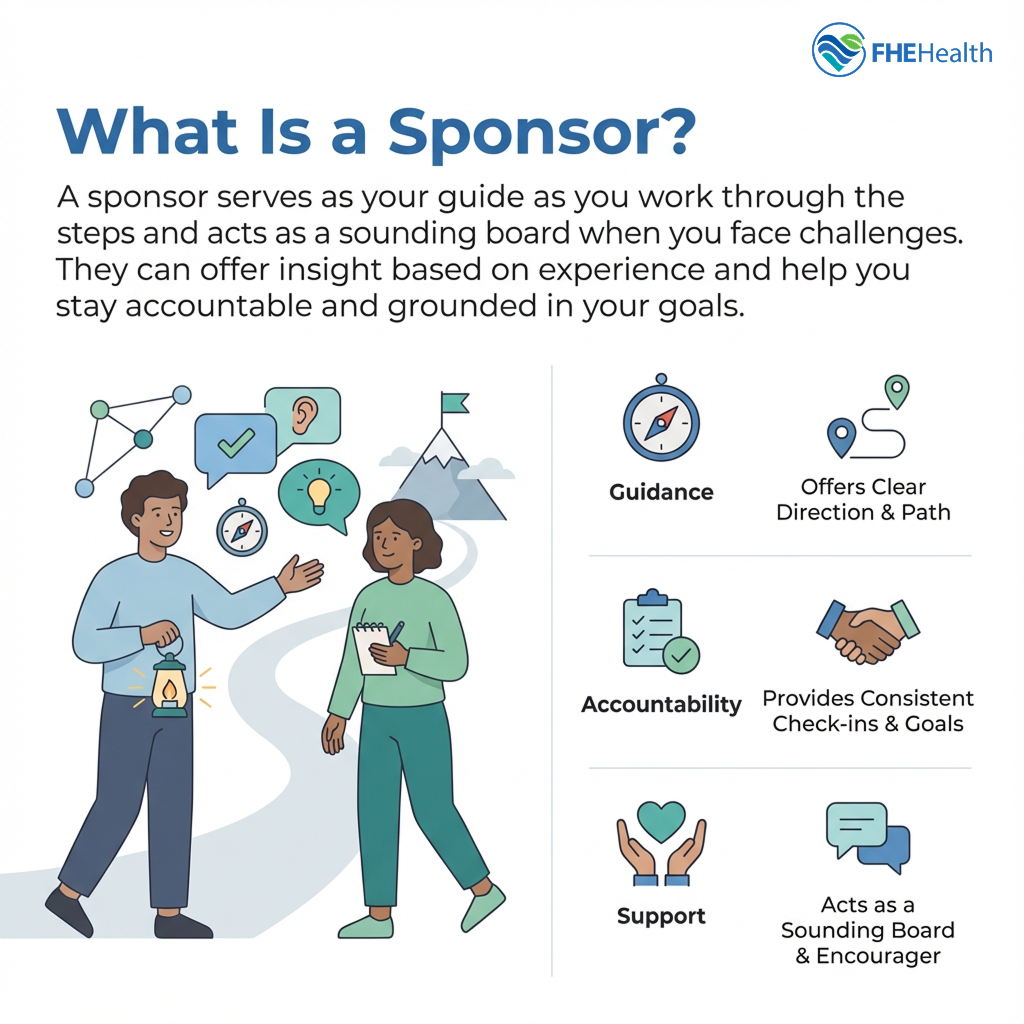
What is a Sponsor?Research suggests peer support gives real advantages over standard care. In one recent study, 88.6% of people who paired methadone treatment with peer-delivered support remained in treatment at 3 months.

Your sponsor serves as your guide as you work through the steps and acts as a sounding board when you face challenges. They have walked the same path and offer insight based on experience. This type of relationship creates a safe space where you can be honest about your struggles without fear of judgment.

The right sponsor helps you stay accountable and grounded in your goals. They’re someone you can call on tough days and who’ll challenge you when needed and celebrate your progress.

A healthy sponsor-sponsee bond also teaches you how to build trust and communicate openly. These are skills many people in recovery are still working to develop. Learning to be vulnerable with a sponsor can strengthen how you relate to others.

The wrong sponsor, however, can slow your progress. Someone who isn’t available or is critical and dismissive of boundaries can add stress to your recovery. That’s why it’s vital to choose carefully and make changes if the fit isn’t right.

Key Traits of an Effective Sponsor

Certain traits can indicate someone who’ll provide steady, healthy support. Here’s a quick checklist of what to look for:

  • Sustained sobriety. Look for someone with at a year or more of continuous sobriety.
  • Active involvement. Seek out a sponsor who attends meetings and engages in the recovery community.
  • Experience with the steps. They’ve completed all 12 steps and apply them daily.
  • Availability. They have time to meet regularly and take calls when needed.
  • Willingness to sponsor. Choose someone open to guiding others, not someone who’s overwhelmed with commitments.
  • Similar values. Look for someone with shared values, like honesty and spirituality, to make communication easier.
  • Good boundaries. Look for a sponsor who is willing to offer guidance but doesn’t try to control your choices.
  • Honest communication. Seek a sponsor who’s direct and caring, saying what you need to hear.
  • Same gender. Most programs recommend seeking a sponsor who’s the same gender to avoid distractions.
  • Strong program knowledge. Try to find a sponsor who understands how the steps, traditions and fellowship connect.
  • Humility. Look for a sponsor who is humble and doesn’t claim to have all the answers.

Red Flags to Avoid in Sponsor Relationships

Some behaviors signal that a sponsor may not be right for you. For example, if someone frequently skips meetings or seems inconsistent in their recovery, be cautious. You need someone committed to their own sobriety.

Avoid sponsors who try to control your choices or insist there’s only one right way to recover. Recovery is personal. Your sponsor’s guidance should never feel like pressure. Steer clear of anyone who overshares personal details or blurs boundaries. The relationship should stay centered on recovery work, not become a social outlet.

If someone gossips about other sponsees or breaks confidentiality, that’s a major red flag. What you share should remain private unless safety is at risk. Also, beware of sponsors who discourage professional help. A strong sponsor recognizes when therapy or medical care is needed and supports you in seeking it.

How to Approach and Ask Someone to Be Your Sponsor

When you’ve found someone who seems like a fit, approach them after meetings or during fellowship time. Get to know them before asking. When you’re ready, be direct. Mention that you’ve been watching how they work the program and ask if they’d consider being your sponsor. Most people appreciate honesty.

If they decline, don’t take it personally. If they accept, discuss expectations early. It’s important to be clear on how often you’ll meet, communication preferences and their approach with sponsees. Clear expectations prevent misunderstandings. Additionally, some people start with a temporary sponsor to begin step work while looking for a long-term match.

Adjusting If It’s Not a Good Fit

Not every sponsor relationship works, and that’s okay. If the connection feels strained or unhelpful, it might be time for a change. Signs include feeling judged, struggling to communicate or your sponsor being consistently unavailable. Trust your instincts.

End things respectfully: “I appreciate your help, but I don’t think we’re the right fit. I’m going to find another sponsor.” You don’t need to explain in detail. Most sponsors understand and want you to succeed with the right person. Afterward, reflect on what you learned, including what worked for you and what didn’t, so you can choose better next time.

Building a Sponsor-Sponsee Relationship That Supports Long-Term Recovery

Public health research describes peer support services as bridging the gap between formal intervention processes and the personal recovery experience. At FHE Health, we understand you need someone with lived experience for guidance and nonclinical support.

A strong sponsor relationship takes honesty, effort and consistency. Be open, even when it’s uncomfortable. The relationship only works if you’re real about your struggles. Follow through on commitments. For example, call when you say you will and complete your step work. This builds trust and shows dedication to recovery.

Stay in touch even during good times. Don’t wait for a crisis to reach out. Consistent communication helps your sponsor understand your progress. Be open to feedback, even when it challenges you. Your sponsor’s experience can guide you through tough spots.

The relationship will evolve as you grow in recovery. A healthy sponsorship adapts while staying focused on sobriety and personal growth.

Find Professional Support for Your Recovery Journey

A sponsor provides essential peer support, but professional treatment builds the skills and structure for lifelong recovery. Together, they form a powerful foundation for sobriety.

Contact FHE Health today to learn more about our inpatient and outpatient treatment programs. We offer evidence-based addiction treatment addressing both substance use and underlying mental health concerns. Our programs include individual therapy, group support and aftercare planning to help you thrive in recovery. Whether you’re starting out or strengthening your sobriety, we’re here to help.


Filed Under: Featured in Recovery, Life in Recovery

About Chris Foy

Chris Foy is a content manager and webmaster for FHE Health with years of experience in the addiction treatment industry...read more

Primary Sidebar

Learning Center

  • Help for You
  • Help For Loved Ones
  • Help For Alcoholism
  • Help With Substance Abuse
  • Behavioral & Mental Health
  • Life in Recovery
  • Rehab Explained
  • All Articles

Sign up for the Blog

Our Facilities

Take a look at our state of the art treatment center.

View Our Gallery

The Experience Blog

  • Addiction News
  • Alumni
  • Community Events
  • Expert Columns
  • FHE Commentary
  • FHE News
  • Treatment Legislation
  • All Articles

Footer

FHE Health

© 2026 FHE Health

505 S Federal Hwy #2,
Deerfield Beach, Florida 33441
1-833-596-3502
youtube facebook instagram linkedin twitter
  • Contact
  • Careers
  • AI Policy
  • Privacy Policy
  • Sitemap
A+ BBB and Top Places to Work - Sun Sentinel

Copyright © 2026 · FHE Theme On Genesis Framework · WordPress · Log in

Manage Consent
To provide the best experiences, we use technologies like cookies to store and/or access device information. Consenting to these technologies will allow us to process data such as browsing behavior or unique IDs on this site. Not consenting or withdrawing consent, may adversely affect certain features and functions.
Functional Always active
The technical storage or access is strictly necessary for the legitimate purpose of enabling the use of a specific service explicitly requested by the subscriber or user, or for the sole purpose of carrying out the transmission of a communication over an electronic communications network.
Preferences
The technical storage or access is necessary for the legitimate purpose of storing preferences that are not requested by the subscriber or user.
Statistics
The technical storage or access that is used exclusively for statistical purposes. The technical storage or access that is used exclusively for anonymous statistical purposes. Without a subpoena, voluntary compliance on the part of your Internet Service Provider, or additional records from a third party, information stored or retrieved for this purpose alone cannot usually be used to identify you.
Marketing
The technical storage or access is required to create user profiles to send advertising, or to track the user on a website or across several websites for similar marketing purposes.
  • Manage options
  • Manage services
  • Manage {vendor_count} vendors
  • Read more about these purposes
View preferences
  • {title}
  • {title}
  • {title}
Questions?

We’re here to Listen & Help.
Chat with us 24/7

Contact Us
Call (833) 596-3502


The FHE Health team is committed to providing accurate information that adheres to the highest standards of writing. If one of our articles is marked with a ‘reviewed for accuracy and expertise’ badge, it indicates that one or more members of our team of doctors and clinicians have reviewed the article further to ensure accuracy. This is part of our ongoing commitment to ensure FHE Health is trusted as a leader in mental health and addiction care.

If there are any concerns about content we have published, please reach out to us at marketing@fhehealth.com.

833-596-3502

Text/Call Me