• Skip to primary navigation
  • Skip to main content
  • Skip to primary sidebar
  • Skip to footer

FHE Health | Inpatient Rehab & Mental Health Facility in Florida Homepage

Drug, Alcohol and Mental Health Treatment

ContactCareers

Call for Immediate Help (833) 596-3502

  • About
        • About FHE Rehab
          • About FHE Health
          • Our Staff
          • Locations We Serve
          • Testimonials
        • Our Campus
          • Gallery
          • Our Videos
          • The Health and Wellness Center at FHE Health
        • Our Locations
          • Alcohol Rehab
          • Detox Center
          • Drug Rehab
          • Mental Health Center
          • Outpatient Rehab
        • Careers at FHE Health
          • Employment Opportunities
        • Our Expertise
          • Accreditations
          • Educational Opportunities
          • Community Impact Award
          • First Responder Families Podcast
          • First Responder Paws
          • Education Scholarship
  • Addiction
        • Treatment Programs
          • Treatment Program Overview
          • Alcohol Addiction
          • Drug Addiction Treatment
          • Behavioral Addiction
        • Levels of Care
          • Continuum of Care
          • Addiction Detox
          • Inpatient Addiction Treatment
          • Outpatient Addiction Treatment
        • What We Treat
          • Alcoholism
          • Amphetamines
          • Benzodiazepines
          • Cocaine
          • Heroin
          • Opioids
          • Sedative
  • Mental Health
        • Mental Health Rehab
          • Mental Health Rehab
          • Onsite Psychiatric Care
          • Dual Diagnosis
        • Levels of Care
          • Residential Mental Health Care
          • Outpatient Mental Health Care
        • What We Treat
          • ADD & ADHD
          • Anxiety Disorders
          • Bipolar Disorder
          • Depression
          • Eating Disorders
          • Personality Disorders
          • PTSD
          • Schizophrenia
          • Substance Use Disorder
          • Trauma
  • Programs
        • FHE Programs
          • Specialty Program Overview
          • Restore (Mental Health)
          • Empower! (Women's Program)
          • Shatterproof FHE Health(First Responders)
          • Compass Program
        • Support Programs
          • Alumni
          • Family Support
        • Therapies
          • Acupuncture
          • Breathwork Therapy
          • CBT (Cognitive Behavioral Therapy)
          • DBT (Dialectical Behavioral Therapy)
          • EMDR Therapy
          • Expressive Arts Therapy
          • Individual Therapy
          • Group Therapy
          • Gambling Therapy
        • Medical Care
          • Medical Integration
          • Ketamine Infusion
          • IV Vitamin
          • Fitness & Nutrition
          • Medication-Assisted Treatment Program
          • Medication Management
        • NeuroRehab Services
          • Neuro Rehabilitation
          • Neurofeedback Training
          • Neurostimulation Therapy
          • EEG Brain Mapping
          • Insomnia Treatment for PTSD
  • Resources
        • FHE Guides
          • Understanding Drug Abuse
          • Signs of Addiction
          • The Disease of Addiction
          • Confronting Addiction
          • Staging an Intervention
          • Rehab Success Rate – Does It Really Work?
          • Withdrawal Timelines
          • Life After Rehab
          • LGBTQ+ Community Resources
          • Veteran Resources
          • FHE Podcasts
          • Remote Resources Toolkit
        • Learning Center
          • Help for You
          • Help For Loved Ones
          • Help For Alcoholism
          • Help With Substance Abuse
          • Behavioral & Mental Health
          • Life in Recovery
          • Rehab Explained
          • Addiction Statistics
          • Our Research Articles
          • View All Articles
        • The Experience Blog
          • Addiction News
          • Alumni
          • Community Events
          • Expert Opinions
          • FHE Commentary
          • FHE News
          • Treatment Legislation
          • View All Articles
  • Admissions
        • Insurance
          • Blue Cross Insurance
          • Beacon Health / Value Options Insurance
          • Cigna Insurance
          • Humana Insurance
          • TRICARE Insurance
        • Admissions
          • Steps to Addiction Help
          • Will Insurance Cover Behavioral Treatment?
          • Self-Pay Rehab
        • FAQ
          • Keeping Your Job in Rehab
          • Example Day in Rehab
        • Contact Admissions
          • Contact Us
          • Secure Payment Form
  • Contact
  •  
Home > Featured in Recovery > What Is a Recovery Sponsor and Do You Need One?

By: Chris Foy | Last Updated: January 12, 2026

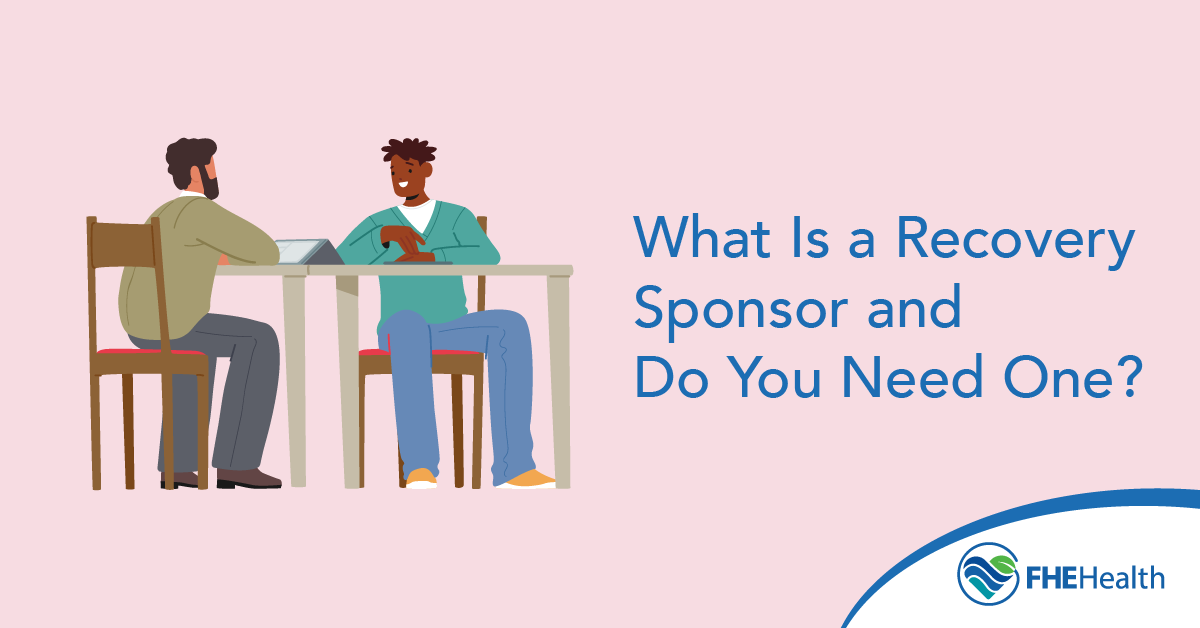
What Is a Recovery Sponsor and Do You Need One?

What Is a Recovery Sponsor and Do You Need One?

When you’re navigating the path to recovery from substance use disorder (SUD), you might hear people talking about getting a sponsor. But what does this mean, and is having a sponsor necessary for your journey? Understanding the role of sponsor in recovery programs can help you make informed decisions about your own healing process. Whether you’re just starting out or you’ve been in recovery for a while, getting answers to relevant questions about what a sponsor is can empower you to build the right support system for your needs. FHE is here to help you recover from addiction.

What Is a Sponsor in a 12-Step Recovery Program?

In mutual-help groups such as Alcoholics Anonymous (AA) and Narcotics Anonymous (NA), a sponsor is a volunteer who’s currently practicing the 12-step program of recovery. Their role is to help newer members by providing support, encouragement and guidance to promote sustained long-term recovery. Usually, an AA sponsor has worked through the steps and can share their experience and strength as you navigate your journey.

The relationship between you and your sponsor is unique. It’s not friendship, therapy or mentorship but rather a spiritual partnership focused on recovery. Your sponsor helps you work through the 12 steps, shares their personal experiences with addiction and recovery and is someone you can call when you’re struggling with cravings or facing sobriety challenges.

What Do Sponsors Do?

Understanding what a sponsor can and shouldn’t do can help set appropriate expectations for this relationship. AA literature details how the role of a sponsor is to share their experience in a 12-step program and:

  • Provide accountability and support in maintaining sobriety
  • Share their personal recovery story and coping strategies
  • Help you understand and work through the 12 steps
  • Offer guidance during difficult moments or cravings
  • Encourage meeting attendance and active participation
  • Serve as a sounding board for recovery-related challenges

What Shouldn’t Sponsors Do?

A sponsor shouldn’t claim to always be right or know all the answers, and they shouldn’t try to impose their personal views on you. They also shouldn’t make decisions for you or attempt to solve your problems. Sponsors aren’t trained professionals providing services or clinical treatment, so they won’t act as a therapist, legal advisor, banker, marriage counselor or social worker. They’re just other people in recovery who offer peer support based on their own experiences.

How Do You Know You’re Ready for a Sponsor?

There’s no universal timeline for when to get a sponsor, but many people in recovery find it helpful to seek one relatively early in their journey. According to research, less than half of participants (43.5%) reported having a sponsor when they first entered a 12-step program. However, the percentage remained relatively stable across a 9-month period, suggesting many people find sponsors as they progress.

You might be ready for a sponsor when you:

  • Have attended several meetings and feel committed to the program
  • Want guidance in working through the steps
  • Need additional accountability beyond meeting attendance
  • Feel comfortable opening up about your struggles
  • Have observed other sponsorship relationships and understand what to expect

When seeking a sponsor, you don’t need to have everything figured out before approaching someone. Many sponsors remember their own struggles early in recovery and are willing to help guide newcomers through similar challenges.

Are There Alternatives to Sponsorship in Non-12-Step Programs?

Not everyone resonates with the 12-step approach, which is OK. Several effective alternatives exist and don’t involve traditional sponsorship.

Self-Management and Recovery Training, or SMART, is a secular, science-based recovery program emphasizing self-empowerment rather than reliance on a higher power. Meetings are led by trained facilitators who guide participants through a four-point program focusing on building motivation, coping with urges, managing thoughts and behaviors and living a balanced life.

Other alternatives include LifeRing Secular Recovery, which offers sober, secular self-help with a focus on individual empowerment and Women for Sobriety, which provides a program specifically designed to meet the recovery needs of women.

These programs typically don’t include formal sponsorship relationships but do offer peer support through trained facilitators and fellow members. These programs tend to be less religious and may have different demographic characteristics, but participants can still achieve successful recovery outcomes.

Does Having a Sponsor Benefit Accountability and Growth?

The practical benefits of having a sponsor can make a real difference in your daily life. Knowing you can call someone at 2 a.m. to help you cope with cravings or temptations could save your life. A sponsor can help you stay accountable to your recovery goals, provide perspective when you’re struggling and celebrate your victories along the way.

Providing sponsorship also helps the sponsor. It offers psychological and social benefits, including increased self-awareness, psychological well-being, social competence and social approval. The reciprocal relationship of helping someone else also strengthens their own recovery, creating a cycle of mutual support and growth.

Is Having a Sponsor Right for Your Recovery Path?

Ultimately, the decision to work with a sponsor is deeply personal and depends on your individual needs, beliefs and recovery goals.

You might benefit from having a sponsor if you:

  • Respond well to structured guidance and accountability
  • Feel comfortable with the spiritual aspects of 12-step programs
  • Want someone with real-life experience to guide your journey
  • Appreciate one-on-one support in addition to group meetings
  • Are committed to working the 12 steps

An alternative may be a better choice if you:

  • Prefer a secular or science-based approach
  • Want to maintain more independence in your recovery
  • Feel uncomfortable with traditional sponsorship dynamics
  • Respond better to professional facilitation or peer support
  • Are exploring harm reduction rather than complete abstinence

Remember, your recovery path isn’t set in stone. Many people start with one approach and later incorporate elements from others. Some people work with sponsors while also participating in therapy or non-12-step programs. The key is finding what works for you and being willing to adjust your approach as your needs evolve.

Start Your Recovery Journey With Professional Support

While sponsors and peer support groups play valuable roles in recovery, they work best when combined with professional treatment. At FHE Health, we understand that everyone’s path to recovery is unique. Our comprehensive addiction treatment programs provide evidence-based care tailored to your individual needs, whether you’re seeking support for an SUD, a mental health challenge or a co-occurring condition. Contact us today to learn how we can help you build a strong foundation for lasting recovery.


Filed Under: Featured in Recovery, Life in Recovery

About Chris Foy

Chris Foy is a content manager and webmaster for FHE Health with years of experience in the addiction treatment industry...read more

Primary Sidebar

Learning Center

  • Help for You
  • Help For Loved Ones
  • Help For Alcoholism
  • Help With Substance Abuse
  • Behavioral & Mental Health
  • Life in Recovery
  • Rehab Explained
  • All Articles

Sign up for the Blog

Our Facilities

Take a look at our state of the art treatment center.

View Our Gallery

The Experience Blog

  • Addiction News
  • Alumni
  • Community Events
  • Expert Columns
  • FHE Commentary
  • FHE News
  • Treatment Legislation
  • All Articles

Footer

FHE Health

© 2026 FHE Health

505 S Federal Hwy #2,
Deerfield Beach, Florida 33441
1-833-596-3502
youtube facebook instagram linkedin twitter
  • Contact
  • Careers
  • AI Policy
  • Privacy Policy
  • Sitemap
A+ BBB and Top Places to Work - Sun Sentinel

Copyright © 2026 · FHE Theme On Genesis Framework · WordPress · Log in

Manage Consent
To provide the best experiences, we use technologies like cookies to store and/or access device information. Consenting to these technologies will allow us to process data such as browsing behavior or unique IDs on this site. Not consenting or withdrawing consent, may adversely affect certain features and functions.
Functional Always active
The technical storage or access is strictly necessary for the legitimate purpose of enabling the use of a specific service explicitly requested by the subscriber or user, or for the sole purpose of carrying out the transmission of a communication over an electronic communications network.
Preferences
The technical storage or access is necessary for the legitimate purpose of storing preferences that are not requested by the subscriber or user.
Statistics
The technical storage or access that is used exclusively for statistical purposes. The technical storage or access that is used exclusively for anonymous statistical purposes. Without a subpoena, voluntary compliance on the part of your Internet Service Provider, or additional records from a third party, information stored or retrieved for this purpose alone cannot usually be used to identify you.
Marketing
The technical storage or access is required to create user profiles to send advertising, or to track the user on a website or across several websites for similar marketing purposes.
  • Manage options
  • Manage services
  • Manage {vendor_count} vendors
  • Read more about these purposes
View preferences
  • {title}
  • {title}
  • {title}

The FHE Health team is committed to providing accurate information that adheres to the highest standards of writing. If one of our articles is marked with a ‘reviewed for accuracy and expertise’ badge, it indicates that one or more members of our team of doctors and clinicians have reviewed the article further to ensure accuracy. This is part of our ongoing commitment to ensure FHE Health is trusted as a leader in mental health and addiction care.

If there are any concerns about content we have published, please reach out to us at marketing@fhehealth.com.

833-596-3502

Text/Call Me