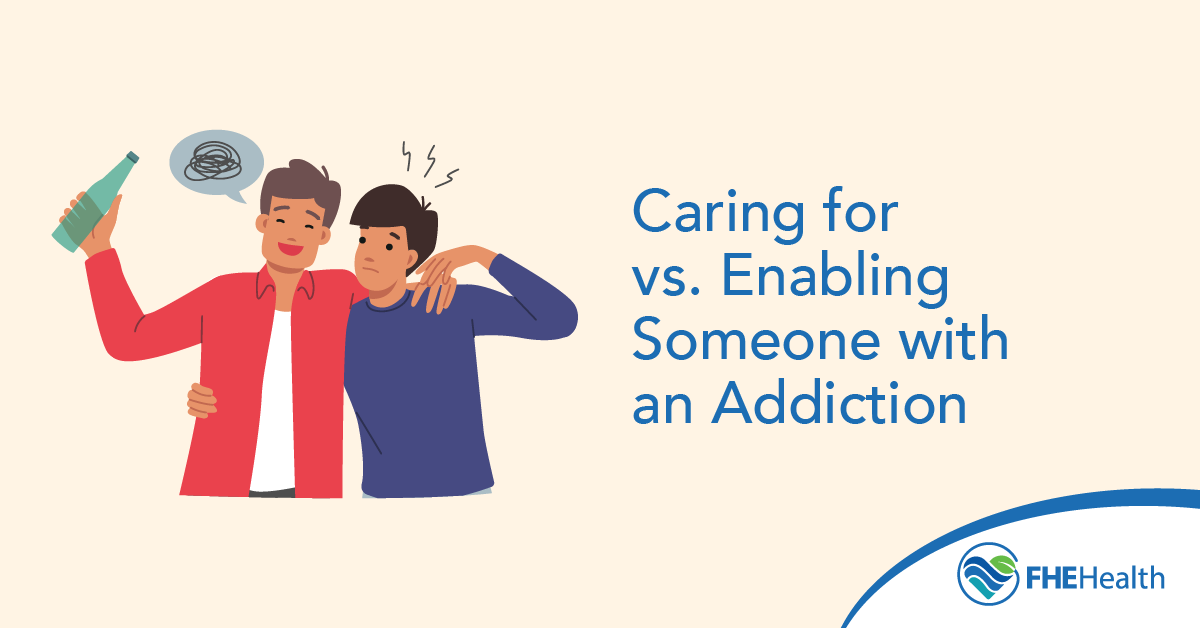
Addiction rarely affects just the person living with a substance use disorder. Loving someone who has a drug or alcohol addiction can be difficult. You may find yourself trying to ease their pain, solve all their problems or protect them from the consequences of their actions. But when substance use is involved, it can be hard to recognize what’s caring vs. enabling someone with addiction.
According to the Substance Abuse and Mental Health Services Administration (SAMHSA), 15.3% of Americans aged 12 and older had a substance use disorder in 2025.
What is enabling behavior, and how do you recognize it? How can you support your loved one without shielding them from the consequences of their behavior?
Caring vs. Enabling Someone With Addiction: What’s the Difference?
The main difference between caring for someone and enabling their behavior is whether your actions protect the person from the natural consequences of their addiction and behavior. For example, caring for someone may include offering emotional support and encouragement and helping them access resources for recovery. This could include providing contact information for substance use counselors or taking them to rehab.
Enabling, on the other hand, involves removing negative consequences. This could include lying to cover up the person’s behavior or absence at a family function, giving them money that will likely be used to fund their habit or even bailing them out of jail.
Enabling vs. Caring: Quick Comparison
Caring
- Providing essential supplies directly
- Helping arrange professional care
- Offering temporary help during treatment
- Speaking honestly and respectfully
- Setting reasonable expectations
Enabling
- Repeatedly giving cash that funds substance use
- Making excuses to avoid addressing addiction
- Consistently taking over their obligations
- Hiding harmful behavior to avoid conflict
- Repeatedly ignoring your own limits
Common Signs of Enabling Behavior
Here are some common ways people may enable a loved one dealing with substance use.
Overlooking Dishonest Behavior
It’s often easier to ignore when a loved one steals from you, but avoiding the issue means they don’t have to face any consequences or acknowledge that their behavior is wrong and harming your relationship.
Ignoring the Addiction
It can be uncomfortable and painful to talk about addiction and harmful behaviors, and you may worry about alienating your loved one. However, avoiding these conversations means the person doesn’t have to face the impact their addiction is having on those around them.
Taking Over Their Responsibilities
Covering bills or taking care of pets or children can feel like you’re just providing help and support, but over time, it can remove the ownership they feel over their own life and choices. When you repeatedly handle their responsibilities, they lose opportunities to manage their own affairs. The goal is to provide necessary support without permanently taking over duties your loved one can safely manage.
The Gray Zone Between Caring and Enabling
It’s not always easy to tell the difference between caring and enabling, especially during tough times. You might struggle with whether to protect someone you love or let them deal with the consequences of their actions.
Helping With Rent or Bills
If someone you care about is struggling with money, helping pay their rent can keep them housed. But if you keep covering their expenses while they spend money on substances, you might be making things worse. Instead of giving them money, agree to pay their important bills directly to the provider or landlord.
Providing Transportation
Driving someone to a treatment appointment is a good way to support their recovery. But if you often drive them to places where they get drugs or alcohol, you could be helping them stay in the same pattern.
Offering a Place to Stay
Nobody wants to worry that a loved one is sleeping somewhere unsafe or out in the elements, but offering them a place to stay without conditions can be a sign of enabling. Letting someone stay could be a good way to help them get back on their feet following treatment. But ignoring risky behavior just to avoid conflict can put everyone in your home at risk.
Set clear rules and let your loved one know what will happen if those rules aren’t followed. Most importantly, make sure you follow through.
Looking After Their Children
Keeping children safe from neglect should always come first. But if you keep covering for a parent’s substance use without dealing with the real problem, unsafe situations can continue. Make sure the children are safe right now, and encourage the parent to get professional help.
No solution works for every family. When you’re deciding what to do, think about whether your actions help keep people safe and support recovery or if you’re unwittingly allowing the harmful behavior to continue. A counselor can help you work through these tough choices.
Safety Isn’t Enabling: Keep Naloxone, Know Overdose Signs
If your loved one uses opioids, keeping naloxone available can help prevent a fatal overdose. Naloxone temporarily reverses the effects of opioids and gives emergency responders time to provide medical care.
According to the Centers for Disease Control and Prevention (CDC), slow breathing and being unresponsive are the main signs of an opioid overdose. Gurgling sounds can also indicate an emergency.
If you think someone is experiencing an overdose, call 911 right away and give them naloxone if you have it. Follow the instructions from the emergency dispatcher, and stay with the person until help arrives.
Helping in an emergency doesn’t enable substance use. It gives the person a chance to survive and find hope for recovery.
Need Help?
Treatment can begin quickly and discreetly, get started now
Am I Enabling My Loved One?
If you’re unsure whether your actions are helpful, ask yourself these five questions.
- Do I regularly make excuses for my loved one’s substance use?
- Am I giving more financial help than I can afford?
- Do I avoid setting boundaries because I fear their reaction?
- Have I repeatedly taken over responsibilities they can safely manage?
- Is supporting them beginning to harm my own well-being?
Answering yes doesn’t necessarily mean you’re enabling addiction. However, it suggests you should review your boundaries and consider seeking support.
How to Support Someone Without Shielding Them From Consequences
It’s not easy to establish and hold to boundaries when someone you love has a substance use disorder. A good first step is often to have an open, honest conversation with your loved one about how their behavior is affecting you and others. It can also help to directly tell them what support you’re willing to offer and what you’ll no longer do. For example, you may be willing to give them a place to stay as long as they’re pursuing outpatient treatment but not be willing to give them any money.
When your loved one begins facing the consequences of their behavior, you may find sticking to your boundaries difficult. It’s perfectly understandable to not want to see your loved one in pain. Remember, it’s not your job to fix every challenge they face. Instead, offer practical support that inspires growth while letting them own their choices.
Tips for Setting Healthy Boundaries
When you’re deciding what boundaries you’ll set, the following considerations can be helpful to keep in mind.
- Think about your own well-being. The point of boundaries is to protect your own physical and mental health, which means identifying what you can handle or how you can help without sacrificing yourself.
- Consider putting it in writing. Writing out your boundaries can help you solidify them and give you something clear to refer back to if the conversation becomes difficult.
- Be prepared for pushback. There’s often a long, sometimes multigenerational history of enabling in families where addiction is present, and many people have learned that boundaries don’t have to be respected. Be prepared for your loved one to try to pressure or guilt you, be angry with you or promise “it will never happen again” if you give in.
- Seek support. Addiction affects everyone in the family, and it can be helpful to create your own support system, whether that’s through individual counseling, Al-Anon or a similar program or a close circle of friends.
How to Communicate Your Boundaries
It can feel uncomfortable to set boundaries, especially if your loved one is likely to react with anger. Planning what you want to say ahead of time can help you stay calm. Here’s an example of how you could start the difficult conversation:
“I love you and want to support your recovery. I’m willing to help you find treatment and take you to appointments. I won’t give you money if I’m worried it will be used for alcohol or drugs. I also won’t lie to protect you from the consequences of your drinking or drug use. These boundaries aren’t meant to punish you. They’re here to protect our relationship and help you take responsibility for your recovery.”
When you set boundaries, focus on what you can do, not on trying to control someone else. Make sure you can stick to the expectations you set.
Family Support Options
Many family members find they need support to be able to encourage a loved one to seek treatment without enabling their addiction. Support groups are often a vital source of self-care, strength, wisdom and community.
Several organizations guide families affected by addiction. You don’t have to wait until your loved one enters treatment to get help for yourself. Our team offers family support resources, including educational guidance and opportunities for family involvement during treatment.
You can find additional support in Al-Anon, which offers peer support for people affected by someone else’s drinking. Nar-Anon provides similar support for families dealing with drug addiction. SMART Recovery Family & Friends uses practical strategies to improve communication and help relatives establish healthy boundaries.
Another approach is Community Reinforcement and Family Training (CRAFT). It teaches family members how to encourage treatment through positive communication rather than confrontation.
Encouraging Treatment and Self-Responsibility
One of the best ways you can support a loved one struggling with addiction is to keep encouraging them to take responsibility for their situation and actions and to seek treatment. When your loved one expresses concern about their substance use, offer to help them find professional treatment. Approach the conversation calmly and focus on the improvements recovery can bring.
Remember that you can’t force someone into treatment or do the work for them. You can’t control their decision to seek help, but you can keep treatment options available and encourage positive changes.
Need Help?
Treatment can begin quickly and discreetly, get started now
Frequently Asked Questions
Support for Families Affected by Addiction
Supporting someone through addiction can be difficult, but you don’t have to manage everything alone. FHE Health offers addiction treatment and family support services to help loved ones understand the recovery process. Contact FHE Health today to discuss your options.