When you’re working through addiction or a mental health condition, you deserve care that goes beyond your symptoms. Emotional health, physical well-being, relationships and daily routines all shape recovery. At FHE Health in Deerfield Beach, holistic rehab brings these needs into your care alongside medical support and therapy.
Our holistic services complement clinical care by offering practical tools to manage stress, process emotions and build healthier habits. Depending on your treatment plan, these services include acupuncture, breathwork therapy, expressive arts, fitness, nutrition support, yoga and mindfulness.
What Is Holistic Rehab?
Holistic rehab is an approach to addiction and mental health treatment that aims to treat the whole person, hence the name holistic. It pairs evidence-based therapies with practices that support your physical, emotional and spiritual well-being.
Holistic care doesn’t replace traditional treatment. Therapy, psychiatric care and medical support remain the foundation, and holistic services give you additional ways to manage stress, reconnect with your body and build habits you can keep after treatment. The goal is to take what works from a variety of approaches and bring them together in one plan.
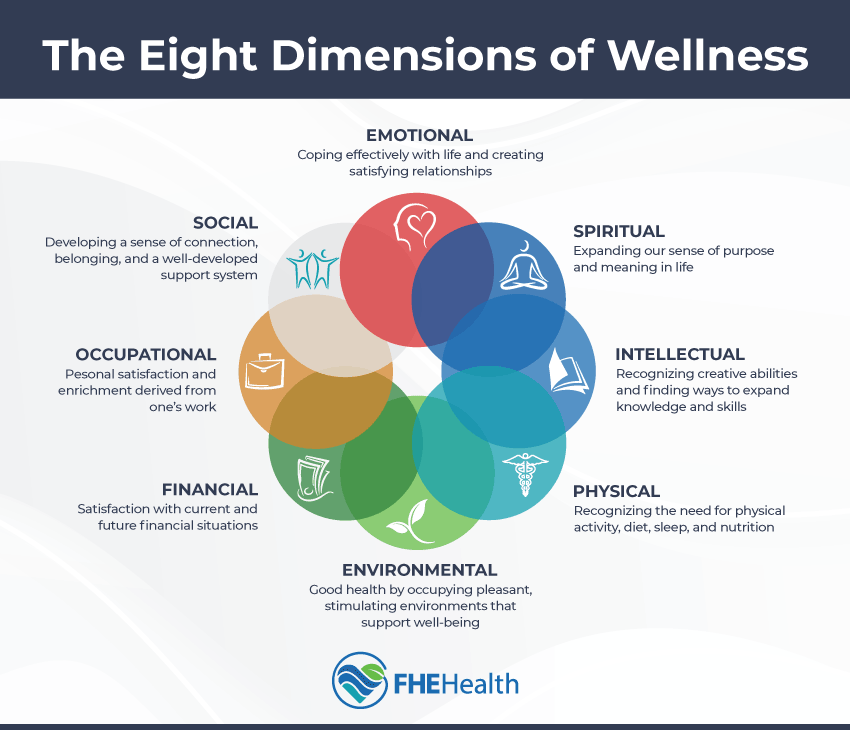
Recovery touches every part of life. The dimensions of wellness below show how physical, emotional, social, spiritual and other areas of well-being connect, and why caring for each one can support lasting recovery.
Treating the Whole Person
Addiction and mental health conditions affect daily life, routines, relationships and emotional well-being. We tailor treatment plans to your history, challenges and recovery goals.
Care focuses on identifying emotional triggers, developing healthy stress responses, rebuilding self-confidence, improving relationship boundaries and creating sustainable daily structure. We’ll talk with you about which areas need attention and how clinical treatment and wellness activities can work together to support you.
Mind, Body and Spirit: What Holistic Care Looks Like in Treatment
Holistic care can look different for each person. You may benefit from approaches that help you manage stress, explore your emotions or pay closer attention to your physical well-being. We’ll explain the services recommended for you and how they fit into your treatment.
Treating the Mind
 Holistic care builds on proven therapies that help you understand your thoughts and emotions. Cognitive behavioral therapy (CBT) helps you identify thought patterns that drive substance use or distress and restructure them into healthier ways of coping. DBT-informed therapy focuses on managing intense emotions and handling difficult situations without falling back on harmful behaviors.
Mind-focused services may include:
- Expressive arts therapy: Creative activities such as art, writing and poetry offer additional ways to explore emotions and express experiences that may be difficult to put into words. Personal reflection matters more than artistic skill.
- Group therapy: Sharing experiences with peers helps you practice new coping skills and build connection.
Treating the Body
 Addiction and mental health conditions take a physical toll, and caring for your body is part of recovery. Physical wellness services help you rebuild routines, release stress and reconnect with how you feel.
Body-focused services may include:
- Acupuncture: This practice uses fine needles at specific points on the body. We offer it as a complementary service within your broader care plan.
- Breathwork therapy: Guided breathing exercises help you become more aware of your breathing, physical sensations and stress responses.
- Fitness and nutrition support: Movement and exercise help you build healthier routines, and nutrition education helps you make informed choices about eating habits and physical health. Our fitness instructors can help you find activities suited to your needs.
- Yoga: Breathing and stretching practices offer physical and mental health benefits you can continue on your own after treatment.
Treating the Spirit
 Spiritual wellness is also part of holistic care. Spirituality in recovery doesn’t require a particular religion or belief in God. Instead, it’s about developing a deeper understanding of yourself, finding meaning and feeling connected to something larger than your day-to-day struggles. Learn more about what spirituality means in rehab.
At FHE Health, spiritual wellness is supported through meditation, mindfulness and yoga. These practices help you slow down, notice how you’re feeling and stay present, skills that can make cravings and stress easier to manage.
These services work alongside individual therapy, group therapy, psychiatric care and other treatments included in your plan. For a closer look at how these practices support healing, read about holistic healing in recovery.
Wellness Activities and Daily Life Skills
Long-term recovery involves practicing healthier habits beyond clinical sessions. Our wellness center gives you space to exercise, participate in yoga and explore activities you can continue after treatment.
You can also build practical skills to navigate life after treatment. Depending on your needs, this may include learning to set boundaries, communicate more effectively, recognize stress triggers or find alternatives to familiar but harmful coping behaviors.
For example, if you tend to turn to substances when life feels overwhelming, you can work on recognizing the signs of stress earlier and finding other ways to respond. If you’ve become isolated, you can begin exploring how to rebuild supportive relationships. If your daily routine has become unpredictable, you can work toward habits that give your day more structure.
These changes take practice. We’ll help you identify realistic goals and develop strategies you can continue using at home.
How Holistic Care Supports Recovery
When you’re working toward recovery, you may face several challenges at once. You might be learning to manage cravings, processing painful experiences, rebuilding relationships or learning how to handle stress without returning to old patterns.
Holistic care gives you additional ways to practice these skills alongside your primary treatment:
- Manage stress: Breathing exercises, mindfulness and coping skills practice give you more options when you’re feeling overwhelmed.
- Understand your emotions: Creative expression offers another way to recognize your feelings, explore patterns and communicate what you’re experiencing.
- Build healthier routines: Movement and nutrition support help you form habits that support your well-being.
- Recognize your needs: Paying attention to physical and emotional signals helps you notice when you need rest, nourishment, connection or support.
You don’t have to make every change at once. We’ll help you find useful practices and build on them throughout treatment.



Holistic and Traditional Treatment Work Together
Holistic services are most effective as part of a complete treatment plan. Someone early in recovery may first need medically supervised detox or medication-assisted treatment to safely manage withdrawal. Once you’re medically stable, talk therapy, life skills work and holistic practices can be combined into a comprehensive approach that supports lasting recovery.
Holistic care isn’t the right fit for everyone, and that’s okay. If yoga or acupuncture doesn’t appeal to you, your treatment can focus on the clinical approaches that do. What matters most is getting the care you need. Our team will help you build a plan that fits you at every stage of the continuum of care.
What Makes Holistic Treatment Different at FHE Health?
Our wellness services are part of a larger treatment setting where medical care, therapy and specialized services work together. You have access to those resources within a treatment community focused on your needs.
- Wellness and medical care connected. Our physicians, psychiatrists, nurses and therapists coordinate your care. Your health needs and treatment recommendations help guide the wellness activities included in your plan.
- An on-site wellness center with fitness guidance. Our on-campus gym, yoga classes and fitness instructors give you opportunities to build physical wellness into your day. We help you develop exercise routines suited to your needs that you can continue after treatment.
- Additional support through neuroscience-based services. Alongside therapy and wellness activities, we offer brain mapping and specialized NeuroRehab services, including neurofeedback and TMS. Our team considers these options based on your clinical needs.
- Specialized treatment communities. Our programs include Compass for men with substance use disorders, Empower! for women, Restore for primary mental health treatment, Shatterproof FHE Health for First Responders and Shatterproof Military & Veterans for those who served. Within these communities, we bring clinical treatment and whole-person support together.