
Some forms of mental illness, like anxiety and depression, are extremely common and affect a large portion of the population at one point in life. Others, however, are less prevalent. Borderline personality disorder is a serious mental health challenge that affects around 1.4% of the American population.
Due to the relative rarity of borderline personality disorder, or BPD, many of those affected may not see the signs and symptoms right away. Loved ones may notice a trend in behavior changes but may not realize that BPD is associated. As such, understanding the realities of BPD can be very important for those who live with this disorder on a daily basis.
Like many mental illnesses, BPD can be treated in a way that reduces side effects and minimizes the ramifications of everyday life. This is what you need to know about BPD.
What Is Borderline Personality Disorder (BPD)?
Borderline personality disorder is a mental health illness that is characterized by variable behavior, including symptoms of other conditions like anxiety, depression and anger. In general, this condition is primarily defined by the inability to regulate emotions, leading to what some people consider to be extreme reactions to everyday situations, like furious crying in the workplace in response to a minor problem that can be easily resolved or fighting with a significant other over something minor, like who will go grocery shopping.
Due to the irregularity in emotional responses, diagnosing BPD can be a challenging endeavor. As such, many people live with BPD for years or, in worst-case scenarios, decades without so much as speaking to a psychologist.
What Are the Symptoms of BPD?
Borderline personality disorder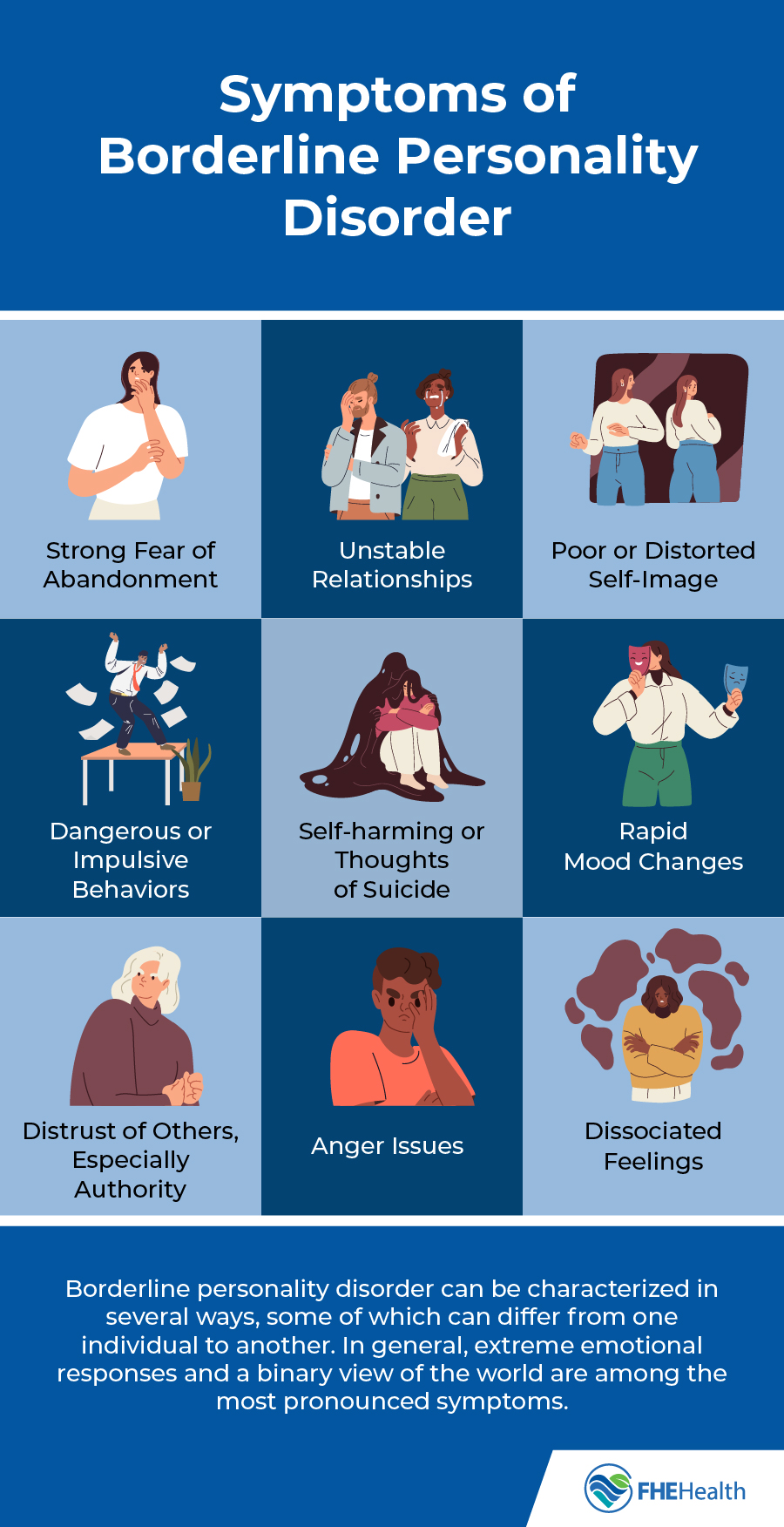 can be characterized in several ways, some of which can differ from one individual to another. In general, extreme emotional responses and a binary view of the world are among the most pronounced BPD symptoms. Those affected will see things in black and white, as good or bad, without significant room for gray space. This means that something mildly positive, like a good conversation with a friend, can lead to elation, while a bad grade on a test can cause a depressive episode.
Emotions can change quickly as well; someone can be a friend one day and a hated enemy the next. Interests can also fluctuate, with an idea or activity serving as an excessive focal point or object of obsession for a period of time, only to be quickly replaced by a period of deep disinterest.
Other Common Symptoms
Other common symptoms of borderline personality disorder include:
- A strong fear of abandonment, either real or imagined, and strong efforts to prevent abandonment from coming to fruition
- Unstable relationships with family or loved ones dominated by periods of bliss followed by anger and fighting
- A poor or distorted self-image
- Dangerous or impulsive behaviors, like drug use, picking fights, having unprotected sex, quitting stable jobs, binge eating and driving recklessly
- Rapid fluctuation of moods, including a regular cycle of anger and happiness that shifts every few days to every few hours
- Self-harming activities, like drug abuse, heavy drinking and cutting
- Thoughts of suicide
- Challenges trusting others
- Trouble controlling feelings of anger
- Distrust of authority and problems adhering to rules and guidelines
- Dissociated feelings
What Are Some Early Signs of BDP?
For those who develop BPD, intense emotions are often a primary indicator. This can mean feelings of anger or sadness at times when extreme responses aren’t appropriate — or even elevated levels of paranoia or jealousy during benign interactions.
In the first stages of BPD, those experiencing variable emotions may realize that something is wrong but are unable to do anything about it. They may feel helpless, watching these kinds of ideas or feelings control them without being able to stop the process.
Other initial signs of borderline personality disorder may include problems with relationships, like trouble maintaining friendships or romantic partnerships.
What Are the Challenges of a BDP Diagnosis?
Borderline personality disorder resembles bits and pieces of other conditions, like general anxiety disorder and major depressive disorder. This can make diagnosis challenging; for some of those living with BPD, previous diagnoses can include depression and anxiety before the full range of symptoms is fully evident. Some other personality disorders, like bipolar disorder, also cross over with BPD, leading to either dual diagnoses or incorrect diagnoses.
For some people who feel they exhibit BPD symptoms, speaking with a professional can clarify a situation. A trained psychologist or psychiatrist will use signs, symptoms and circumstances to come to a conclusion regarding diagnosis, including whether borderline personality disorder is appropriate. It is not uncommon to see dual diagnoses with these kinds of disorders; many people with BPD are also depressed or live with anxiety.
Due to the nature of borderline personality disorder and its overlaps with other forms of mental illness, self-diagnosis is strongly discouraged. Those who feel as though BPD is an appropriate diagnosis due to behavioral traits and thoughts should see a specialist to determine the best course of diagnosis and treatment.
What Are The Different Kinds of Borderline Personality Disorder?
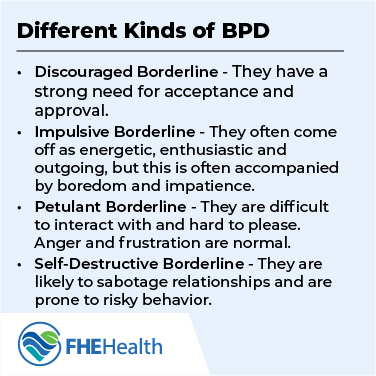 There are several different kinds of borderline personality disorder that can affect individuals. These include:
Discouraged Borderline
Discouraged borderline is characterized by behavior that may otherwise be classified as needy or dependent. These individuals have a strong need for acceptance and approval but often feel inadequate or inferior, leading to anger and resentment. Self-harm is common in this subtype of BPD.
Impulsive Borderline
Those with impulsive BPD often come off as energetic, enthusiastic and outgoing, making friends with people and projecting a positive outward appearance. However, this is often accompanied by boredom and impatience, particularly when social situations cannot be adequately controlled. When not the center of attention, those with impulsive borderline personality disorder are likely to engage in risky behaviors, like drug abuse or unprotected sex.
Petulant Borderline
Those with petulant BPD are difficult to interact with and hard to please. Anger and frustration are normal, as are irrational emotional outbursts and impatience when dealing with people in normal social situations. These individuals have trouble admitting that they are wrong and favor passive-aggressive actions to display feelings.
Self-Destructive Borderline
Those who are self-destructive are, in many ways, their own worst enemies. They are likely to sabotage family relationships, romantic relationships and friendships. These individuals are prone to risky or dangerous behaviors, acting with little regard for the potential ramifications. These symptoms of borderline personality disorder are associated with a lack of control; when coupled with a dependency on other people and a fear of abandonment, strong, irrational feelings often lead to improper activities, like risky sex.
What Causes Borderline Personality Disorder?
Like many mental illnesses, the causes of BPD are not always clear. Numerous factors can influence the diagnosis of any mental health disorder, from circumstantial situations to genetics. While there is no true consensus, many doctors recognize the major contributing components:
- Genetics: While there is no one true genetic profile that can indicate a predisposition to a diagnosis of BPD, research indicates that those who have a family member with BPD are at greater risk of developing the condition themselves.
- Traumatic histories: Diagnosis of numerous mental health disorders, like depression and PTSD, can be directly influenced by prior experiences. Things like acts of violence, sexual abuse, physical abuse and witnessing traumatic events, like the murder of a parent, can all play into the development of mental illness later in life. A diagnosis of borderline personality disorder can be more common in those who witnessed or endured traumatic events as a child, teen or young adult.
- Brain functioning: As with other forms of mental illness, there may be neurological factors that play a part in the development of BPD. As varying areas of the brain participate in the regulation of emotions, some doctors believe that issues in how signals are interpreted and processed are correlated with the development of BPD.
BPD may be something you develop over the course of your life, but it can also be something to which you are genetically predisposed.
How Do You Treat Borderline Personality Disorder?
As BPD manifests differently in each patient, diagnosis and treatment for borderline personality disorder aren’t always easy. Due to the overlap with other mental health issues, many individuals will see a wide variety of doctors or try a number of courses of care before finding something that works.
There is no one medication that can treat BPD, but medications that are effective against similar disorders, like anxiety and depression, can be effective. Therapy is also a wonderful way to temper BPD symptoms, helping individuals to learn more about signs of BPD, common responses to situations and emotional regulation.
Get the Support You Need for Borderline Personality Disorder
If you or someone you love lives with borderline personality disorder, FHE Health is here to help. Contact us today to learn more.