
Overthinking and catastrophizing are common patterns that affect millions of people. Things that start as minor interactions can snowball into full-blown disaster scenarios in your mind if you’re an overthinker. Before you know it, you can go from something like saying a simple “Good morning” to your boss to a complete catastrophe very quickly.
The good news? You can learn to stop overanalyzing situations and take back control of your thoughts.
What Is Overthinking and Catastrophizing?
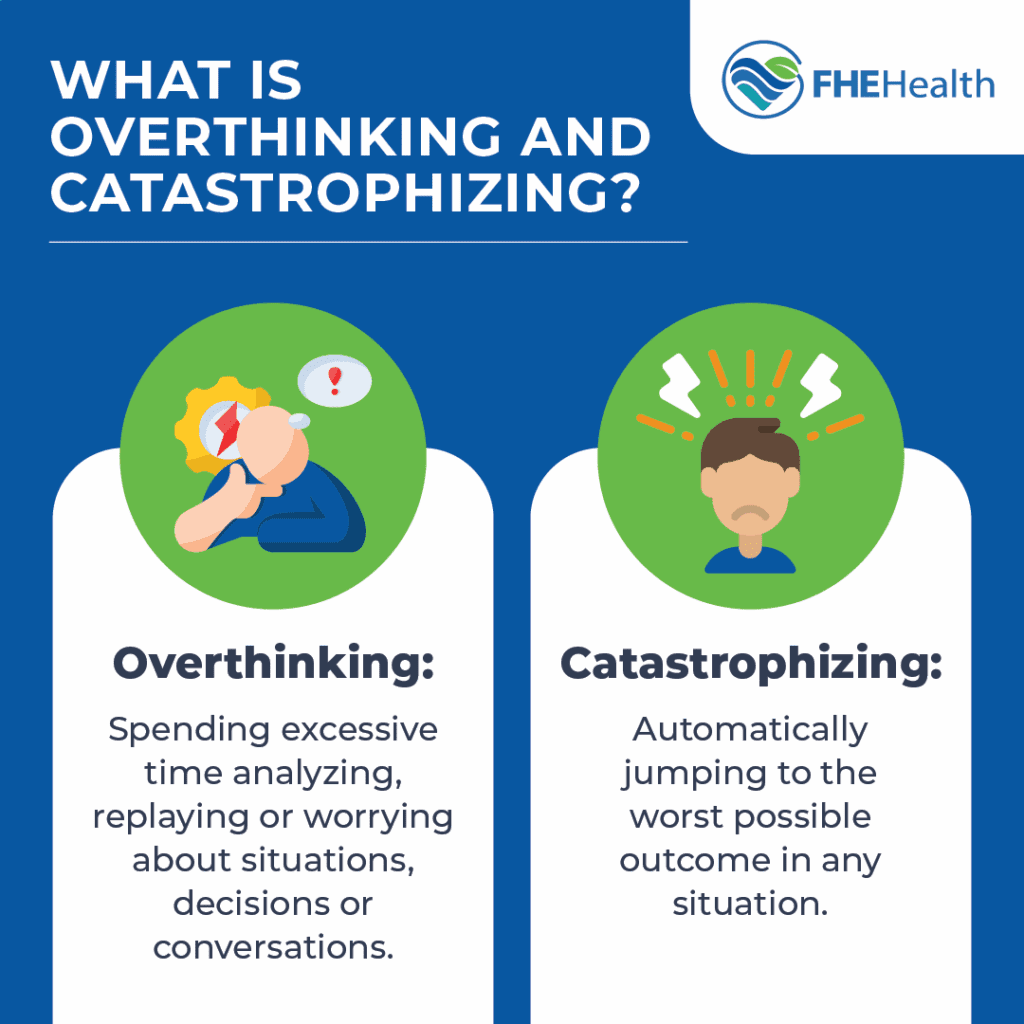 Overthinking is when you spend excessive time analyzing, replaying or worrying about situations, decisions or conversations. Your mind gets stuck in a loop, examining every detail until you’re mentally exhausted.
Catastrophizing is a specific type of overthinking. It’s when you automatically jump to the worst possible outcome in any situation. This is a cognitive distortion — an inaccurate way of processing information that reinforces negative thought patterns.
For example, if your friend doesn’t text you back right away, catastrophizing might lead you to think they’re angry with you or planning to end the friendship or that something terrible has happened to them. In reality, they might just be busy or have forgotten to respond.
These patterns often go hand in hand. When you’re overthinking, you’re more likely to catastrophize. And when you catastrophize, you give yourself even more to overthink about.
Why the Brain Defaults to Worst-Case Scenarios
Your brain isn’t trying to torture you. It’s actually trying to protect you.
From an evolutionary perspective, those who anticipated danger and planned for the worst were more likely to survive. If they heard a rustling in the bushes and assumed it was a predator, they lived to see another day. Those who assumed everything was fine might become lunch.
The problem today is that modern life rarely involves life-or-death situations. Your brain can’t tell the difference between a real threat and a perceived one, though, so it treats an unanswered email the same way it would treat a predator in the bushes.
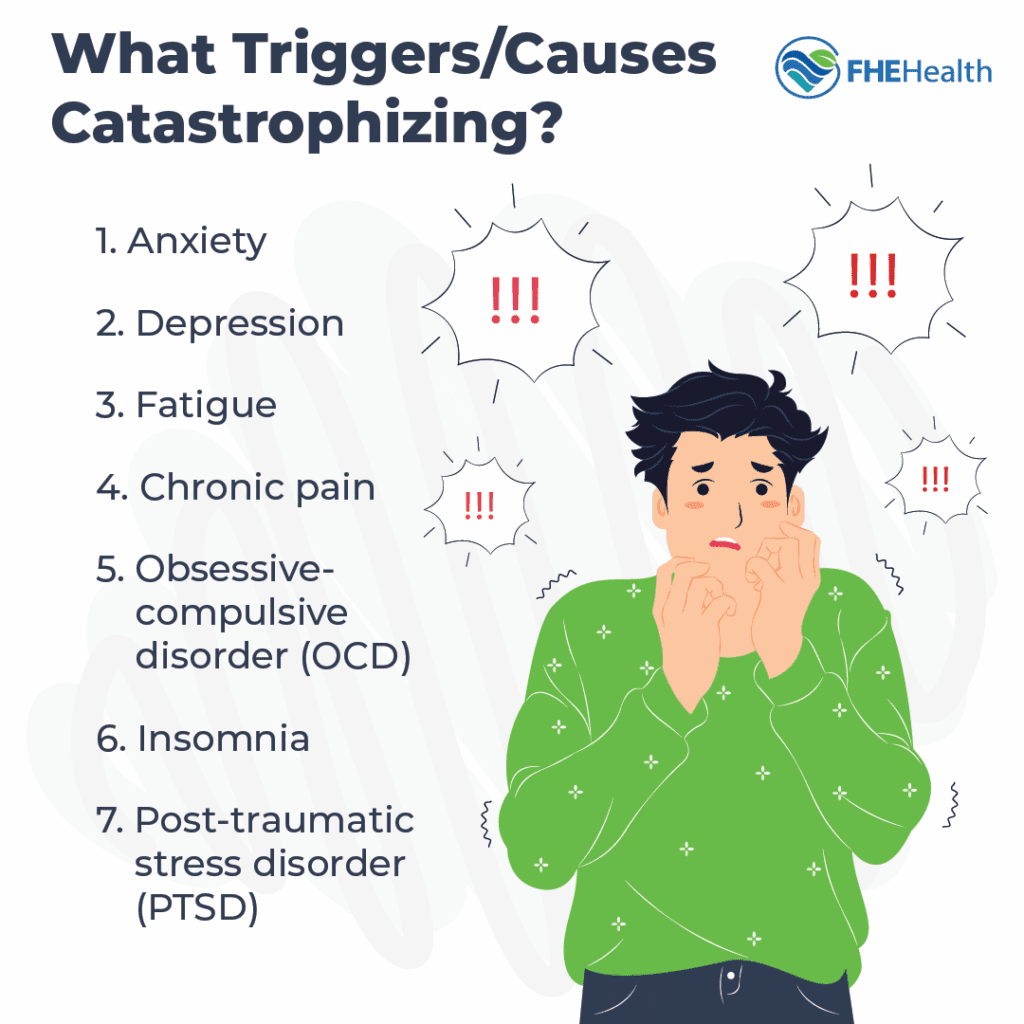
Certain factors, like past trauma, anxiety disorders, depression and chronic stress, can all increase the likelihood of falling into these patterns. If you grew up in an unstable environment, your brain may have learned to constantly scan for danger as a survival mechanism.
How These Patterns Fuel Anxiety and Stress
When you catastrophize, your body responds as if the imagined threat is real. Your heart rate increases, your muscles tense and stress hormones flood your system.
This physical response then reinforces the anxious thoughts. This creates more catastrophizing thoughts, which create more physical anxiety symptoms, and the cycle continues.
Over time, this pattern can lead to chronic stress and anxiety disorders. Repetitive negative thinking is associated with an increased risk of becoming one of the 55 million people with mental health conditions from age-related causes.
These patterns affect your daily life in other ways, too. Overthinking can lead to decision paralysis, where you’re so worried about making the wrong choice that you can’t make any choice at all. It can damage relationships when you constantly seek reassurance or misinterpret others’ actions. And it’s exhausting, leaving you mentally drained with little energy for things you actually enjoy.
Cognitive Techniques to Challenge and Reframe Thoughts
The first step to stop overthinking is recognizing when you’re doing it. Pay attention to your thought patterns. Once you’ve identified the pattern, try these cognitive techniques:
- Question the evidence. Ask yourself what actual evidence supports your catastrophizing thoughts. Often you’ll find little to no evidence for your worst-case scenario.
- Consider alternative explanations. For every catastrophic interpretation, come up with at least two other possible explanations. These are usually more likely than your catastrophic assumption.
- Use 10-10-10 framework. Ask yourself: Will this matter in 10 minutes? 10 months? 10 years? This helps put situations in perspective and prevents you from catastrophizing over minor issues.
- Challenge cognitive distortions. Learn to recognize common distortions like all-or-nothing thinking, overgeneralization and jumping to conclusions. When you catch yourself using these patterns, reframe the thought more accurately.
- Set a “worry time.” Instead of trying to suppress overthinking entirely, schedule 15 minutes a day to worry. When catastrophizing thoughts come up outside that time, remind yourself you’ll address them during your designated worry period.
Mindfulness and Grounding Strategies for Staying Present
Overthinking pulls you out of the present moment and into imagined futures or past events. Mindfulness brings you back to now.
Try the 5-4-3-2-1 grounding technique when you notice yourself spiraling. Identify five things you can see, four things you can touch, three things you can hear, two things you can smell and one thing you can taste. This anchors you in the present moment and interrupts the overthinking cycle.
Breathing exercises are another powerful tool. Try box breathing: Breathe in for four counts, hold for four counts, exhale for four counts and hold for four counts. Repeat several times. This activates your parasympathetic nervous system and calms your body’s stress response.
Regular mindfulness meditation can help you develop a different relationship with your thoughts. Instead of getting caught up in every thought, you learn to observe them without judgment. Even just 5 minutes a day can make a difference.
Physical activity also helps. Exercise releases endorphins and gives your mind something to focus on besides catastrophizing thoughts. A walk, yoga session or quick workout can interrupt overthinking patterns.

When to Seek Help for Intrusive or Racing Thoughts
Sometimes self-help strategies aren’t enough. If your overthinking and catastrophizing are interfering with your daily life, it may be time to seek professional help.
Consider reaching out if you’re experiencing persistent racing thoughts that won’t quiet down, losing sleep due to worry, avoiding activities or decisions because of anxiety or noticing that friends and family have expressed concern about your anxiety levels.
Therapy can be incredibly effective for addressing these patterns. Cognitive behavioral therapy specifically targets the connection between thoughts, feelings and behaviors. A therapist can help you identify your specific cognitive distortions and develop personalized strategies to challenge them.
In some cases, catastrophizing and overthinking may be symptoms of an underlying mental health condition like generalized anxiety disorder, obsessive-compulsive disorder or depression. A mental health professional can provide an accurate diagnosis and recommend appropriate treatment, which might include therapy, medication or both.
Take the First Step Toward Peace of Mind
If you find yourself unable to stop overthinking despite trying these techniques or catastrophizing thoughts are controlling your life, professional help is available. At FHE Health, our compassionate team understands how exhausting it is to live with racing thoughts and constant worry. We offer evidence-based treatment programs designed to help you break free from these patterns and rediscover peace of mind. Contact us to learn more about how we can support your journey toward better mental health.