
• Skip to primary navigation
  • Skip to main content
  • Skip to primary sidebar
  • Skip to footer

FHE Health | Inpatient Rehab & Mental Health Facility in Florida Homepage

Drug, Alcohol and Mental Health Treatment

ContactCareers

Call for Immediate Help (833) 596-3502

  • About
        • About FHE Rehab
          • About FHE Health
          • Our Staff
          • Locations We Serve
          • Testimonials
        • Our Campus
          • Gallery
          • Our Videos
          • The Health and Wellness Center at FHE Health
        • Our Locations
          • Alcohol Rehab
          • Detox Center
          • Drug Rehab
          • Mental Health Center
          • Outpatient Rehab
        • Careers at FHE Health
          • Employment Opportunities
        • Our Expertise
          • Accreditations
          • Educational Opportunities
          • Community Impact Award
          • First Responder Families Podcast
          • First Responder Paws
          • Education Scholarship
  • Addiction
        • Treatment Programs
          • Treatment Program Overview
          • Alcohol Addiction
          • Drug Addiction Treatment
          • Behavioral Addiction
        • Levels of Care
          • Continuum of Care
          • Addiction Detox
          • Inpatient Addiction Treatment
          • Outpatient Addiction Treatment
        • What We Treat
          • Alcoholism
          • Amphetamines
          • Benzodiazepines
          • Cocaine
          • Heroin
          • Opioids
          • Sedative
  • Mental Health
        • Mental Health Rehab
          • Mental Health Rehab
          • Onsite Psychiatric Care
          • Dual Diagnosis
        • Levels of Care
          • Residential Mental Health Care
          • Outpatient Mental Health Care
        • What We Treat
          • ADD & ADHD
          • Anxiety Disorders
          • Bipolar Disorder
          • Depression
          • Eating Disorders
          • Personality Disorders
          • PTSD
          • Schizophrenia
          • Substance Use Disorder
          • Trauma
  • Programs
        • FHE Programs
          • Specialty Program Overview
          • Restore (Mental Health)
          • Empower! (Women's Program)
          • Shatterproof FHE Health(First Responders)
          • Compass Program
        • Support Programs
          • Alumni
          • Family Support
        • Therapies
          • Acupuncture
          • Breathwork Therapy
          • CBT (Cognitive Behavioral Therapy)
          • DBT (Dialectical Behavioral Therapy)
          • EMDR Therapy
          • Expressive Arts Therapy
          • Individual Therapy
          • Group Therapy
          • Gambling Therapy
        • Medical Care
          • Medical Integration
          • Ketamine Infusion
          • IV Vitamin
          • Fitness & Nutrition
          • Medication-Assisted Treatment Program
          • Medication Management
        • NeuroRehab Services
          • Neuro Rehabilitation
          • Neurofeedback Training
          • Neurostimulation Therapy
          • EEG Brain Mapping
          • Insomnia Treatment for PTSD
  • Resources
        • FHE Guides
          • Understanding Drug Abuse
          • Signs of Addiction
          • The Disease of Addiction
          • Confronting Addiction
          • Staging an Intervention
          • Rehab Success Rate – Does It Really Work?
          • Withdrawal Timelines
          • Life After Rehab
          • LGBTQ+ Community Resources
          • Veteran Resources
          • FHE Podcasts
          • Remote Resources Toolkit
        • Learning Center
          • Help for You
          • Help For Loved Ones
          • Help For Alcoholism
          • Help With Substance Abuse
          • Behavioral & Mental Health
          • Life in Recovery
          • Rehab Explained
          • Addiction Statistics
          • Our Research Articles
          • View All Articles
        • The Experience Blog
          • Addiction News
          • Alumni
          • Community Events
          • Expert Opinions
          • FHE Commentary
          • FHE News
          • Treatment Legislation
          • View All Articles
  • Admissions
        • Insurance
          • Blue Cross Insurance
          • Beacon Health / Value Options Insurance
          • Cigna Insurance
          • Humana Insurance
          • TRICARE Insurance
        • Admissions
          • Steps to Addiction Help
          • Will Insurance Cover Behavioral Treatment?
          • Self-Pay Rehab
        • FAQ
          • Keeping Your Job in Rehab
          • Example Day in Rehab
        • Contact Admissions
          • Contact Us
          • Secure Payment Form
  • Contact
  •  
Home > Learning > Drug Addiction > HHC vs THC: Understanding the Difference

By: Chris Foy | Last Updated: December 4, 2025

HHC vs THC: Understanding the Difference

HHC vs THC: Understanding the Difference

The cannabis market continues to expand, with new products emerging regularly. Among these are hexahydrocannabinol or HHC, which has gained attention as an alternative to traditional tetrahydrocannabinol or THC products. Understanding the differences between HHC vs. THC helps consumers make informed decisions about their use and potential risks.

What’s HHC vs. THC?

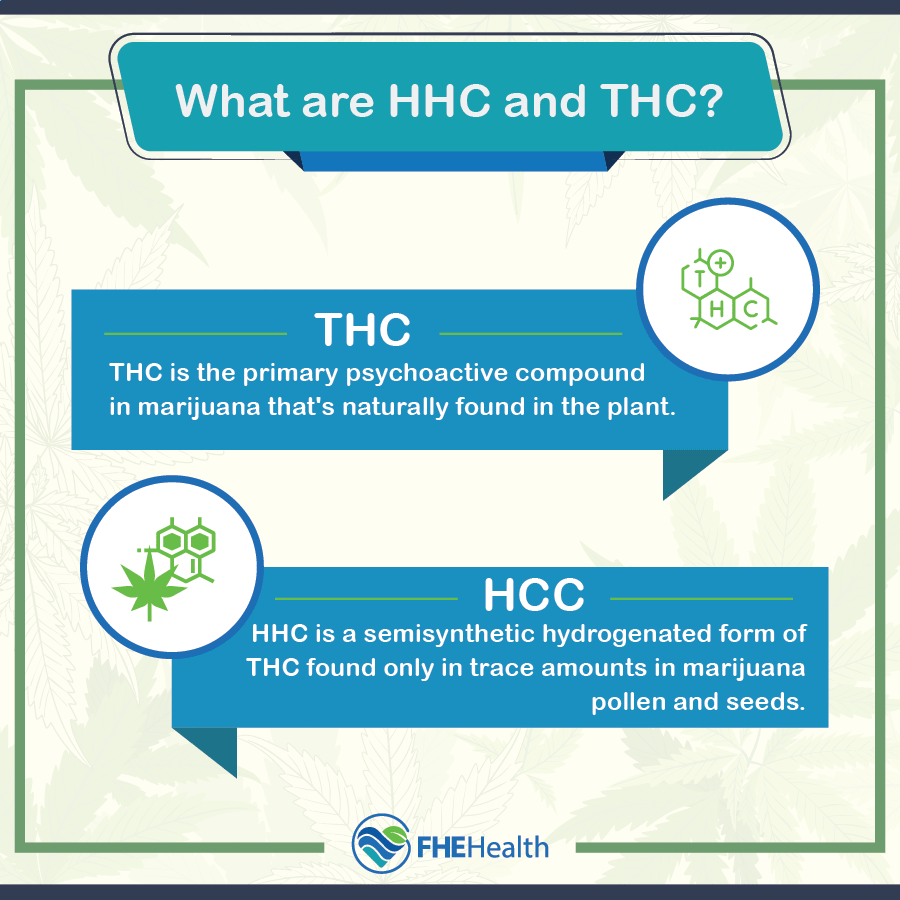
THC is the primary psychoactive compound in cannabis. It’s naturally abundant in marijuana plants and has been studied for decades.

The HHC cannabinoid is a semisynthetic hydrogenated form of THC. While it occurs naturally in cannabis, it’s only found in trace amounts in the pollen and seeds.

Most HHC products on the market are synthesized in laboratories by adding hydrogen molecules to THC. The hydrogenation process is similar to how vegetable oil is converted into margarine. There’s limited research on HHC.

Both HHC and THC interact with your body’s endocannabinoid system, but they differ in vital ways. These differences affect everything from their legal status to the impact they have on users.
Chemical and Legal Differences Between the Two

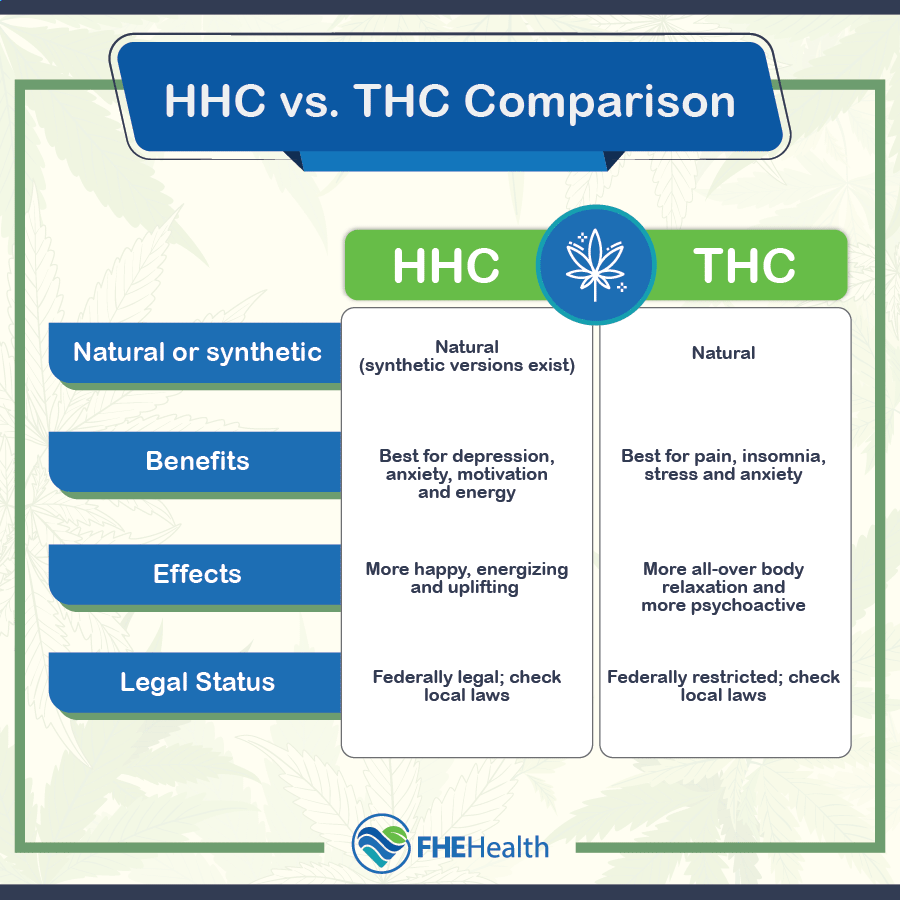
The chemical structures of these compounds differ by only a few atoms. THC contains a double bond in its molecular structure, while HHC has hydrogen atoms in place of that double bond.

This seemingly minor change has significant legal implications. THC derived from marijuana remains federally illegal, but many states have legalized it. Hemp products that contain less than 0.3% THC became legal under the 2018 Farm Bill.

HHC is in a gray area legally. Because it’s technically not THC, some manufacturers argue it falls under hemp-derived products protected by federal law. However, the Drug Enforcement Administration hasn’t issued clear guidance.

The lack of regulation means HHC products often lack quality control and testing standards. This creates serious safety concerns for users.

Products containing HHC are sold online and over the counter in states where they’re allowed. Many states have moved to regulate or ban HHC alongside synthetic cannabinoids.
Effects on the Brain and Body

Both HHC and THC produce psychoactive effects by binding to cannabinoid receptors in the brain. Users report similar experiences, including euphoria, altered perception and relaxation.

How strong is HHC compared to traditional THC? Users describe HHC’s potency as being lower than THC. Consensus based on a study published by the National Institutes of Health indicates that the psychoactive potency of HHC is about 70% to 80% that of delta-9 THC.

However, limited research exists on the exact potency and effects of HHC. The effects can vary significantly based on product quality and individual factors.

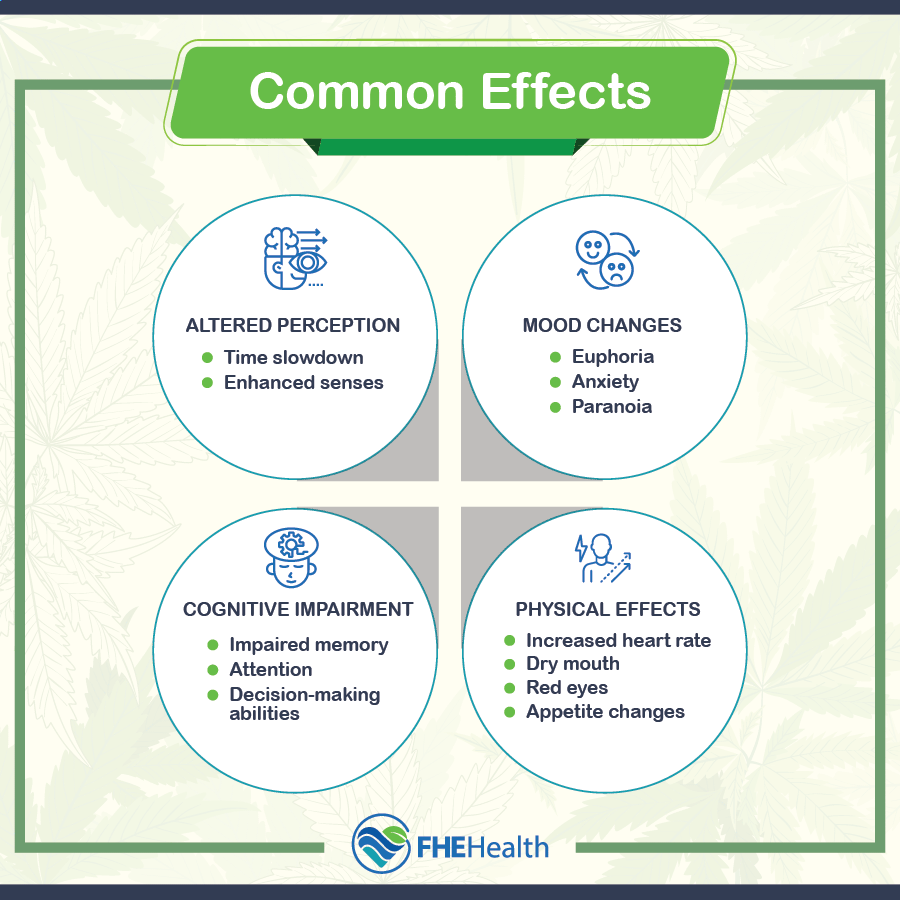
Common effects of both substances include:

  • Altered perception. Time may seem to slow down, and sensory experiences can be more intense.
  • Mood changes. Users often experience euphoria but may also develop anxiety or paranoia.
  • Cognitive impairment. Memory, attention and decision-making abilities typically decline during intoxication.
  • Physical effects. Both can cause increased heart rate, dry mouth, red eyes and changes in appetite.

The duration and intensity depend on your consumption method, dosage and tolerance levels.
Risks, Side Effects and Safety Concerns

According to the National Institute on Drug Abuse, studies have estimated that 22% to 30% of people who use cannabis develop cannabis use disorder. Furthermore, about 12% of people who use it frequently have withdrawal symptoms when they stop using it. Understanding these risks is crucial for anyone considering using either HHC or THC.

While HHC may not contain high levels of THC and isn’t legally considered cannabis, many addiction specialists have concerns over the lack of reliable data on potency and risks.

There’s little research on HHC and how it compares to THC. However, it’s thought that HHC has the same side effects and risks as THC. Risks and side effects are generally considered milder in HHC, but it still raises safety concerns.

Short-term risks of cannabis include impaired driving, accidents and acute anxiety or panic attacks. Some users experience temporary psychotic symptoms, particularly with high doses.

Long-term risks associated with regular use include:

  • Cognitive effects. Persistent use, especially during adolescence, may impact brain development and long-term memory.
  • Respiratory problems. Smoking or vaping either substance can damage lung tissue.
  • Mental health concerns. Heavy use has been linked with increased rates of depression, anxiety and psychotic disorders.
  • Dependence. Users can develop tolerance and experience withdrawal symptoms when stopping.

HHC has additional safety concerns due to limited research and lack of regulation. The synthesis process may introduce contaminants or impurities. Without standardized testing, consumers can’t verify the purity or potency of products.

Some HHC products contain harmful additives or residual solvents from the manufacturing process. The long-term health effects remain unknown because human studies on HHC have been virtually nonexistent. Preliminary data from small studies began to emerge in early 2025, but further research is necessary to fully understand the risks.

Popularity and Misconceptions Among Users

HHC has become popular partly because users believe it offers a legal alternative to THC. Online marketing often portrays it as “legal THC” or a safer option.

This represents a dangerous misconception. Legal status doesn’t equal safety. The lack of regulation and research means HHC may pose unknown risks.

Another common myth suggests that HHC is stronger than THC in positive ways. Some vendors claim enhanced benefits with fewer side effects. However, no scientific evidence supports these claims.

Young adults and adolescents are particularly vulnerable to marketing that downplays risks. The appealing packaging and easy online availability can make these products seem harmless.

The reality is that any psychoactive cannabinoid carries risks. The newness of HHC and limited safety data should promote caution, not experimentation.

When to Seek Help for Cannabis-Related Issues

The Centers for Disease Control and Prevention states that 3 in 10 people using cannabis have a cannabis use disorder. Thus, you have an estimated 30% likelihood of becoming addicted if you use cannabis.

Cannabis use disorder is a real condition that requires professional treatment. Warning signs it may be time to seek help include:

  • Using more than intended
  • Needing more to achieve the same effect
  • Unsuccessful attempts to quit
  • Continued use despite negative consequences
  • Giving up important activities because of use

Mental health symptoms that develop or worsen with use, such as anxiety or depression, also need attention. Professional treatment programs can address both substance use and co-occurring mental health conditions.

Take the First Step Toward Recovery

If you or a loved one struggles with cannabis use, professional help is available. FHE Health offers comprehensive treatment programs designed to address substance use disorders and support lasting recovery. Contact FHE Health today to take the first step toward a healthier future.


Filed Under: Drug Addiction, Featured for Drug Addiction

About Chris Foy

Chris Foy is a content manager and webmaster for FHE Health with years of experience in the addiction treatment industry...read more

Primary Sidebar

Learning Center

  • Help for You
  • Help For Loved Ones
  • Help For Alcoholism
  • Help With Substance Abuse
  • Behavioral & Mental Health
  • Life in Recovery
  • Rehab Explained
  • All Articles

Sign up for the Blog

Our Facilities

Take a look at our state of the art treatment center.

View Our Gallery

The Experience Blog

  • Addiction News
  • Alumni
  • Community Events
  • Expert Columns
  • FHE Commentary
  • FHE News
  • Treatment Legislation
  • All Articles

Footer

FHE Health

© 2025 FHE Health

505 S Federal Hwy #2,
Deerfield Beach, Florida 33441
1-833-596-3502
youtube facebook instagram linkedin twitter
  • Contact
  • Careers
  • AI Policy
  • Privacy Policy
  • Sitemap
A+ BBB and Top Places to Work - Sun Sentinel

Copyright © 2025 · FHE Theme On Genesis Framework · WordPress · Log in

Manage Consent
To provide the best experiences, we use technologies like cookies to store and/or access device information. Consenting to these technologies will allow us to process data such as browsing behavior or unique IDs on this site. Not consenting or withdrawing consent, may adversely affect certain features and functions.
Functional Always active
The technical storage or access is strictly necessary for the legitimate purpose of enabling the use of a specific service explicitly requested by the subscriber or user, or for the sole purpose of carrying out the transmission of a communication over an electronic communications network.
Preferences
The technical storage or access is necessary for the legitimate purpose of storing preferences that are not requested by the subscriber or user.
Statistics
The technical storage or access that is used exclusively for statistical purposes. The technical storage or access that is used exclusively for anonymous statistical purposes. Without a subpoena, voluntary compliance on the part of your Internet Service Provider, or additional records from a third party, information stored or retrieved for this purpose alone cannot usually be used to identify you.
Marketing
The technical storage or access is required to create user profiles to send advertising, or to track the user on a website or across several websites for similar marketing purposes.
  • Manage options
  • Manage services
  • Manage {vendor_count} vendors
  • Read more about these purposes
View preferences
  • {title}
  • {title}
  • {title}

The FHE Health team is committed to providing accurate information that adheres to the highest standards of writing. If one of our articles is marked with a ‘reviewed for accuracy and expertise’ badge, it indicates that one or more members of our team of doctors and clinicians have reviewed the article further to ensure accuracy. This is part of our ongoing commitment to ensure FHE Health is trusted as a leader in mental health and addiction care.

If there are any concerns about content we have published, please reach out to us at marketing@fhehealth.com.

833-596-3502

Text/Call Me