• Skip to primary navigation
  • Skip to main content
  • Skip to primary sidebar
  • Skip to footer

FHE Health | Inpatient Rehab & Mental Health Facility in Florida Homepage

Drug, Alcohol and Mental Health Treatment

ContactCareers

Call for Immediate Help (833) 596-3502

  • About
        • About FHE Rehab
          • About FHE Health
          • Our Staff
          • Locations We Serve
          • Testimonials
          • #FHE25
        • Our Campus
          • Gallery
          • Our Videos
          • Our Services
          • Health & Wellness Center
        • Our Locations
          • Alcohol Rehab
          • Detox Center
          • Drug Rehab
          • Mental Health Center
          • Outpatient Rehab
        • Careers at FHE Health
          • Employment Opportunities
        • Our Expertise
          • Accreditations
          • Educational Opportunities
          • Community Impact Award
          • First Responder Families Podcast
          • First Responder Paws
          • Education Scholarship
  • Addiction
        • Treatment Programs
          • Treatment Program Overview
          • Alcohol Addiction
          • Drug Addiction Treatment
          • Behavioral Addiction
        • Levels of Care
          • Continuum of Care
          • Addiction Detox
          • Inpatient Addiction Treatment
          • Outpatient Addiction Treatment
        • What We Treat
          • Alcoholism
          • Amphetamines
          • Benzodiazepines
          • Cocaine
          • Heroin
          • Opioids
          • Sedative
  • Mental Health
        • Mental Health Rehab
          • Mental Health Rehab
          • Onsite Psychiatric Care
          • Dual Diagnosis
        • Levels of Care
          • Residential Mental Health Care
          • Outpatient Mental Health Care
        • What We Treat
          • ADD & ADHD
          • Anxiety Disorders
          • Bipolar Disorder
          • Depression
          • Eating Disorders
          • Personality Disorders
          • PTSD
          • Schizophrenia
          • Substance Use Disorder
          • Trauma
  • Programs
        • FHE Programs
          • Specialty Program Overview
          • Restore (Mental Health)
          • Empower! (Women's Program)
          • Shatterproof FHE Health(First Responders)
          • Compass Program
        • Support Programs
          • Alumni
          • Family Support
        • Therapies
          • Acupuncture
          • Breathwork Therapy
          • CBT (Cognitive Behavioral Therapy)
          • DBT (Dialectical Behavioral Therapy)
          • EMDR Therapy
          • Expressive Arts Therapy
          • Individual Therapy
          • Group Therapy
          • Gambling Therapy
        • Medical Care
          • Medical Integration
          • Ketamine Infusion
          • IV Vitamin
          • Fitness & Nutrition
          • Medication-Assisted Treatment Program
          • Medication Management
        • NeuroRehab Services
          • Neuro Rehabilitation
          • Neurofeedback Training
          • Neurostimulation Therapy
          • EEG Brain Mapping
          • Insomnia Treatment for PTSD
  • Resources
        • FHE Guides
          • Understanding Drug Abuse
          • Signs of Addiction
          • The Disease of Addiction
          • Confronting Addiction
          • Staging an Intervention
          • Rehab Success Rate – Does It Really Work?
          • Withdrawal Timelines
          • Life After Rehab
          • LGBTQ+ Community Resources
          • Veteran Resources
          • FHE Podcasts
          • Remote Resources Toolkit
        • Learning Center
          • Help for You
          • Help For Loved Ones
          • Help For Alcoholism
          • Help With Substance Abuse
          • Behavioral & Mental Health
          • Life in Recovery
          • Rehab Explained
          • Addiction Statistics
          • Our Research Articles
          • View All Articles
        • The Experience Blog
          • Addiction News
          • Alumni
          • Community Events
          • Expert Opinions
          • FHE Commentary
          • FHE News
          • Treatment Legislation
          • View All Articles
  • Admissions
        • Insurance
          • Blue Cross Insurance
          • Beacon Health / Value Options Insurance
          • Cigna Insurance
          • Humana Insurance
          • TRICARE Insurance
        • Admissions
          • Steps to Addiction Help
          • Will Insurance Cover Behavioral Treatment?
          • Self-Pay Rehab
        • FAQ
          • Keeping Your Job in Rehab
          • Example Day in Rehab
        • Contact Admissions
          • Contact Us
          • Secure Payment Form
  • Contact
  •  
Home > Learning > Help For Loved Ones > Living with an Addict: What To Do

By: Chris Foy | Last Updated: December 11, 2018

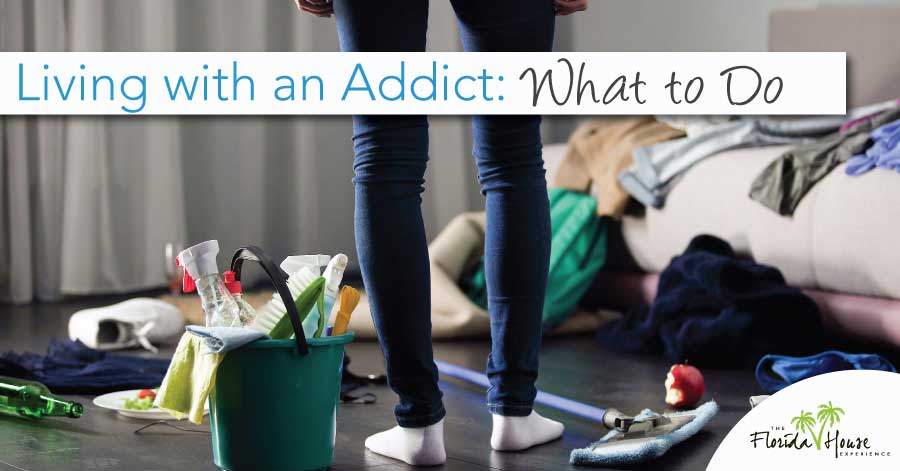
Living with an Addict: What To Do

What to do when you're living with an addict

Are you living with someone who is actively abusing and addicted to drugs? If so, you’re not alone. According to the latest National Survey on Drug Use and Health, “an estimated 24.6 million Americans aged 12 or older — 9.4 percent of the population — had used an illicit drug in the past month“. That means that millions of American households include one or more people who struggle with substance abuse issues.

Understand The Basics of Drug Addiction

Whether your roommate, spouse, child, or other family member is addicted to alcohol, prescription medications, street drugs, or a combination of substances, the effects that their addiction can have on your household are all strikingly similar.

Substance abuse is a serious illness that affects all aspects of a person’s life – their interpersonal relationships, how they function at school or work, and what happens in their home. This is due to the fact that addiction is a complex disease that leads to real, measurable changes within the brain – changes that can significantly alter the addict’s ability to make good decisions, predict consequences, and even feel empathy towards others.

When a person is living in active addiction to drugs or alcohol, they tend to focus all of their energy around sustaining their addiction, even if that means engaging in dangerous or hurtful behaviors that impact the people who are closest to them. It’s common for families who are living with an addict to feel like they have a stranger in their midst – their once loving, trustworthy son, daughter, or wife has become a person they barely recognize.

The Realities of Living With An Addict

As you may have already discovered, living with an addict requires you to change many of your usual routines, habits, and ways of interacting with everyone in your home.

For example, a teenager who is abusing substances may start neglecting the family dog, meaning that you can’t count on him or her to take the dog out for walks every day like they used to. A spouse who previously handled all the family finances may start draining the family bank accounts to support their drug habit, while a roommate might start behaving in odd, irrational ways that can be frightening.

Because the addict will focus all of their attention on sustaining their addiction, they may start to steal from other members of their family, lie about money, and behave in a way that is unpredictable. People who are living with an addict often describe feeling like they are ‘walking on eggshells;’ they never know when the addict will have an emotional outburst, become violent, or even threaten to hurt themselves.

Living with an Addict - Quote

Start By Accepting The Fact That There Is An Addict In Your Family

It’s common for family members to feel a sense of failure, shame, and even personal responsibility when a loved one becomes addicted to drugs, alcohol, or both. While these feelings of embarrassment are real, according to Candace Plattor, Registered Clinical Counsellor and addiction expert, “Coming face-to-face with reality means accepting that parts of your life may be out of control as a result of loving someone who is engaging in addictive behaviors.”

Plattor explains that accepting reality is a critical step for the entire family because denial helps to enable the addict and perpetuate the myth that everything is perfectly fine.

Stop Enabling The Addict

The terms ‘codependent’ and ‘enabling’ are common when dealing with addictions. These words simply mean things that you, as a sober person, may be consciously or unconsciously doing to make abusing alcohol or drugs easier for your loved one. This could include lying for the addict to cover up a car crash they caused, giving them money to buy drugs or anything else you do to try and protect the addict from the natural consequences of their own behaviors.

While it can be tough to identify codependent behaviors, often the best way to help someone with an addiction is to hold them accountable for their actions. Unfortunately, this is easier said than done, which is why seeking support from others who are in the same situation as you is important. Community-based 12-step fellowship groups such as Nar-Anon offer a safe, supportive environment where you can connect with people in the same situation, while many inpatient treatment centers also offer family groups and counseling programs.

Focus On Your Own Health and Wellness

If you’ve ever flown on a commercial airplane you’ve heard the pre-flight safety briefing directing you to don your oxygen mask before you try to assist others. The same goes for living with an addict. You need to make sure you are safe and healthy in order to protect yourself from the stress that comes with having an addicted person in your home.

Focus on finding time for yourself. This could mean attending regular exercise classes, participating in church services, or simply making sure you are keeping up with your own medical appointments, getting your hair done, and meeting up with your friends.

All too often people who are living with a drug addict find themselves dealing with preventable stress-induced illnesses, sacrificing their career, or giving up on activities they enjoy doing simply because they are constantly trying to prevent the next crisis from happening. This relentless stress can lead to everything from cardiovascular disease to weight gain and even some types of cancers. That’s why self-care is such a critical part of living with an addict.

Need Help? Call Us Today

Living with a drug addict is difficult, but you don’t have to deal with the burden alone. At FHE Health, we use the latest in cutting-edge therapies to treat people dealing with substance abuse, mental health, and dual-diagnosis. Our addiction specialists are available 24 hours a day, 7 days a week to take your call at 833-596-3502.


Filed Under: Help For Loved Ones

About Chris Foy

Chris Foy is a content manager and webmaster for FHE Health with years of experience in the addiction treatment industry...read more

Primary Sidebar

Learning Center

  • Help for You
  • Help For Loved Ones
  • Help For Alcoholism
  • Help With Substance Abuse
  • Behavioral & Mental Health
  • Life in Recovery
  • Rehab Explained
  • All Articles

Sign up for the Blog

Our Facilities

Take a look at our state of the art treatment center.

View Our Gallery

The Experience Blog

  • Addiction News
  • Alumni
  • Community Events
  • Expert Columns
  • FHE Commentary
  • FHE News
  • Treatment Legislation
  • All Articles

Footer

FHE Health

© 2026 FHE Health

505 S Federal Hwy #2,
Deerfield Beach, Florida 33441
1-833-596-3502
youtube facebook instagram linkedin twitter
  • Contact
  • Careers
  • AI Policy
  • Privacy Policy
  • Sitemap
A+ BBB and Top Places to Work - Sun Sentinel

Copyright © 2026 · FHE Theme On Genesis Framework · WordPress · Log in

Manage Consent
To provide the best experiences, we use technologies like cookies to store and/or access device information. Consenting to these technologies will allow us to process data such as browsing behavior or unique IDs on this site. Not consenting or withdrawing consent, may adversely affect certain features and functions.
Functional Always active
The technical storage or access is strictly necessary for the legitimate purpose of enabling the use of a specific service explicitly requested by the subscriber or user, or for the sole purpose of carrying out the transmission of a communication over an electronic communications network.
Preferences
The technical storage or access is necessary for the legitimate purpose of storing preferences that are not requested by the subscriber or user.
Statistics
The technical storage or access that is used exclusively for statistical purposes. The technical storage or access that is used exclusively for anonymous statistical purposes. Without a subpoena, voluntary compliance on the part of your Internet Service Provider, or additional records from a third party, information stored or retrieved for this purpose alone cannot usually be used to identify you.
Marketing
The technical storage or access is required to create user profiles to send advertising, or to track the user on a website or across several websites for similar marketing purposes.
  • Manage options
  • Manage services
  • Manage {vendor_count} vendors
  • Read more about these purposes
View preferences
  • {title}
  • {title}
  • {title}
Questions?

We’re here to Listen & Help.
Chat with us 24/7

Contact Us
Call (833) 596-3502


The FHE Health team is committed to providing accurate information that adheres to the highest standards of writing. If one of our articles is marked with a ‘reviewed for accuracy and expertise’ badge, it indicates that one or more members of our team of doctors and clinicians have reviewed the article further to ensure accuracy. This is part of our ongoing commitment to ensure FHE Health is trusted as a leader in mental health and addiction care.

If there are any concerns about content we have published, please reach out to us at marketing@fhehealth.com.

833-596-3502

Text/Call Me