
• Skip to primary navigation
  • Skip to main content
  • Skip to primary sidebar
  • Skip to footer

FHE Health | Inpatient Rehab & Mental Health Facility in Florida Homepage

Drug, Alcohol and Mental Health Treatment

ContactCareers

Call for Immediate Help (833) 596-3502

  • About
        • About FHE Rehab
          • About FHE Health
          • Our Staff
          • Locations We Serve
          • Testimonials
        • Our Campus
          • Gallery
          • Our Videos
          • The Health and Wellness Center at FHE Health
        • Our Locations
          • Alcohol Rehab
          • Detox Center
          • Drug Rehab
          • Mental Health Center
          • Outpatient Rehab
        • Careers at FHE Health
          • Employment Opportunities
        • Our Expertise
          • Accreditations
          • Educational Opportunities
          • Community Impact Award
          • First Responder Families Podcast
          • First Responder Paws
          • Education Scholarship
  • Addiction
        • Treatment Programs
          • Treatment Program Overview
          • Alcohol Addiction
          • Drug Addiction Treatment
          • Behavioral Addiction
        • Levels of Care
          • Continuum of Care
          • Addiction Detox
          • Inpatient Addiction Treatment
          • Outpatient Addiction Treatment
        • What We Treat
          • Alcoholism
          • Amphetamines
          • Benzodiazepines
          • Cocaine
          • Heroin
          • Opioids
          • Sedative
  • Mental Health
        • Mental Health Rehab
          • Mental Health Rehab
          • Onsite Psychiatric Care
          • Dual Diagnosis
        • Levels of Care
          • Residential Mental Health Care
          • Outpatient Mental Health Care
        • What We Treat
          • ADD & ADHD
          • Anxiety Disorders
          • Bipolar Disorder
          • Depression
          • Eating Disorders
          • Personality Disorders
          • PTSD
          • Schizophrenia
          • Substance Use Disorder
          • Trauma
  • Programs
        • FHE Programs
          • Specialty Program Overview
          • Restore (Mental Health)
          • Empower! (Women's Program)
          • Shatterproof FHE Health(First Responders)
          • Compass Program
        • Support Programs
          • Alumni
          • Family Support
        • Therapies
          • Acupuncture
          • Breathwork Therapy
          • CBT (Cognitive Behavioral Therapy)
          • DBT (Dialectical Behavioral Therapy)
          • EMDR Therapy
          • Expressive Arts Therapy
          • Individual Therapy
          • Group Therapy
          • Gambling Therapy
        • Medical Care
          • Medical Integration
          • Ketamine Infusion
          • IV Vitamin
          • Fitness & Nutrition
          • Medication-Assisted Treatment Program
          • Medication Management
        • NeuroRehab Services
          • Neuro Rehabilitation
          • Neurofeedback Training
          • Neurostimulation Therapy
          • EEG Brain Mapping
          • Insomnia Treatment for PTSD
  • Resources
        • FHE Guides
          • Understanding Drug Abuse
          • Signs of Addiction
          • The Disease of Addiction
          • Confronting Addiction
          • Staging an Intervention
          • Rehab Success Rate – Does It Really Work?
          • Withdrawal Timelines
          • Life After Rehab
          • LGBTQ+ Community Resources
          • Veteran Resources
          • FHE Podcasts
          • Remote Resources Toolkit
        • Learning Center
          • Help for You
          • Help For Loved Ones
          • Help For Alcoholism
          • Help With Substance Abuse
          • Behavioral & Mental Health
          • Life in Recovery
          • Rehab Explained
          • Addiction Statistics
          • Our Research Articles
          • View All Articles
        • The Experience Blog
          • Addiction News
          • Alumni
          • Community Events
          • Expert Opinions
          • FHE Commentary
          • FHE News
          • Treatment Legislation
          • View All Articles
  • Admissions
        • Insurance
          • Blue Cross Insurance
          • Beacon Health / Value Options Insurance
          • Cigna Insurance
          • Humana Insurance
          • TRICARE Insurance
        • Admissions
          • Steps to Addiction Help
          • Will Insurance Cover Behavioral Treatment?
          • Self-Pay Rehab
        • FAQ
          • Keeping Your Job in Rehab
          • Example Day in Rehab
        • Contact Admissions
          • Contact Us
          • Secure Payment Form
  • Contact
  •  
Home > Learning > Behavioral & Mental Health > De-escalate with this Panic Attack Checklist

By: Chris Foy | Last Updated: December 4, 2025

De-escalate with this Panic Attack Checklist

De-escalate with this Panic Attack Checklist (Self Identifying)

If you’ve experienced a panic attack, you understand how debilitating it can be. The sudden rush of fear combines with dizziness, and your heart starts pounding out of your chest. You struggle to take a breath and feel as though you’re losing control. Close to 3% of adults in the United States experience these symptoms at least once a year, and these episodes can even mimic physical medical emergencies.

The good news is, you’re not completely powerless when a panic attack happens. By developing effective panic attack coping skills, you can learn how to get through these intense episodes, calm your racing thoughts, and regain your sense of calm. You can use this guide as a checklist to help walk you through each stage of panic.
Why Self-Awareness Is Key When Developing Panic Attack Coping Skills

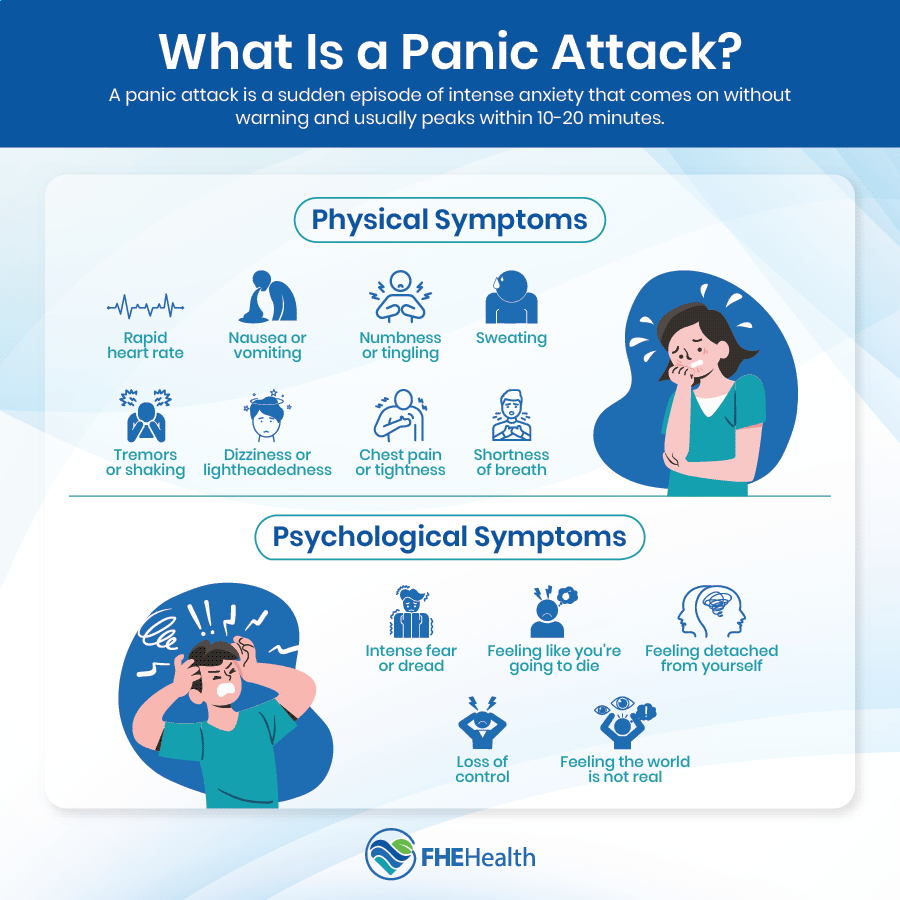
To effectively manage symptoms of a panic attack, it’s important to know what’s going on inside your body and why it reacts the way it does. When you have a panic attack, your body goes into fight-or-flight mode. Your brain detects stimuli it perceives as threats. The amygdala misfires and floods your system with adrenaline, which prepares you to face nonexistent danger.

When adrenaline pumps through your body, you experience a rapid heartbeat, sweating and trembling. Even though the threat isn’t real, the physical symptoms are. When you recognize the symptoms and start telling yourself. “This is a panic attack, not a heart attack. I’m safe. The feelings will pass,” you take the first step in de-escalating the situation.

The Panic Attack De-Escalation Checklist

Knowing how to stop an anxiety attack isn’t a test you can pass or fail. It’s an active exercise to ground you in the moment and calm your overactive nervous system.

Step 1: Acknowledge the Panic and Name It

The first step in developing panic attack coping skills is acknowledging when an attack happens. Say it out loud. Sometimes verbalizing it can make it feel more real. Tell yourself, “This is a panic attack. It’s only temporary. It’s not dangerous. It will pass.”

Before continuing, have you acknowledged what’s happening to you?


Step 2: Focus on Breathing

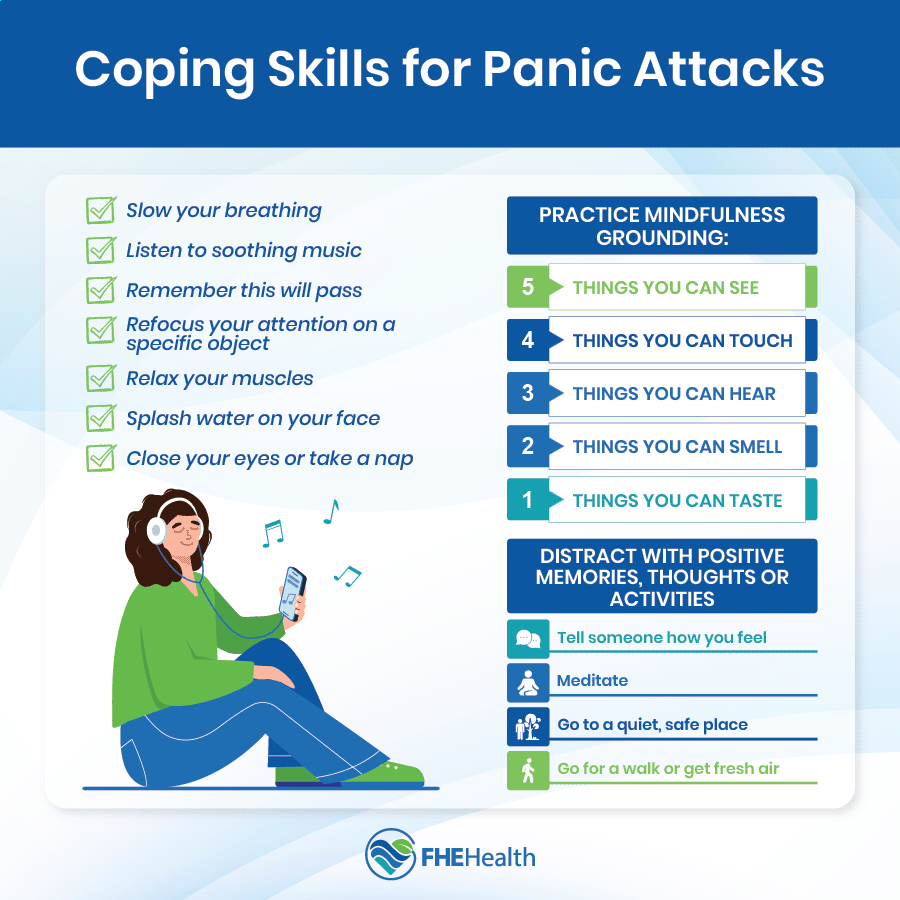
Panic attacks can cause you to become short of breath, increasing feelings of dizziness and anxiety. By developing breathing techniques and slowing your breathing, you send a signal to your brain that all threats have passed.

One simple technique is called box breathing:

  • Slowly breathe in through your nose and count to four.
  • Hold your breath while you count again in your head to four.
  • Slowly exhale through your mouth for a count of four.
  • Again, hold your breath while you mentally count to four.
  • Repeat this exercise for a full minute.

Before continuing, have you focused on your breathing for at least a minute?


Step 3: Use the 5-4-3-2-1 Coping Technique

Also known as the five-senses technique, this method focuses on using all your senses to bring you back to the present moment. This grounding technique forces you to use your external environment rather than allowing your thoughts and feelings to take over. Answer the following prompts below.

5 Things You Can See

Look around the room and notice specific details about your surroundings. What type of grain is in the wood on your desk? What color is the spine on your favorite book? Is there a crack somewhere in your ceiling?

List five things in your surroundings you can see.

4 Things You Can Feel

Focus on physical sensations. What’s the temperature in the room? How do your clothes feel against your skin? Put your feet flat on the floor and describe the sensation. Describe the weight of your blanket when you wrap it around your shoulders.

List four things you can feel.

3 Things You Can Hear

Listen carefully. Even though you may be sitting in silence, there’s a good chance there are background noises you haven’t noticed. Focus on the hum your computer makes as the fan turns on. Are birds chirping outside? Can you hear your heating and cooling system turn on and off? Listen to the sound your own body makes as you breathe in and out.

List three things you can hear.

2 Things You Can Smell

This can be the trickiest step, so really focus on your surroundings. Maybe you smell coffee brewing if it’s first thing in the morning. Can you smell the scent of soap on your hands from washing up? What do your laundered clothes smell like? If you’re having trouble identifying scents in the room, consider your favorite smells. Do you love the smell of fresh-cut grass or baked goods?

List two things you can smell.

1 Thing You Can Taste

Can you describe the current taste in your mouth? Alternatively, grab a stick of gum and think about the flavor or take a sip of your drink.

List one thing you can taste.

Before continuing, confirm you’ve completed each of the steps in the five senses technique.


Step 4: Check In With Yourself

After completing the previous steps, evaluate your symptoms and determine whether the techniques are helping. Rate each activity on a scale from 1 to 10, with 10 being the peak of your panic. Where is your anxiety level now? If you still feel your number is high, repeat Step 2 or Step 3 until your symptoms are under control.

When Panic Becomes a Pattern: What to Do Next

Over 30% of adults in the United States have struggled with anxiety at some point in their lives. Because of this, it’s not uncommon to experience a single panic attack. However, if you’re constantly worrying about your next event or you find these episodes are interfering with your daily life, you may be developing panic disorder.

If your panic attacks occur on a regular basis or grounding techniques aren’t working, it’s time to seek more structured support.

Finding Support for Panic and Anxiety Disorders

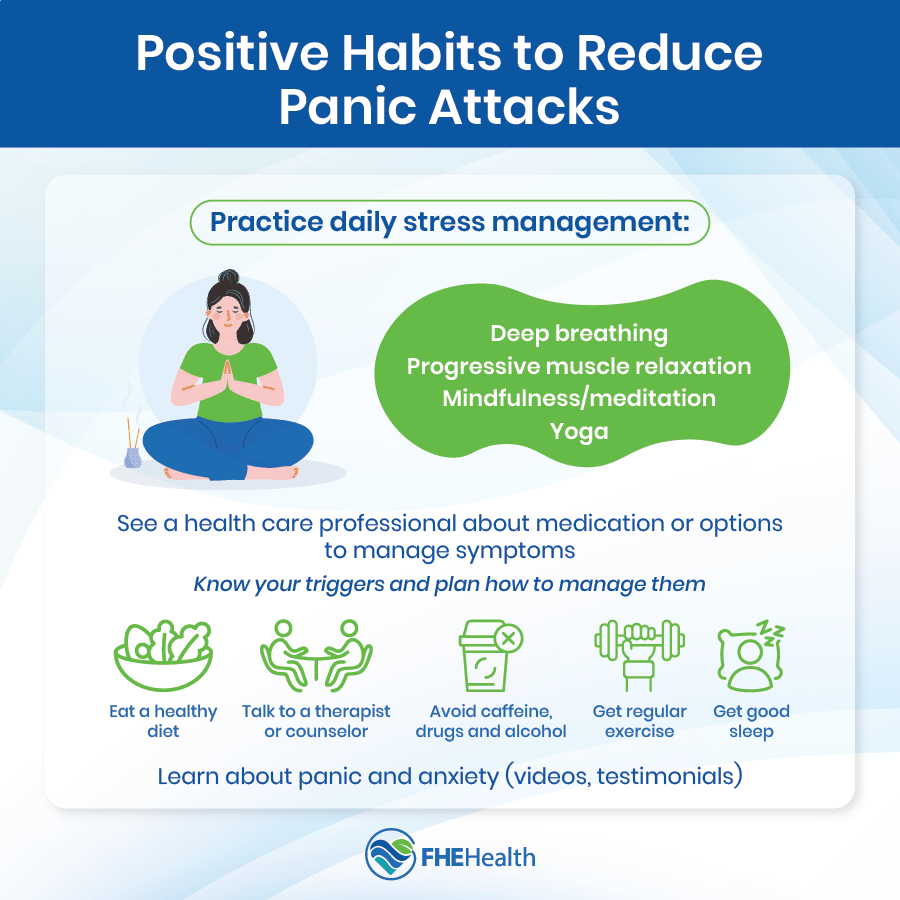
It’s important to know that you don’t have to manage panic attacks on your own. In addition to developing panic attack coping skills, you can seek professional help. Cognitive behavioral therapy is highly effective at helping individuals discover their triggers and reduce the frequency and intensity of panic attacks. Some health care providers also prescribe medications, such as antidepressants, beta blockers or benzodiazepines, to help with severe panic disorders.

If you’re ready to take the next step toward freedom from panic, contact the dedicated team at FHE Health. We specialize in treating anxiety and panic disorders through comprehensive, individualized care.


Filed Under: Behavioral & Mental Health, Featured in Mental Health

About Chris Foy

Chris Foy is a content manager and webmaster for FHE Health with years of experience in the addiction treatment industry...read more

Primary Sidebar

Learning Center

  • Help for You
  • Help For Loved Ones
  • Help For Alcoholism
  • Help With Substance Abuse
  • Behavioral & Mental Health
  • Life in Recovery
  • Rehab Explained
  • All Articles

Sign up for the Blog

Our Facilities

Take a look at our state of the art treatment center.

View Our Gallery

The Experience Blog

  • Addiction News
  • Alumni
  • Community Events
  • Expert Columns
  • FHE Commentary
  • FHE News
  • Treatment Legislation
  • All Articles

Footer

FHE Health

© 2025 FHE Health

505 S Federal Hwy #2,
Deerfield Beach, Florida 33441
1-833-596-3502
youtube facebook instagram linkedin twitter
  • Contact
  • Careers
  • AI Policy
  • Privacy Policy
  • Sitemap
A+ BBB and Top Places to Work - Sun Sentinel

Copyright © 2025 · FHE Theme On Genesis Framework · WordPress · Log in

Manage Consent
To provide the best experiences, we use technologies like cookies to store and/or access device information. Consenting to these technologies will allow us to process data such as browsing behavior or unique IDs on this site. Not consenting or withdrawing consent, may adversely affect certain features and functions.
Functional Always active
The technical storage or access is strictly necessary for the legitimate purpose of enabling the use of a specific service explicitly requested by the subscriber or user, or for the sole purpose of carrying out the transmission of a communication over an electronic communications network.
Preferences
The technical storage or access is necessary for the legitimate purpose of storing preferences that are not requested by the subscriber or user.
Statistics
The technical storage or access that is used exclusively for statistical purposes. The technical storage or access that is used exclusively for anonymous statistical purposes. Without a subpoena, voluntary compliance on the part of your Internet Service Provider, or additional records from a third party, information stored or retrieved for this purpose alone cannot usually be used to identify you.
Marketing
The technical storage or access is required to create user profiles to send advertising, or to track the user on a website or across several websites for similar marketing purposes.
  • Manage options
  • Manage services
  • Manage {vendor_count} vendors
  • Read more about these purposes
View preferences
  • {title}
  • {title}
  • {title}

The FHE Health team is committed to providing accurate information that adheres to the highest standards of writing. If one of our articles is marked with a ‘reviewed for accuracy and expertise’ badge, it indicates that one or more members of our team of doctors and clinicians have reviewed the article further to ensure accuracy. This is part of our ongoing commitment to ensure FHE Health is trusted as a leader in mental health and addiction care.

If there are any concerns about content we have published, please reach out to us at marketing@fhehealth.com.

833-596-3502

Text/Call Me