

From giving us a sense of purpose and belonging to protecting us from serious illnesses, social connectedness enriches our lives and supports our physical and mental health. When it comes to how many friends the average person has, it’s typically a matter of preference. The goal is to build the level of connection that provides support without tipping into social burnout.
What Does Science Say About the Ideal Number of Friends?
 While the number of friends a person has depends largely on their personality, preferences and life circumstances, science does provide some insight into how many close relationships we need for optimal wellness.
What Researchers Know About Social Needs
Social connectedness may not feel as important to our survival as food or shelter, but research reveals it’s a core need linked to reduced stress and better physical health. In one systematic review of over three dozen studies, researchers found the more friends an adult had, the more significant their sense of direction in life and the more likely they were to set and achieve goals.
The Range of the “Normal” Number of Friends
An individual’s personality, environment, culture and life stage all influence the size of their social circle. For example, an introvert who spends energy on social interactions may not desire the same number of relationships as an extrovert who recharges by being around people.
Dunbar’s Number: The Psychology Behind Social Limits
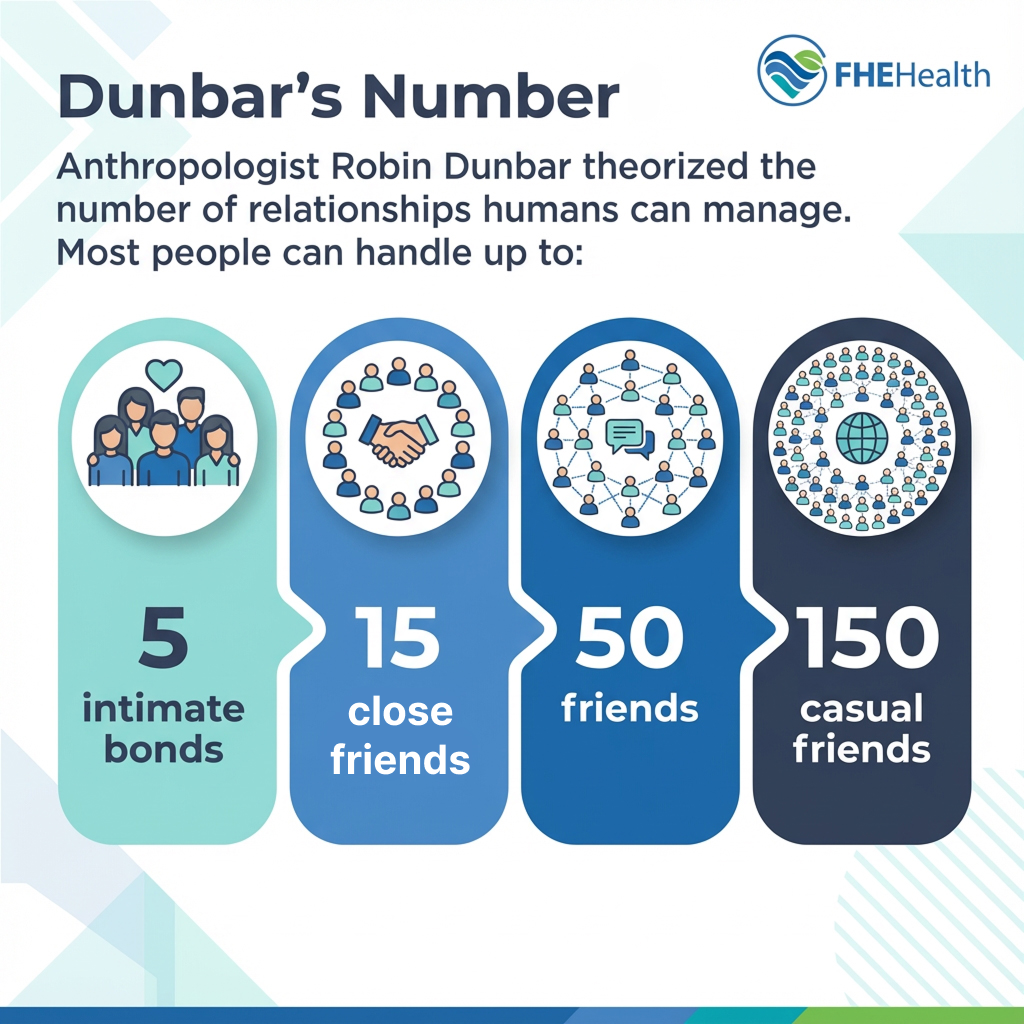 In the 1990s, British anthropologist Robin Dunbar discovered a correlation between a primate’s brain size and the typical size of its social group. By extrapolating from this data, he proposed that based on a human’s brain size, individuals can comfortably maintain 150 stable relationships. He found this number reflected in hunter-gatherer groups, medieval European communities and Mormon wagon trains.
How Many Connections Can We Handle?
To be clear, Dunbar’s theory doesn’t mean the average person needs to cultivate 150 friendships for optimal quality of life. It recognizes relationships are hierarchical, comparing them to ripples on a pond.
The ripple closest to you is made up of around five people you connect with at least weekly. These may be family members or close friends. The next ripple is around 10 good friends you see monthly. According to the theory, these two groups account for about 60% of your social attention.
The third ripple is made up of around 50 people you don’t see regularly but would invite to a house party, and the final 100 are those you seldom see but would invite to a significant event such as a wedding. Everyone else you encounter regularly, including most work colleagues, falls outside these circles. Dunbar estimates that beyond our social circle, we can maintain 350 acquaintances and recognize an additional 1,000 people by sight.
Quality vs. Quantity: How Many Friends Does the Average Person Have?
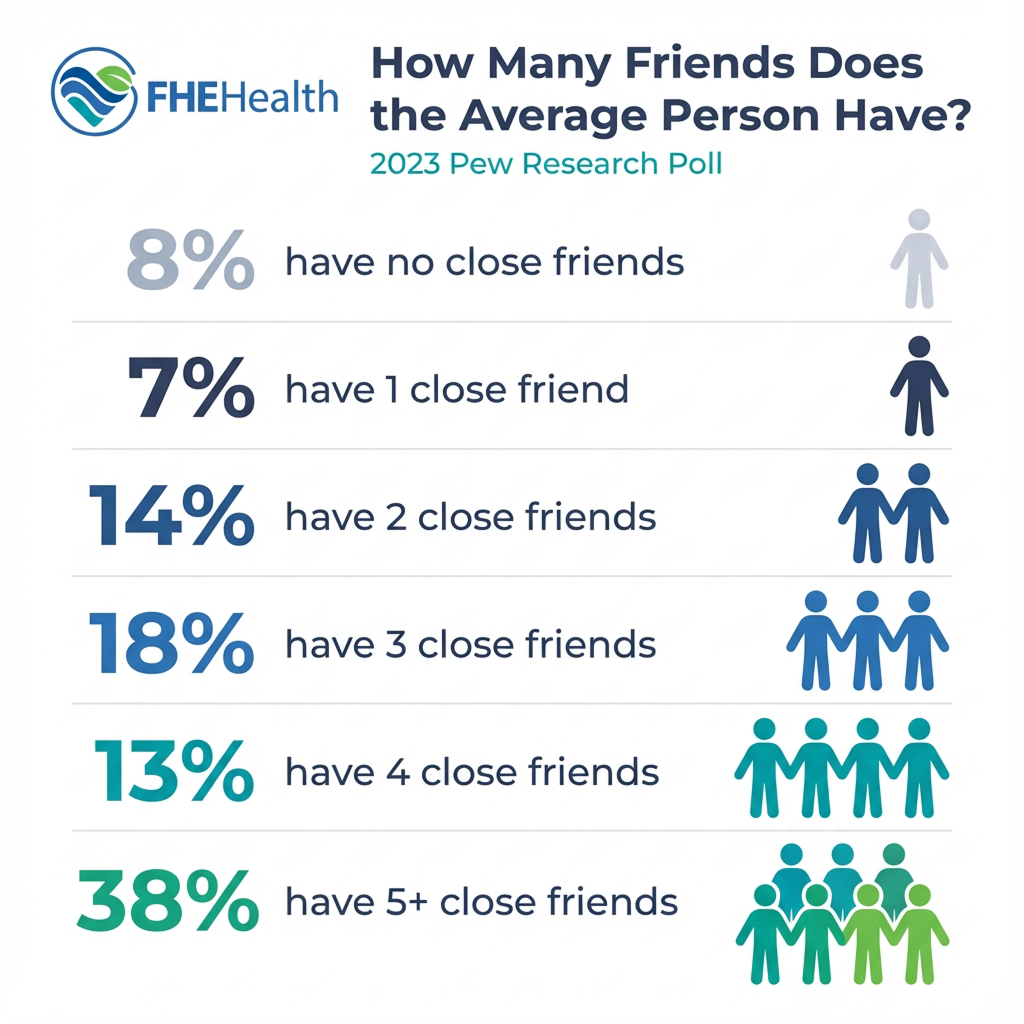
 According to a survey from the Pew Research Center, 53% of adults reported having between one and four close friends, while 38% said they have five or more close friends. Around 8% reported no close friendships. About 72% of respondents who had at least one close friend said they were either completely or very satisfied with those friendships, compared to 81% of those with five or more close friends.
While satisfaction tends to rise as an individual’s social circle grows, there’s no single “right” number of friends. An individual’s degree of satisfaction may be largely due to factors related to personality or cultural expectations. The level of social engagement that feels fulfilling for one person may feel overwhelming or insufficient for another.
The Mental Health Impact of Managing Large Social Circles
A large social circle frequently brings benefits such as increased happiness, reduced stress and greater emotional support. However, it often comes at a cost. Social fatigue can contribute to stress, while comparing accomplishments and social status can lead to feelings of inadequacy and discontentment.
Emotional Exhaustion From Too Many Social Obligations
A full social calendar provides a sense of purpose, but when you’re managing constant scheduling and commitments alongside work and family obligations, it can become taxing. Managing a large group of friends can leave you feeling obligated to keep up with everyone. This can feel especially exhausting for people with introversion tendencies.
How Social Comparison Increases With Bigger Networks
A larger social circle means exposure to more lifestyles and achievements. You may have a friend who’s enjoyed the career success you’ve hoped for or another living with the kind of home or family you’ve dreamed of. Seeing success in others can fuel self-criticism or anxiety, especially if you feel like you’re falling behind. Social media can amplify these feelings, showcasing the most polished versions of those in your social circles while omitting the more mundane or disappointing moments.
Social Burnout: Signs You’re Spread Too Thin
Social burnout can happen when you have too many social commitments or feel physical or emotional strain from overload. Some signs to watch for include:
- Irritability before social events
- Avoiding messages
- Canceling plans
- Feeling disconnected, even when surrounded by people
- Lack of time for recovery or hobbies
- Fatigue or disrupted sleep
- Stress-related digestive issues
- Feeling emotionally numb
- Difficulty concentrating
While these signs aren’t exclusive to social burnout, if they seem to accompany social situations, they can indicate you’re spreading yourself too thin. Taking a step back and prioritizing commitments can help you reduce the mental load and find a healthier balance.
Need Help?
Treatment can begin quickly and discreetly, get started now
Building a Supportive Social Life Without Overwhelm
Social isolation can be as detrimental to your health and quality of life as social burnout. Prioritizing meaningful relationships and creating a social routine that fits your life helps you build a support system that enriches your life without adding stress.
How to Prioritize Meaningful Relationships
To prioritize the friendships that matter most, consider which connections add enrichment and meaning and which ones drain your energy. Borrowing from Dunbar’s theory, create friendship tiers and invest your efforts accordingly. Letting shallower friendships fade is a simple way to maintain a social life without overwhelming yourself with commitments.
Creating a Social Routine That Fits Your Life
Your threshold for social interaction is unique to you. To find the balance that fits your life, choose a realistic number of weekly social interactions. If interactions tend to feel draining, even when you spend time with people you love, plan a buffer day or two before your next one.
Need Some Help Navigating Friendships?
Whether you thrive in a small social circle or enjoy maintaining a wide network, what matters is finding the right level of connection that supports your well-being. At FHE Health, we provide evidence-based support to help you navigate your social world with confidence and balance. Contact us today to talk about our client-centered services.