

The detox process may be uncomfortable or even painful. But for individuals who are dependent on certain drugs, such as alcohol or benzodiazepines, it can be fatal if not managed properly. Many find that after a short period of medically supervised detox, the withdrawal symptoms pass.
However, some people successfully detox from alcohol or drugs yet still experience withdrawal symptoms or discomfort. The set of symptoms plaguing successfully detoxed individuals long after they finish the withdrawal process is known as post-acute withdrawal syndrome, or PAWS. At FHE, we can help you deal with this syndrome.
What Is Post-Acute Withdrawal Syndrome?
Post-acute withdrawal syndrome is still being researched. The condition hasn’t been officially recognized in the DSM-5, and there’s no formal definition or diagnostic criteria. However, it could be defined as a combination of symptoms that linger after acute withdrawal symptoms have resolved. Such symptoms can persist for several months or years and might include irritability, depression, insomnia, fatigue, cravings and distractibility.
These symptoms stem from the body’s response to long-term substance use. As an individual increases their use of drugs or alcohol, the brain’s reward system grows reliant on the substance used. The production of the neurotransmitters dopamine and serotonin becomes tied to the use of substances, and over time, the body’s ability to produce these chemicals declines. This results in tolerance and addiction.
A recent literature review explains how in the post-acute withdrawal period, the brain is more susceptible to cravings due to the bonds between neurons growing stronger. Both serotonin breakdown and orexins, which regulate appetite and wakefulness, may increase.
These factors work together to affect sleep, mood, cognition and cravings, and it takes time and continued abstinence for the brain and body to return to normal. The symptoms people experience during the post-acute period can be severe, and while there are no statistics on relapse rates for individuals struggling with PAWS, the incidence of relapse after SUD treatment is over 60%.
How Common Is PAWS?
The exact prevalence of PAWS is unknown. However, according to research results published in the Journal of Epidemiology and Psychiatric Sciences, 15% of study participants with panic disorder and agoraphobia experienced PAWS after stopping antidepressants.
How Long Does Post-Acute Withdrawal Syndrome Last?
Post-acute withdrawal syndrome occurs because the nervous system still needs time to recover once substances are cleared from the body and brain and acute withdrawal ends. As the reward system in the brain repairs itself, post-acute symptoms may manifest. The repair process can take anywhere from 4 to 6 months or longer, depending on the individual and the duration and nature of their substance use.
Common Symptoms of Post-Acute Withdrawal
 Post-acute withdrawal symptoms aren’t as intense as those experienced during the detox process, but they can be disruptive and uncomfortable. These temporary symptoms can be alarming for those who don’t know they might develop post-acute withdrawal syndrome. Some of the most common symptoms of PAWS include:
- Anhedonia, an inability to derive joy from any normally pleasurable activities
- Depression
- Mood swings
- Impaired social function
- Poor concentration and memory
- Lack of motivation
- Low or fluctuating energy levels
- Cravings
- “Foggy” thinking patterns or racing thoughts
- Emotional disturbances, feelings of numbness and/or emotional overreactions
- Problems with sleep, such as insomnia, sleep disturbances or sleeping too much
- Impaired coordination
- Increased stress and pain sensitivity
- Anxiety
- Fatigue
Are These Symptoms Permanent?
A person unaware of post-acute withdrawal syndrome may fear they’ve suffered permanent damage from drug or alcohol use and their brain and body will never return to normal. Fortunately, these symptoms signify recovery and healing.
Historically, medical professionals have tried restarting a previously prescribed antidepressant medication or using different drugs to manage PAWS. However, there’s no conclusive evidence to support these treatments.
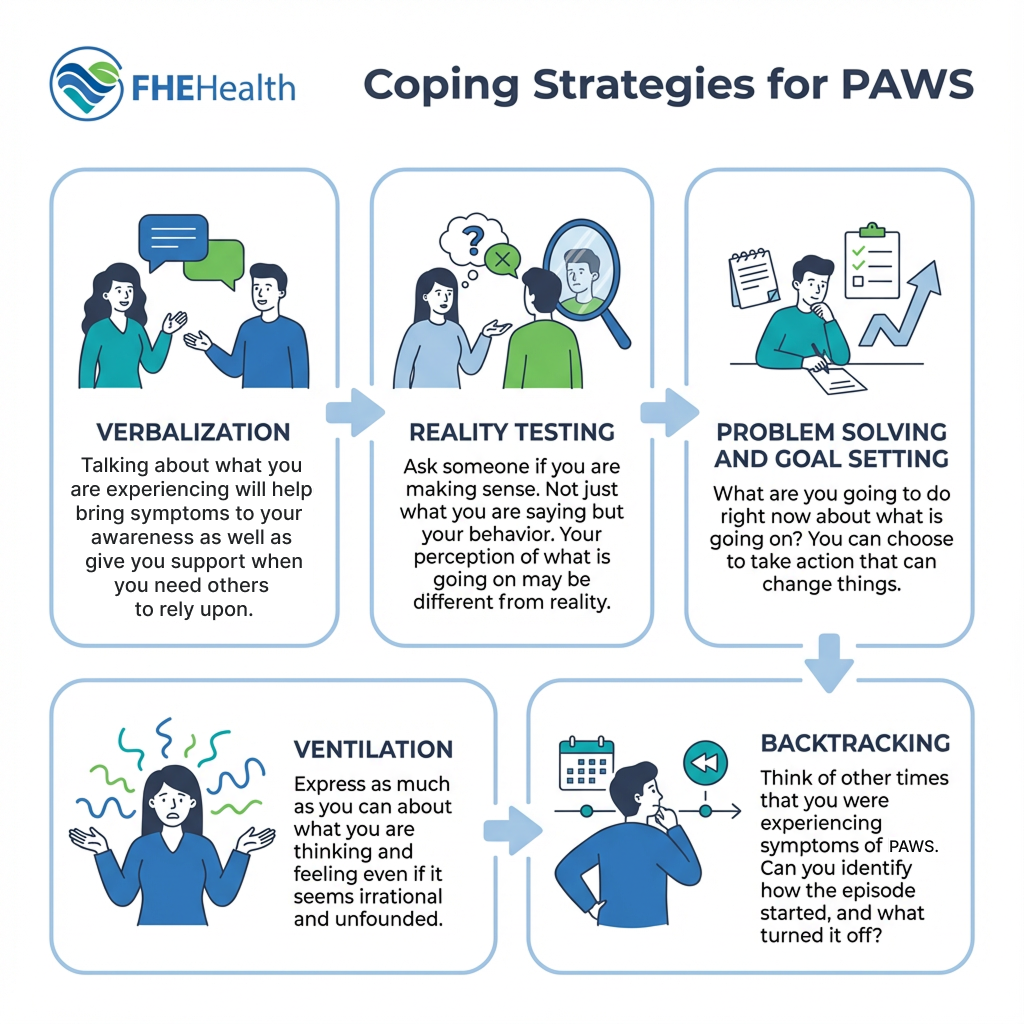
Dealing With Post-Acute Withdrawal Syndrome
 The best treatment for post-acute symptoms is time. The longer the brain and body go without alcohol or drugs, the more they repair themselves. However, during the post-acute withdrawal period, recovering individuals can try several things to mitigate the more unpleasant effects of the syndrome. It may help to:
- Establish and stick to a healthy sleep routine, including making time for 8 hours of rest per night.
- Exercise regularly to build physical strength, reduce anxiety and promote the production of dopamine and endorphins.
- Adhere to medical recommendations, including taking prescribed medications.
- Ensure proper nutrition, which can promote healthy brain activity and make up for any deficiencies caused by substance abuse.
- Attend support groups or therapy sessions at a facility like FHE, which can help provide support in dealing with symptoms.
Healing in the Long Term
Ultimately, the only cure for post-acute withdrawal syndrome is long-term, sustained abstinence from drugs and alcohol. The body needs time to heal from prolonged substance use. This can be a lengthy, difficult process, but over time, the body will adjust to life without drugs or alcohol, and cravings should subside.
At FHE Health, we provide both short- and long-term support for people in addiction recovery. Our continuum of care ensures individuals receive support not only during the acute withdrawal period but also for longer recovery. By preparing people for post-acute withdrawal symptoms and giving them coping strategies as well as long-term accountability, we lessen the likelihood of relapse.
Contact us today to learn about our life-saving treatments and how we can help you beat post-acute withdrawal syndrome.
Frequently Asked Questions
- How Long Does Post-Acute Withdrawal Syndrome Last?
Post-acute withdrawal syndrome (PAWS) can last several months or even longer in some cases. Over time, however, most people do recover from the symptoms. - What Are the Symptoms of Post-Acute Withdrawal Syndrome?
Symptoms of PAWS can include irritability, depression, insomnia, mood swings, anxiety and fatigue. People may experience persistent cravings, brain fog and difficulty focusing. These symptoms gradually subside with sustained abstinence. - When Does Post-Acute Withdrawal Syndrome Start?
PAWS symptoms start during the early stages of abstinence, after initial withdrawal symptoms have subsided. Because of how long it can last, achieving long-term sobriety may be more difficult, making it vital to have support throughout the process.