

For millions of Americans — more than 1 in 6 — smoking weed is a common recreational activity. Used primarily to relax, treat pain, party or simply relieve temporary stress, marijuana is largely seen as a less dangerous drug due to its usually milder effects and medicinal uses. However, just because marijuana lacks the dangers drugs like heroin and meth may offer doesn’t mean a chronic weed habit is harmless. On the contrary, it can lead to negative physical and emotional consequences that impair your quality of life.
If marijuana is having this impact on you, it’s worth taking the time to learn how to stop smoking weed, especially if you feel you can’t function without its influence.
How to Stop Smoking Weed
So, you’re ready to stop smoking weed. Now what?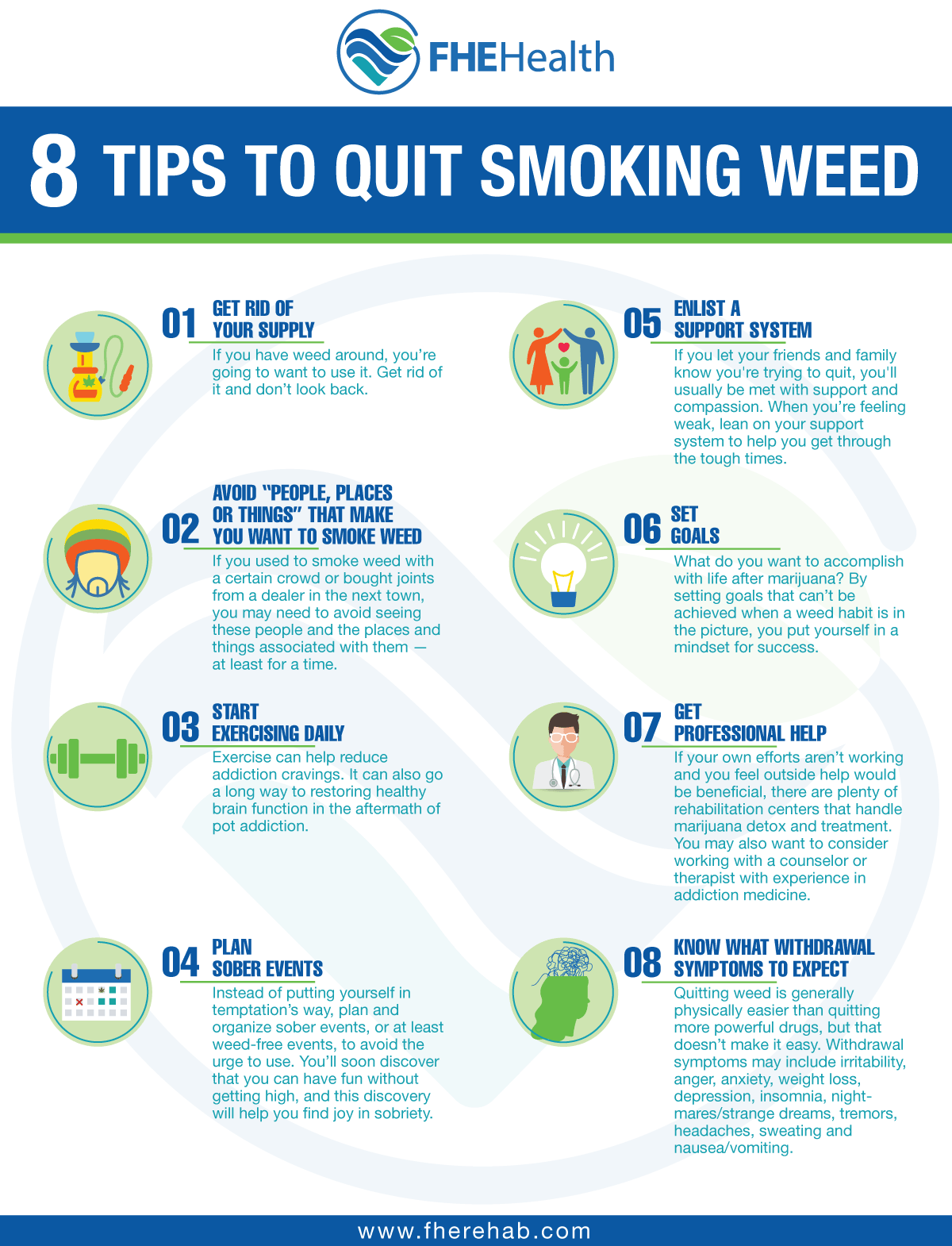
While detoxing from marijuana is relatively easy compared to detoxing from some other drugs, quitting any addiction isn’t easy. Some people are afraid of the effects on their day-to-day lives, while others are worried about the physical side effects of withdrawal. Such concerns shouldn’t stop you from taking the leap.
Altogether, marijuana withdrawal symptoms are usually pretty mild and may include headaches, mood swings, irritability, change in dreams and trouble focusing. Furthermore, there are no serious physical risks when quitting cold turkey, like there are for alcohol or benzodiazepines.
In many ways, successfully detoxing from marijuana is more of a mental hurdle than a physical one. It’s much more tied up with your daily habits than the physical challenges of detox, and the right mindset can make all the difference. The following quit-marijuana tips can help you do what’s right for your health and your life.
1. Trash Your Stash
Once you’ve decided to quit smoking weed, get rid of whatever you have left. If you keep the rest of your stash around, you’re much more likely to give in during a moment of weakness. Commit to your decision and throw the rest of your weed away. You won’t need it.
2. Know Your Triggers and Avoid Them
People in early recovery from drugs or alcohol are often counseled to avoid people, places or things that trigger cravings to drink or use drugs. This principle can be just as helpful for those hoping to kick a weed habit. Until you’ve at least overcome the habit of smoking weed, avoid hanging out with the same people you previously smoked with, and try not to frequent the same types of establishments you visited when you were an active marijuana user.
3. Exercising Daily
Research has shown that exercise helps reduce addiction cravings in addition to improving overall brain function. Exercise is also a great buffer against stress, so it can serve as a healthy, alternative coping device for those who may have smoked weed because of stress.
4. Plan Weed-Free Outings
If you spend your nights at parties with other pot-smoking friends, breaking your routine will be particularly difficult. Planning how you’re going to enjoy yourself without the inclusion of weed can help you avoid cravings, especially if you encounter an unexpected trigger. Think about all the fun ways you can enjoy life without getting high first. Soon, you’ll wonder why you ever thought you’d miss smoking weed.
5. Use Your Support System
Friends and family recognize the courage it takes to admit you have a problem, and you can expect them to be overwhelmingly supportive of your decision. Let them know your plans to quit smoking weed. You’ll be more compelled to stick to the commitment you’ve voiced and won’t want to let them down. Give them a call if you find yourself starting to crave getting high. Talking through your feelings with people you trust allows them to provide perspective and reinforce your decision. You may find that some members of your support system have faced the same struggles and can offer valuable advice on ways to stop smoking weed.
6. Set Goals
Think about what you could achieve if weed wasn’t holding you back. Maybe the free time and additional focus will help you learn a new skill and later get a new job, or maybe you’ll be able to save money for some important life purchases. Decide which of those goals is most important to you and make the decision that you’re going to achieve them.
7. Seek Professional Help
For some marijuana users, enlisting the help of a professional may be necessary to kick their weed habit and become sober. Many rehabilitation centers provide marijuana detox services, and you can also find mental health counselors experienced in helping people overcome addictions, including marijuana. In addition to therapeutic methods, counselors can share techniques they’ve seen others use successfully when learning how to stop smoking weed.
8. Know What Withdrawal Symptoms to Expect
Indeed, quitting weed is generally a physically easier detox experience than quitting other more powerful drugs like opioids, but that doesn’t make it necessarily easy. A person who’s abused marijuana for a long time may find marijuana withdrawal symptoms and the initial recovery period challenging. A person may feel strange for days, weeks and even months as their body and mind transition from drug-dependent to drug-free.
After quitting your marijuana habit, you might start feeling strange or unpleasant. Don’t let those feelings derail your recovery journey. Some people relapse rather than allowing the recovery process to take its natural course. Remember that these symptoms will subside and, ultimately, disappear in time.
Some common marijuana withdrawal symptoms include:
- Irritability. Some people may feel on edge and easily irritated.
- Anger. Irritability can quickly progress to anger and feelings of aggression.
- Anxiety. Marijuana withdrawal can trigger feelings of nervousness, restlessness and anxiety.
- Weight loss. Some people feel a loss of appetite that can persist for weeks.
- Depression. Withdrawal can take a toll on mental health, leaving some people with symptoms of depression.
- Insomnia. Withdrawal can cause sleep disturbances. Many people find it hard to relax and get sleep.
- Nightmares/strange dreams. Some people experience disturbing dreams or even nightmares.
- Tremors. Some people may experience trembling hands.
- Headaches. Headaches are a common symptom of marijuana withdrawal.
- Sweating. Profuse sweating may accompany withdrawal.
- Nausea/vomiting. Gastrointestinal complaints aren’t extremely common during marijuana withdrawal but can occur.
Cannabis Withdrawal Syndrome
Experiencing three or more of these symptoms is dubbed “cannabis withdrawal syndrome.” The symptoms may be mild or severe, but they do dissipate over time. Some people go to rehab to reduce their symptoms, but if you’re detoxing from weed and recovering at home, you may be able to reduce these symptoms with over-the-counter headache medicine and rest.
Medical experts advise people to be gentle with themselves during this initial recovery period. Stay hydrated, and try to minimize exposure to stress. Your brain and body are getting used to a new reality. Although this is just part of the recovery process, it can be an uncomfortable few weeks. If your symptoms escalate, tell your doctor or a nurse practitioner. There are many treatments that can help reduce withdrawal symptoms so you can heal in more comfort.
Signs of a Problem
Weed is often believed to be fairly unproblematic, in large part due to its less addictive nature, its acceptance by many in the medical community and its growing legality. That said, frequent weed use can turn into a harmful addiction and may require professional help to resolve. If you display any of these signs related to your use of marijuana, now may be the time to consider reducing your pot intake — or, even better, learn how to stop smoking weed altogether:
- Anxiety and stress increase without weed. Marijuana can be a good way to relieve stress, particularly for those with anxiety disorders, but too much can take you over the top. If you can’t function or feel normal without weed, you may have a problem.
- You hide the extent of your use. If you feel the need to hide your activity from those who generally approve of pot, you may be smoking too much.
- Securing weed requires lying or stealing. If you’re so desperate for marijuana that you’ve resorted to lying or stealing to feed your habit, your smoking may have gone too far.
- Life without weed is uninteresting. If marijuana is standing in the way of you living a full and enriching life when you’re not high, your habits are indicative of a problem.
- You’re using weed at inappropriate times. If you find yourself smoking during a work shift, at your children’s activities or in a worship service, for example, reconsider your drug use.
It may be possible to correct your habits after initial signs of problematic behavior, but for regular recreational marijuana users, any of these factors may indicate a sign to quit.
The Best Way to Stop Smoking
For those with a long-term smoking habit, the idea of stopping can be fairly troubling. When marijuana is at the center of your life — your hobbies, your friends, your nighttime activities — imagining a life without it isn’t easy.
Whether you realize it or not, your use of drugs that are illegal on a federal level is going to hold you back in one way or another. Maybe that means failing a background check for your dream job or wasting time that could otherwise be invested in creative endeavors. Perhaps your appetite for weed is standing in the way of important personal goals, such as weight loss or fitness, or your grades are sliding because you’ve been smoking instead of studying.
You may not have even realized the extent of your challenges so far, but when you stop to think about it, you’ll likely be able to identify at least one area of life sobriety could improve. From achieving the GPA you need to get into medical school to testing clean for drugs at your next job interview, quitting weed can help you break away from a toxic lifestyle and open doors to new opportunities. The sooner you realize this, the more motivated you’ll be to quit.
How to Get Rid of Marijuana
Getting rid of your marijuana is an integral part of quitting, but actually doing so may be more difficult than it sounds. Be aware that some states have distinct policies surrounding disposal, so follow all area rulings as closely as possible. In some locations, amnesty programs allow you to turn drugs in to be destroyed with no personal consequences, while states with legal medical and recreational marijuana may employ specific disposal policies. If there are no clear laws in your area, flushing is sometimes suggested because marijuana is a natural substance that will disintegrate without clogging pipes. Don’t sell your drugs to friends; depending on the quantity you possess, this could quickly become a felony.
Your Next Steps Toward Quitting
Any kind of drug addiction can be a problem, and that includes marijuana. Marijuana dependence is a real condition that often coincides with mental health conditions such as anxiety and depression. Many people struggle with this dependency and need assistance to end their use. Inpatient treatment is an option for this type of use and, depending on your circumstances may be covered by insurance.
If you’re ready to leave marijuana behind you, contact FHE Health today. Our experienced counselors are standing by, ready to help you begin your journey to sobriety.
Related Marijuana Articles
- Has Weed Taken Over My Life?
- A Testimonial: Seeking Help for Weed Use
- The Varying Concentration of THC per Strain: A Study
- Testing Positive on a Drug Test: Now What?
- How Common Are Nightmares While Quitting Weed?
Frequently Asked Questions About Quitting Weed