
• Skip to primary navigation
  • Skip to main content
  • Skip to primary sidebar
  • Skip to footer

FHE Health | Inpatient Rehab & Mental Health Facility in Florida Homepage

Drug, Alcohol and Mental Health Treatment

ContactCareers

Call for Immediate Help (833) 596-3502

  • About
        • About FHE Rehab
          • About FHE Health
          • Our Staff
          • Testimonials
          • #FHE25
        • Our Campus
          • Gallery
          • Our Videos
          • Our Services
          • Health & Wellness Center
        • Careers at FHE Health
          • Employment Opportunities
        • Our Expertise
          • Accreditations
          • Educational Opportunities
          • Community Impact Award
          • First Responder Families Podcast
          • First Responder Paws
          • Education Scholarship
  • Addiction
        • Treatment Programs
          • Alcohol Addiction
          • Addiction Treatment
          • Behavioral Addiction
        • Levels of Care
          • Continuum of Care
          • Addiction Detox
          • Inpatient Addiction Treatment
          • Outpatient Addiction Treatment
        • What We Treat
          • Alcoholism
          • Amphetamines
          • Benzodiazepines
          • Cocaine
          • Heroin
          • Opioids
          • Sedative
  • Mental Health
        • Mental Health Rehab
          • Mental Health Services
          • Onsite Psychiatric Care
          • Dual Diagnosis
        • Levels of Care
          • Residential Mental Health Care
          • Outpatient Mental Health Care
        • What We Treat
          • ADD & ADHD
          • Anxiety Disorders
          • Bipolar Disorder
          • Depression
          • Eating Disorders
          • Personality Disorders
          • PTSD
          • Schizophrenia
          • Trauma
  • Programs
        • FHE Programs
          • Specialty Program Overview
          • Restore (Mental Health)
          • Shatterproof FHE Health(First Responders)
          • Empower! (Women's Substance Use)
          • Compass (Men's Substance Use)
        • Support Programs
          • Alumni
          • Family Support
        • Therapies
          • Acupuncture
          • Breathwork Therapy
          • CBT (Cognitive Behavioral Therapy)
          • DBT (Dialectical Behavioral Therapy)
          • EMDR Therapy
          • Expressive Arts Therapy
          • Individual Therapy
          • Group Therapy
          • Gambling Therapy
        • Medical Care
          • Medical Integration
          • Ketamine Infusion
          • IV Vitamin
          • Fitness & Nutrition
          • Medication-Assisted Treatment In Deerfield Beach, FL
          • Medication Management Services In Deerfield Beach, FL
        • NeuroRehab Services
          • Neuro Rehabilitation
          • Neurofeedback Training
          • Neurostimulation Therapy
          • EEG Brain Mapping
          • Insomnia Treatment for PTSD
  • Resources
        • FHE Guides
          • Understanding Drug Abuse
          • Signs of Addiction
          • The Disease of Addiction
          • Confronting Addiction
          • Staging an Intervention
          • Rehab Success Rate – Does It Really Work?
          • Withdrawal Timelines
          • Life After Rehab
          • LGBTQ+ Community Resources
          • Veteran Resources
          • Remote Resources Toolkit
        • FHE Health Resources
          • FHE Podcasts
          • Our Surveys
          • FHE News
          • All Articles
  • Admissions
        • Insurance
          • Will Insurance Cover Treatment?
          • Blue Cross Insurance
          • Beacon Health / Value Options Insurance
          • Cigna Insurance
          • Humana Insurance
          • TRICARE Insurance
        • Admissions
          • Admissions
          • Steps to Addiction Help
          • Self-Pay Rehab
        • FAQ
          • Frequently Asked Questions
          • Keeping Your Job in Rehab
          • Example Day in Rehab
        • Contact Admissions
          • Contact Us
          • Secure Payment Form
  • Contact
  •  
Home > Learning > Behavioral & Mental Health > High-Functioning PTSD: Signs You’re Struggling (Even When Life Looks Fine)

By: Chris Foy | Last Updated: April 17, 2026

High-Functioning PTSD: Signs You’re Struggling (Even When Life Looks Fine)

What is High Functioning PTSD?

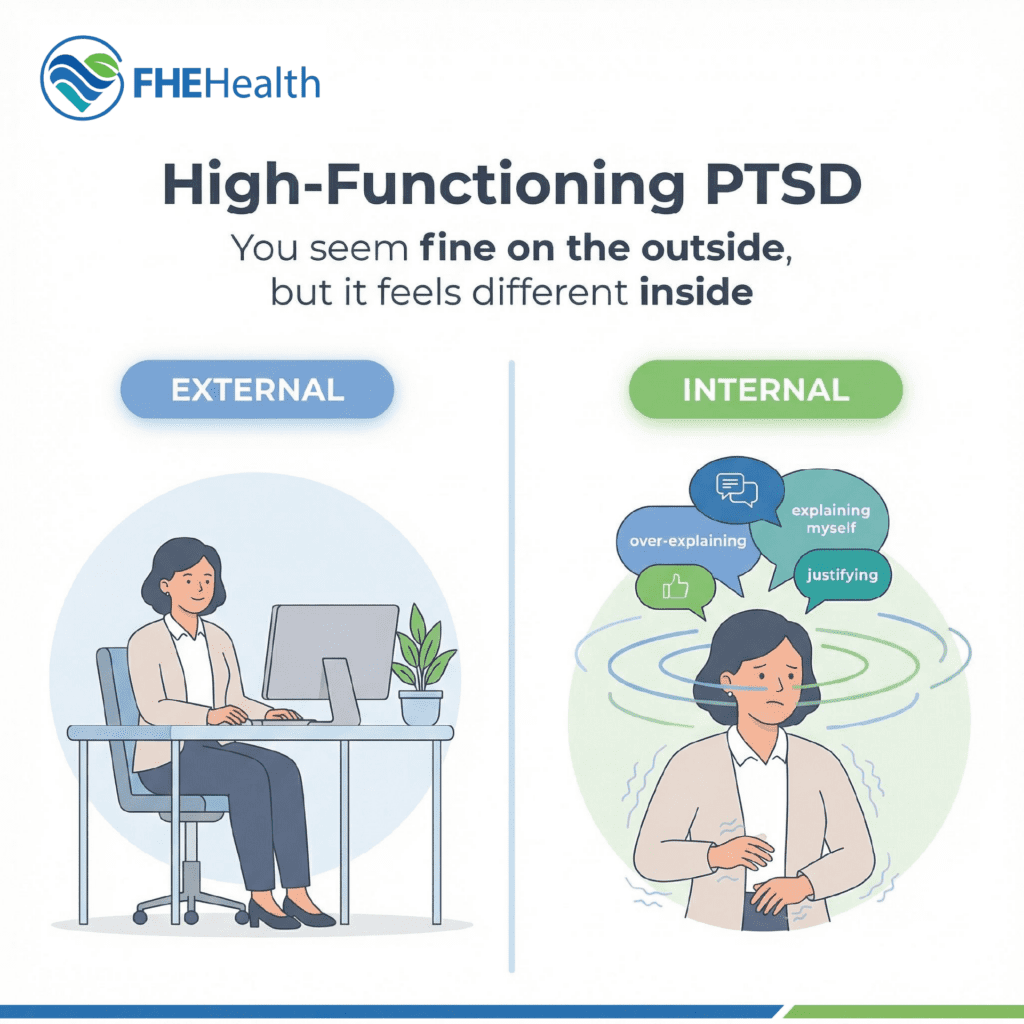
When we think of post-traumatic stress disorder, we often imagine someone visibly struggling. We generally don’t picture someone who seems calm, successful and highly accomplished. Individuals with high-functioning PTSD successfully maintain careers, relationships and daily responsibilities while living with symptoms such as anxiety or heightened stress. Because they appear to manage life effectively, the impact of the trauma they experienced may go unnoticed by themselves and others.
What “High-Functioning” Actually Means

The term “high-functioning” typically describes people who continue to navigate day-to-day life effectively despite living with mental health symptoms. For those experiencing the lasting effects of trauma, this means maintaining careers, relationships and daily responsibilities while dealing with hidden PTSD signs. While high-functioning PTSD isn’t a formal medical diagnosis, the term provides a framework for understanding how trauma can affect people who seem stable and successful.

In a 2024 study, researchers reviewed how PTSD changes the way an individual’s brain navigates processes such as inhibition and task switching. However, the severity of these effects varies widely. Some people are unable to manage daily responsibilities, while others seemingly experience minimal disruption.

An individual with high-functioning PTSD may appear organized and productive. They may enjoy career success, participate in family life and maintain friendships. However, these outward markers of stability may mask symptoms such as anxiety, hypervigilance or intrusive memories.

Being high-functioning doesn’t mean the individual isn’t affected by trauma or wouldn’t benefit from trauma-informed treatment. Oftentimes, individuals cope with PTSD by staying busy, suppressing their memories or emotions or maintaining strict control over their environments. Recognizing PTSD without obvious signs helps us understand how trauma can affect people in different ways.

How PTSD Is Commonly Misunderstood

Oftentimes, our understanding of PTSD is shaped by pop culture. We associate the disorder with extreme reactions, such as panic attacks, flashbacks and withdrawal from daily life. While these reactions are real and common, PTSD often manifests in less obvious ways. This can create misunderstandings about what it means to live with this disorder.

A common misconception about PTSD is that it’s limited to combat veterans or those who’ve experienced a single significant, life-threatening event. In reality, a variety of traumatic experiences can result in PTSD. This may include car accidents, abuse, natural disasters or prolonged exposure to stress.

Another common misconception is that individuals with PTSD experience extreme impairment and aren’t able to function normally at home or work. However, many people continue to manage work and relationships while experiencing internal symptoms.

These misunderstandings can make it difficult for someone to recognize complex PTSD signs in themselves or a loved one. This can delay seeking a diagnosis and getting help.

Signs of High-Functioning PTSD

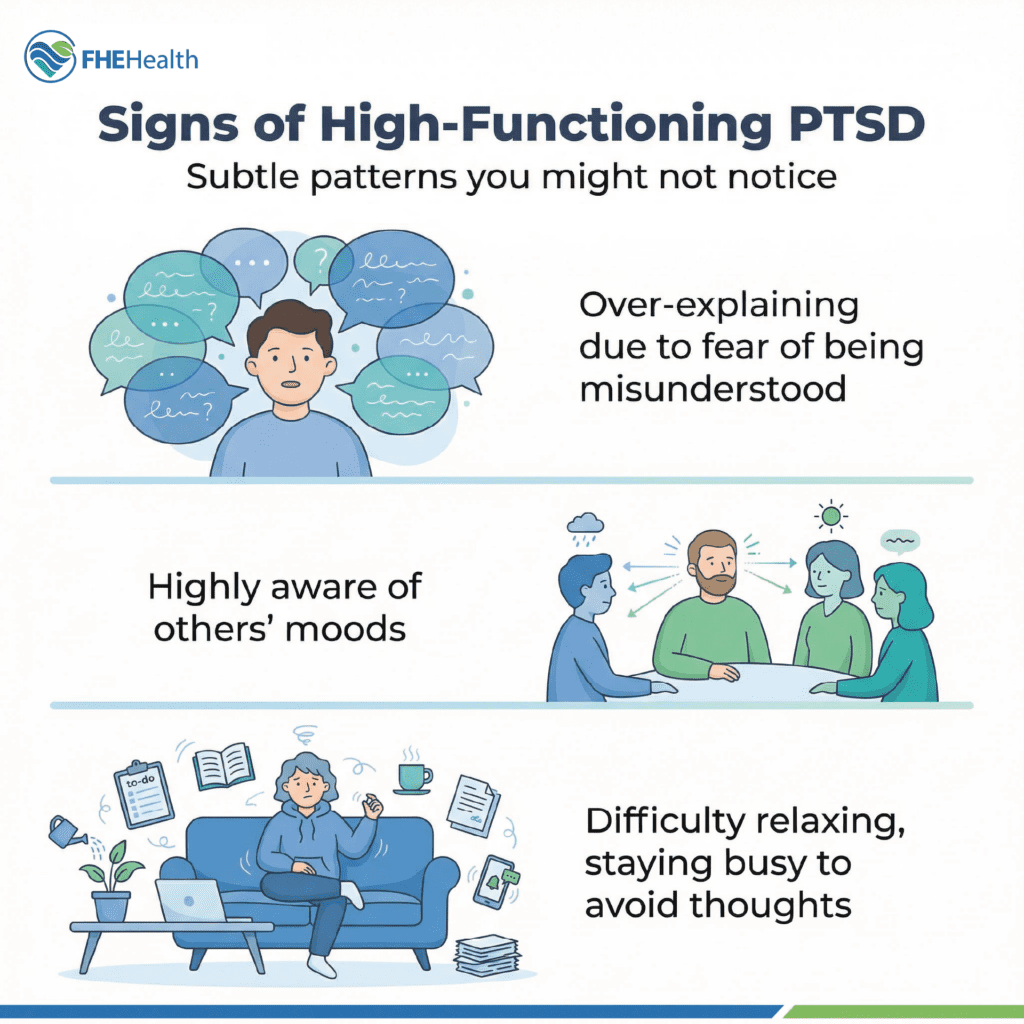
High-functioning PTSD can be difficult to recognize. While the individual may appear stable, subtle signs may indicate trauma is affecting daily life. These may include:

  • Persistent anxiety or hypervigilance
  • Emotional numbness or detachment
  • Perfectionism or overworking
  • Sleep disturbances
  • Avoiding certain places, situations or thoughts

For someone wondering if they’re dealing with PTSD, recognizing these signs can motivate them to seek help. Early intervention can improve their quality of life and help prevent long-term mental health issues.
Why People With HFPTSD Often Don’t Seek Help

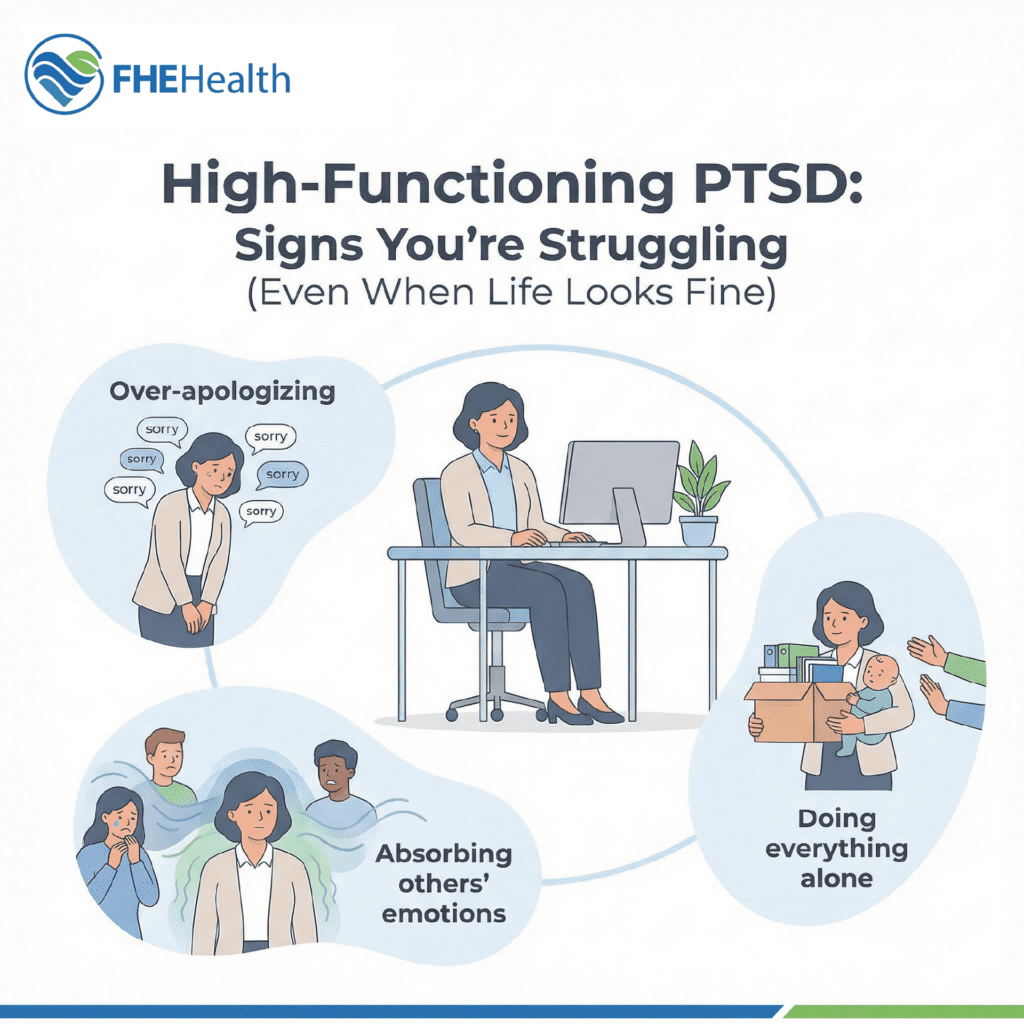
Individuals with high-functioning PTSD may resist seeking help because they think their symptoms are less visible and disruptive. They may feel pressure to maintain their performance at work, school or home, or they may be discouraged by the stigma around mental health.

Over time, coping with hidden PTSD signs through busyness, perfectionism and emotional suppression can mask the need for support. This may delay treatment and recovery.
The Long-Term Cost of Untreated Trauma

Without proper treatment, the effects of PTSD can last for years. A 2024 longitudinal study found that even 12 to 15 years after a serious injury, PTSD can persist. For many, this results in ongoing psychological, functional and economic outcomes. Individuals with long-term PTSD symptoms are more likely to experience anxiety, depression and challenges in daily functioning.

Untreated PTSD can also contribute to ongoing physical health problems, difficulty maintaining relationships and declining performance at work. Over time, these can lead to a reduced quality of life and increased healthcare costs.

By addressing PTSD, even if there aren’t obviously disruptive symptoms, individuals can begin the recovery process. They can also avoid more serious impacts on their daily lives and relationships.

Need Help?

Treatment can begin quickly and discreetly, get started now

Contact Us

How PTSD Is Diagnosed

Diagnosing PTSD typically involves a comprehensive evaluation process. This lets healthcare providers thoroughly assess symptoms and rule out other physical or mental conditions. Evaluations may include a physical exam, mental health evaluation and questionnaires. They usually take between one and two hours and involve answering questions about thoughts, feelings and behaviors following trauma.

A PTSD diagnosis is based on specific clinical criteria and can only be given by a mental health provider. It requires that the individual experienced a significant event or series of events involving actual or threatened death, violence or serious injury, either to themselves or someone else. To meet the diagnostic criteria, symptoms must persist for at least a month.

Seeking Treatment for High-Functioning PTSD

At FHE Health, our licensed clinicians provide individualized care for PTSD treatment. Our programs incorporate evidence-based therapies with tailored treatment planning. With modalities such as cognitive behavioral therapy, Eye Movement Desensitization and Reprocessing therapy and neuro rehabilitation, we focus on lasting recovery and improved well-being. To learn more about our treatment plans or speak with an intake specialist, contact us today.

FAQ

Is high-functioning PTSD more common in certain professions?
High-functioning PTSD might be more noticeable in professions that involve high pressure and maintaining performance.
Can high-functioning PTSD trigger other mental health conditions?
Yes, individuals with PTSD are more likely to develop co-occurring conditions such as depression, anxiety disorders or substance use disorder.
How long does it take to see improvement with treatment for high-functioning PTSD?
Timeframes for improvement vary, but many individuals notice symptom relief within weeks to months of PTSD treatment.

Filed Under: Behavioral & Mental Health, Featured in Mental Health

About Chris Foy

Chris Foy is a content manager and webmaster for FHE Health with years of experience in the addiction treatment industry...read more

Primary Sidebar

Learning Center

  • Help for You
  • Help For Loved Ones
  • Help For Alcoholism
  • Help With Substance Abuse
  • Behavioral & Mental Health
  • Life in Recovery
  • Rehab Explained
  • All Articles

Sign up for the Blog

Our Facilities

Take a look at our state of the art treatment center.

View Our Gallery

The Experience Blog

  • Addiction News
  • Alumni
  • Community Events
  • Expert Columns
  • FHE Commentary
  • FHE News
  • Treatment Legislation
  • All Articles

Footer

FHE Health

© 2026 FHE Health

505 S Federal Hwy #2,
Deerfield Beach, Florida 33441
1-833-596-3502
Open 24 Hours Daily
youtube facebook instagram linkedin twitter
  • Contact
  • Careers
  • AI Policy
  • Privacy Policy
  • Sitemap
A+ BBB and Top Places to Work - Sun Sentinel

Copyright © 2026 · FHE Theme On Genesis Framework · WordPress · Log in

Manage Consent
To provide the best experiences, we use technologies like cookies to store and/or access device information. Consenting to these technologies will allow us to process data such as browsing behavior or unique IDs on this site. Not consenting or withdrawing consent, may adversely affect certain features and functions.
Functional Always active
The technical storage or access is strictly necessary for the legitimate purpose of enabling the use of a specific service explicitly requested by the subscriber or user, or for the sole purpose of carrying out the transmission of a communication over an electronic communications network.
Preferences
The technical storage or access is necessary for the legitimate purpose of storing preferences that are not requested by the subscriber or user.
Statistics
The technical storage or access that is used exclusively for statistical purposes. The technical storage or access that is used exclusively for anonymous statistical purposes. Without a subpoena, voluntary compliance on the part of your Internet Service Provider, or additional records from a third party, information stored or retrieved for this purpose alone cannot usually be used to identify you.
Marketing
The technical storage or access is required to create user profiles to send advertising, or to track the user on a website or across several websites for similar marketing purposes.
  • Manage options
  • Manage services
  • Manage {vendor_count} vendors
  • Read more about these purposes
View preferences
  • {title}
  • {title}
  • {title}
Questions?

We’re here to Listen & Help.
Chat with us 24/7

Contact Us
Call (833) 596-3502


The FHE Health team is committed to providing accurate information that adheres to the highest standards of writing. If one of our articles is marked with a ‘reviewed for accuracy and expertise’ badge, it indicates that one or more members of our team of doctors and clinicians have reviewed the article further to ensure accuracy. This is part of our ongoing commitment to ensure FHE Health is trusted as a leader in mental health and addiction care.

If there are any concerns about content we have published, please reach out to us at marketing@fhehealth.com.

833-596-3502

Text/Call Me