Cannabidiol (CBD) oil is growing in popularity, mostly due to recent legalization and its frequently touted effectiveness in treating common ailments. CBD is used as a treatment for a wide range of illnesses and ailments. Unfortunately, most people are unaware of which dose is best. The responsible use of CBD oil to achieve the best possible results requires awareness of its composition and proper dosage so that too much CBD is not ingested.
Can You Overdose on CBD Oil?
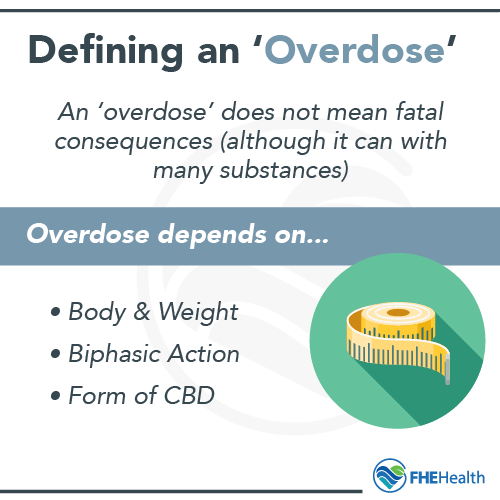 The answer to this question is likely a version of “yes,” you can overdose on CBD. However, an overdose is not as life-threatening as it can be with other substances. It is estimated that an average male who weighs 180 lbs would need to ingest more than 33 tablespoons of CBD oil in one sitting to qualify as “overdosing” on CBD. For more perspective, a typical dose is 1/8 of a teaspoon.
That said, while it may be hard to overdose on CBD, this should not be misconstrued as meaning that high amounts of CBD are somehow harmless. (After all, as with any medicinal substance, the packaging directions regarding recommended dosage are not arbitrary: They are there for a reason.) If you experience severe effects after taking an inordinate amount of CBD, seek immediate medical attention.
Factors That Determine Safe CBD Doses
Anyone who regularly uses CBD for pain or other issues needs to know they are taking a correct and safe, therapeutic dose of CBD, based on factors such as:
- Body and Weight. Appropriate CBD levels are partly based on metabolism and body weight.
- Biphasic Action. Lower doses of CBD have certain effects, and higher doses have other effects. It is important to consider the ailments the CBD is intended to treat in order to identify the correct dosage.
- Form of CBD. The most common form is CBD oil or tincture, but other forms, such as gummies and vape juice, are also used. The dosage depends on the form of CBD consumed.
The Effects CBD Can Have on the Body
 Although CBD is one of 100 chemical compounds found in the cannabis plant, it is not psychoactive, like THC. This quality makes CBD a promising option for chronic pain relief and anxiety. CBD works by changing the receptor activity of the body’s endocannabinoid system (ECS), which regulates functions such as sleep, pain response, and the immune system.
Does Taking More CBD Reduce Anxiety Even More?
Anxiety and depression are devastating mental health disorders that are all too common. People who have sought treatment for anxiety but are not comfortable with pharmaceutical drugs have turned to CBD oil as a promising treatment. CBD has also been used to treat addiction.
A Brazilian study set out to measure anxiety levels when 57 men received either oral CBD or a placebo— 90 minutes before participating in a simulated public speaking contest. The results revealed that a 300-mg dose of CBD significantly reduced the men’s anxiety. Interestingly, both the placebo, a 150-mg dose of CBD, and a 600-mg larger dose of CBD had little to no effect on anxiety.
This study and others like it reveal that more is not necessarily better when it comes to CBD. Identifying the proper dose is imperative for achieving the desired results. Different individuals can react to different doses in varying ways.
Symptoms of CBD Overdose
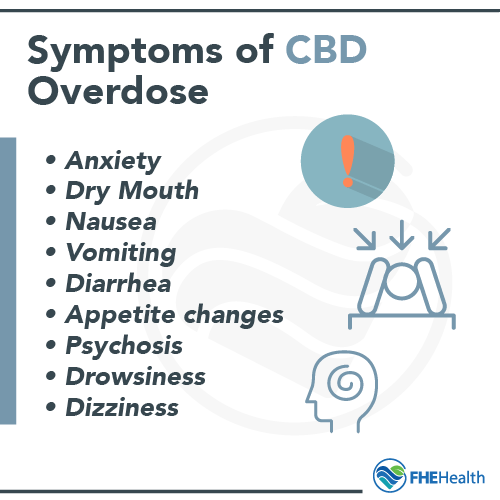
While generally considered safe, high doses of CBD can lead to several adverse effects. It’s important to be aware of these potential symptoms, especially when starting or adjusting your CBD dosage. As illustrated in the graphic above, potential signs of excessive CBD consumption include:
- Dry mouth
- Anxiety
- Nausea and vomiting
- Diarrhea
- Appetite changes
- Psychosis
- Drowsiness
- Dizziness
If you experience any of these symptoms after using CBD, it’s recommended to reduce your dosage or discontinue use and consult with a healthcare professional.
CBD and Pets
While there is no definitive research that shows how CBD affects dogs and other pets, pet owners have plenty of anecdotal evidence based on treating their animals for pain, seizures, and even depression. The AKC Canine Health Foundation is currently sponsoring research into the effects of CBD for treating epilepsy in dogs and is hopeful that beneficial discoveries will come from this effort.
CBD works the same on a dog’s ECS as it does on a human. Pet owners who have struggled to find a viable remedy for their pets’ ailments have turned to CBD. Although the safety and risks of using CBD for dogs have not been researched, it is known to have the following side effects:
- Dry mouth. CBD decreases the production of saliva, which causes increased thirst.
- Lowered blood pressure. Temporary drops in blood pressure can occur when doses are too high.
- Drowsiness. The calming effect of CBD helps with anxiety but can also cause drowsiness.
Can Pets OD on CBD?
A commonly asked question is, “What happens if my dog eats CBD?” The truth is that the safety and risks associated with dogs ingesting CBD have not been researched. The FDA has not approved CBD for dogs, so there is no regulated dosing. It’s not known exactly how much CBD is toxic for dogs. If a dog accidentally ingests any amount of CBD oil, it is best to seek treatment from a vet.
CBD and Children
 Parents will go above and beyond for their children, especially when their children are in pain or suffering from other ailments. Although some doctors recommend CBD oil for children, citing numerous benefits, it is important to understand that a child’s body can react differently to a substance that works well for an adult.
Not only are dosages different to account for a child’s smaller and less developed body, but the manner in which CBD is ingested is different as well. Children obviously will not be vaping or dabbing CBD concentrates, so other methods of ingestion, such as gummies or placing CBD oil under the tongue, are necessary.
If your child has consumed too much CBD and you are concerned, contact poison control immediately. CBD is a legal compound that can be toxic in large doses, similar to soap or toothpaste. Erring on the side of safety is best, especially considering that there is still much to learn about the potentially harmful properties of CBD taken in high quantities.
How Long Do the Effects of CBD Take to Wear Off?
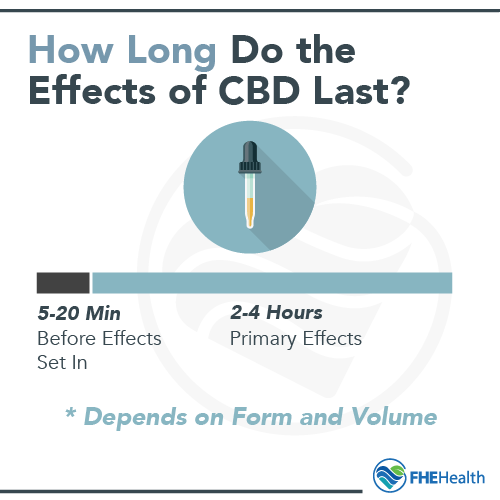
The answer to this question depends on many factors, such as the dose and a person’s metabolism. In general, it can take 5-20 minutes for the effects of CBD to manifest, and these can last 2-4 hours. A big factor affecting how long CBD’s effects last is the method of ingestion and whether a CBD user ingests edible gummies, a capsule, a tincture, or a food product laced with CBD. Vaping, the most common way to consume CBD, begins to work within five minutes but also subsides fairly quickly. The effects of topical CBD can take longer to kick in but also tend to last longer.
CBD oil has been studied for its potential role in easing symptoms of many common health issues in adults, including anxiety, depression, acne and heart disease. However, not much research exists addressing the toxicity of CBD or whether adults, children, or pets can overdose on CBD. Research on the potential health benefits and risks of CBD oil is ongoing. While CBD is generally regarded as a safe and effective way to manage pain and anxiety, CBD is still a medicinal substance that should be taken according to the dosing instructions on the packaging label.
FAQs About CBD Safety and Overdose
Q: Can you actually “overdose” on CBD oil like you can with a drug or alcohol?
A: You can technically overdose, but it’s not life-threatening in the way it is with substances like opioids. A true overdose would require ingesting an extreme, impractical amount. However, taking a huge dose is not harmless and can still cause severe side effects. Always stick to the recommended dosage.
Q: How quickly does CBD work, and how long do the effects last?
A: It depends on how you take it. Vaping works within 5–20 minutes and wears off fast. Edibles or capsules take longer to kick in (30 minutes to an hour) but generally last longer, typically two to four hours.
Q: “I accidentally took a double dose of my oil right before a big meeting. Am I going to be acting ‘high’ or slurring my words in front of my boss?”
A: You are likely fine, but if you’re unsure, talk to a doctor. Unlike THC, CBD doesn’t cause intoxication, so you won’t be hallucinating or slurring during your presentation. The biggest risk you face right now is feeling a bit too relaxed or sleepy. Grab a coffee, drink some water, and try to shake off the anxiety; stressing about the dose will likely affect your performance more than the CBD itself.
Q: I’m using CBD for anxiety. Does taking more than the recommended dose mean I’ll feel even more relaxed?
A: No. CBD has a “biphasic action,” meaning lower doses have one set of effects, and higher doses have different ones. When treating anxiety, an optimized dose works best, and taking a much larger dose often has little to no effect. Finding the right dose is crucial; more is not always better.
Q: What are the main symptoms of taking too much CBD?
A: The most common signs you’ve overdone it include a very dry mouth, feeling unusually drowsy or dizzy, and stomach issues like nausea, vomiting, or diarrhea.
Q: Since it’s generally safe, can I give CBD to my dog for pain or anxiety?
A: Many pet owners do use it, as CBD works on a dog’s endocannabinoid system (ECS) like it does in humans. However, the FDA has not approved CBD for pets, and there is no regulated or established safe dose. Side effects like dry mouth or drowsiness can occur. If your dog ingests a large amount, you must contact your veterinarian.
Q: My friend bought some CBD gummies for her child. Is CBD safe for kids?
A: While some doctors may recommend it for specific conditions, a child’s smaller, less developed body reacts differently than an adult’s, requiring careful dosing. In large doses, CBD can be toxic, similar to accidentally consuming too much soap or toothpaste. If you are concerned your child has consumed too much CBD, contact poison control immediately.
Q: What factors determine what a safe CBD dose is for me?
A: An appropriate therapeutic dose depends on several personal factors, including your body weight (due to metabolism), the specific ailment you are treating, and the form of CBD you are consuming (oil, gummy, vape, etc.), but like all medications, you should talk to a doctor before starting or stopping any regiment.