
Benzodiazepines, including medications such as Xanax and Klonopin, are prescription drugs used to treat anxiety. In many cases they are necessary to manage a mental health concern, but benzos are highly addictive, and people can become physically and psychologically dependent on them. That makes it difficult to stop using benzos when you attempt to, and it can also lead to abuse of the drugs, even by people who were never prescribed them.
Options for safe benzodiazepine detox do exist, though, and depending on your needs and situation, you may be able to do this at home or in an outpatient or inpatient rehab environment. Contact FHE Health to learn more about our benzodiazepine detox options in Florida.
Why Is Benzo Detox a Critical Step in Benzo Addiction Recovery?
Many people are under the false impression that benzos are safer to take or easier to detox from because they are a prescription drug given to them by their doctor. While you can safely take benzos under the care of a physician for specific conditions, they are not always safe or easy to detox from.
Even someone who has only taken the medications as prescribed may experience worrisome withdrawal symptoms. Quitting the medication “cold turkey” can trigger them. Because of this, many physicians work with patients to stop taking benzos gradually when the appropriate time arrives. This is actually a form of benzo detox.
In some cases, however, it is not enough. If someone has started using more benzos than were prescribed, is using benzos outside of a prescription, or is simply very physically dependent, they may have difficulty quitting. Their use is reinforced by the painful, frightening withdrawal symptoms they begin to experience, and those symptoms drive them back to the substance. In these cases, a more sophisticated approach to detox may be required.
Popular Benzos That May Require Detox
Benzodiazepines are used to treat a variety of disorders and conditions, including anxiety, alcohol withdrawal, seizures, panic disorders, muscle spasms, sleep problems, and even some cases of premenstrual syndrome. An estimated 30.5 million U.S. adults, roughly 12.5% of the adult population, have used benzodiazepines, and they remain widely prescribed today.
Drugs within this family include:
- Xanax (generic name: alprazolam)
- Klonopin (generic name: clonazepam)
- Librium (generic name: chlordiazepoxide)
- Valium (generic name: diazepam)
- Ativan (generic name: lorazepam)
Most benzos are prescribed in oral form, via tablet or capsule, in both regular and extended-release versions. Some are also available in liquid form or for injection, which can be easier for some people to misuse.
Why Do Benzos Cause Withdrawal Symptoms?
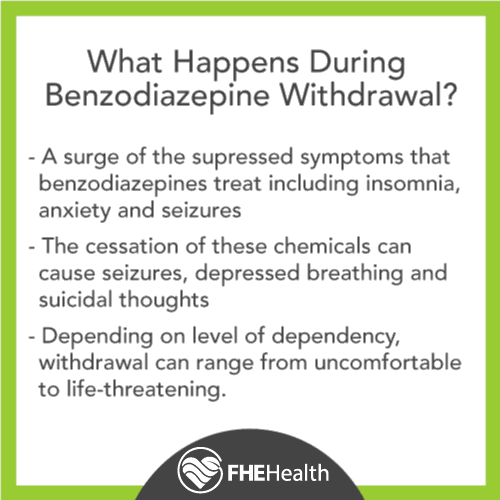
Benzos work by making chemical changes in your body. Specifically, they increase the amount of gamma-aminobutyric acid (GABA) in your brain. GABA is one of the ways the brain communicates, and when you have more of it in your system, your stress reactions, such as fight-or-flight, are calmed. That helps reduce feelings of anxiety.
When you take these drugs regularly, your body becomes used to a higher-than-normal level of GABA and stops producing its own natural levels. When you stop using benzos, you are left with a deficit. That can cause physical withdrawal symptoms and make your anxiety and mood difficult to manage.
Benzo Withdrawal Symptoms
Determining exactly when benzo withdrawal starts is difficult, because the timeline varies for each person. Some people see symptoms within a few hours of their last dose; others see them last for days or weeks. Severity depends on how much of the drug a person was using and how long the dependency has been present. Common symptoms include:
- Anxiety and panic attacks
- Irritability and mood swings
- Insomnia
- Poor concentration and memory
- Body aches, muscle pain, and restless legs
- Tremors, muscle twitches, or spasms
- Nausea
- Heart palpitations
- Agitation
- Sweating or night sweats
- Burning sensations in the brain
- Distortion of reality
Severe Benzo Withdrawal Symptoms
Some people experience severe withdrawal symptoms within just a few hours of discontinuing the drug. These include:
- Seizures
- Delirium
- Periods of psychosis
- Suicidal thoughts
- Intense sweating
- Inability to control movements
- Very fast heart rate, which can trigger sudden death
Although rare, a syndrome very similar to delirium tremens can occur during benzo withdrawal. Widely referred to as DTs, delirium tremens is more closely associated with alcohol withdrawal, but a condition with similar symptoms can develop with benzos. Counterintuitively, the most common treatment for DTs in a medical setting is the use of benzodiazepines.
Whether it qualifies as DTs or not, this condition can cause seizures, hallucinations, uncontrollable shaking, and death if left untreated. It is a medical emergency and requires immediate care. If you believe you are experiencing DTs after trying to quit benzos cold turkey or on your own, seek immediate assistance from first responders or your local emergency room. In a controlled environment, your doctor can minimize these risks should severe complications occur. Keep in mind that even your doctors cannot predict whether you will experience severe symptoms; some people who take small amounts of benzos can develop complications within a short time.
What Is the Benzo Withdrawal Timeline?
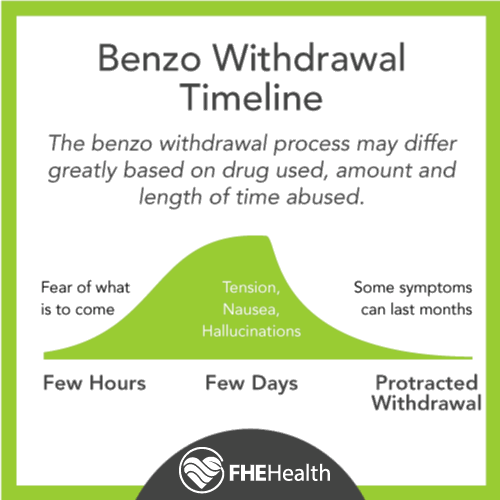
Every patient is different. Benzo withdrawal duration depends on the type of drug used, the amount consumed, and the length of the dependency. Commonly, the following can occur:
- Withdrawal symptoms typically begin within 24 hours of the last use of the drug.
- They can continue, moving from the most intense symptoms to the least intense, over several months.
- The highest risk for severe reactions runs from 24 hours after the last dose through the first week of stopping.
Drugs with a shorter life cycle in the body, such as Xanax, may create withdrawal symptoms within 10 to 12 hours. Others, such as Valium, remain in the body in smaller amounts for longer, so you may not notice symptoms for 2 days or more. The method of use matters too: people used to ingesting pills may experience a delay, while those who snort or inject the drug may see withdrawal symptoms very quickly.
Typical phases of benzo withdrawal include the following.
Early Withdrawal
Early withdrawal may happen within a few hours of the last dose. A sense of anxiety often develops early, along with fear of what is to come, as the feelings the drug was suppressing return.
Acute Withdrawal
A few days later, people may begin to feel more intense physical symptoms, including tension, nausea, and blurred vision. This is also when seizures can occur. Some people experience hallucinations; others struggle with concentration. Cravings are strong in this phase.
Protracted Withdrawal
Many people get through the acute stage within 2 weeks, though it can take several months. Beyond that, a protracted withdrawal can occur, leaving a person feeling not quite “normal” because of the lasting impact of the drug. They may experience chronic depression or anxiety, concentration or memory issues, and muscle pain for years after stopping.
What Will You Feel During Benzo Withdrawal?
Aside from the physical symptoms, withdrawal takes an emotional toll. The pain can create mental anguish and difficulty concentrating. Many people feel afraid, exhausted, and overwhelmed. Some are unable to sleep for days; others experience depression and anxiety that, without treatment, can persist. The intensity of these symptoms, combined with the emotional toll, is why detox attempted outside a clinical setting so often fails. Without benzo withdrawal help, many people turn back to the drug to soothe their symptoms.
How to Detox From Benzos: Options
People struggling with a benzo addiction do not have to put themselves at risk of DTs and other harmful withdrawal symptoms. Medical detox for benzodiazepines is possible, and you may have several choices in Florida.
- Home detox under the care of a physician. This usually involves weaning slowly off benzos. Your doctor reduces your prescription over time so you come off the medication naturally. This may work if you have developed a mild dependence after using benzos for some time.
- Outpatient assistance with detox. Some people need a bit more support with their home detox. In addition to working with their doctor, they may seek outpatient therapy through day programs, support groups, or individual sessions.
- Inpatient benzo detox. One of the most proven methods of breaking addiction cycles is inpatient treatment, which removes distractions and drug triggers so you can focus on getting well. Benefits include clinical staff always nearby to assist with withdrawal symptoms and therapeutic staff to help you understand the root causes of addiction and develop healthier coping mechanisms.
What to Look for in an Inpatient Benzo Detox
- A comprehensive assessment process. Your dependency is unique to you, so work with a Florida benzo detox program that treats you as an individual and takes the time to understand what you need for detox and recovery.
- Comprehensive support. Medically supervised detox keeps you safe and comfortable during the first days and weeks of rehab. You also need access to other forms of therapy, including individual and group therapy, recreational therapy, and education on how lifestyle changes can support recovery.
- The ability to treat co-occurring diagnoses, such as mental health disorders. Many people who become addicted to benzos also struggle with anxiety. Look for a Florida benzo detox and rehab facility that can help you with both.
- Treatment plans with follow-up. Search for a facility that offers outpatient resources or refers you to the right providers and groups so you can continue your recovery after discharge.
Benzo Detox at FHE Health
At FHE Health, we create the most comfortable environment we can for those seeking any of our benzodiazepine addiction treatment or detox programs. Patients are supported 24/7 by caring, expert staff, and we work with you from your first call through post-recovery follow-up to give you the best chance of breaking free from benzos and living a benzo-free life. Contact FHE Health today to learn more.