
Last week, we introduced you to twelve outstanding finalists for this year’s “Hope for Healing Scholarship,” each with an inspiring story and a deep commitment to the field of behavioral health. Choosing from such a talented pool of finalists made the decision even more difficult, and even more meaningful.
After careful deliberation, our selection committee has reached its decision. This year’s two winners of the $5,000 Hope for Healing Scholarship are Elena Dos Santos and Joshua Jones.
Each student will receive a $5,000 scholarship awarded directly to their institution, a reflection of the caliber of this year’s applicant pool and the promise these two individuals bring to the field. In the coming weeks, you’ll get to know each of them better through individual feature blogs highlighting their journeys and aspirations.
Every year, the Hope for Healing Scholarship draws an extraordinary group of applicants, students who are not only academically accomplished, but who are already doing meaningful work in the field of behavioral health. This year was no different. We received hundreds of applications from highly qualified candidates, and we are deeply grateful to everyone who took the time to share their story with us. To the other eight finalists in particular: your dedication to this field is an inspiration, and we have no doubt that each of you will go on to make an incredible difference.
Elena Dos Santos – Graduate Recipient
 Elena Dos Santos is a student at Dartmouth, where she is working toward a future in medicine, specifically at the intersection of neuroscience, trauma, and mental health. She is also, by any measure, someone who has never taken the easy path.
To put herself through college without loans, Elena works three jobs: helping manage her mother’s house cleaning business, working early-morning and evening shifts as a building manager and front-desk assistant at Dartmouth’s Zimmerman Fitness Center, and serving as a Sports Marketing and Game Day Assistant on weekends. It’s a schedule that would overwhelm most, but for Elena, it reflects something deeper about who she is and where she comes from.
Elena immigrated from Brazil with her family at the age of ten. Growing up, she watched her mother clean six or seven houses a day to keep the family afloat. There was no health insurance, and mental health, she writes, “wasn’t something people talk about.” Survival meant keeping your head down and pushing through. That silence, she came to understand, can be just as damaging as any illness.
The seeds of her calling were planted during her time volunteering as an EMT. The medical protocols came naturally enough — but what stayed with her was something harder to quantify. “Behind every call,” she writes, “was something deeper: grief, fear, trauma. And no amount of gauze or CPR training could reach it.” One call in particular, a man alone in a dark apartment, not sick enough to transport, but clearly not okay, left Elena with a question she couldn’t shake: what do you do for the pain you can’t see on a monitor?
That question led her to neuroscience. Today, Elena works in a VA research lab studying blast-induced brain trauma in Veterans, running behavioral assays and examining how treatments like vagus nerve stimulation might reduce the neurological impact of combat-related injuries. She wants to understand, at a biological level, why some people heal after trauma and others don’t — and eventually, to become a physician who brings both the science and the lived experience of her own community to that work.
“I want to be a doctor who doesn’t dismiss pain because it isn’t visible on an X-ray,” she writes, someone who helps make mental health part of the conversation for those who’ve never had it.
Joshua Jones – Undergraduate Recipient
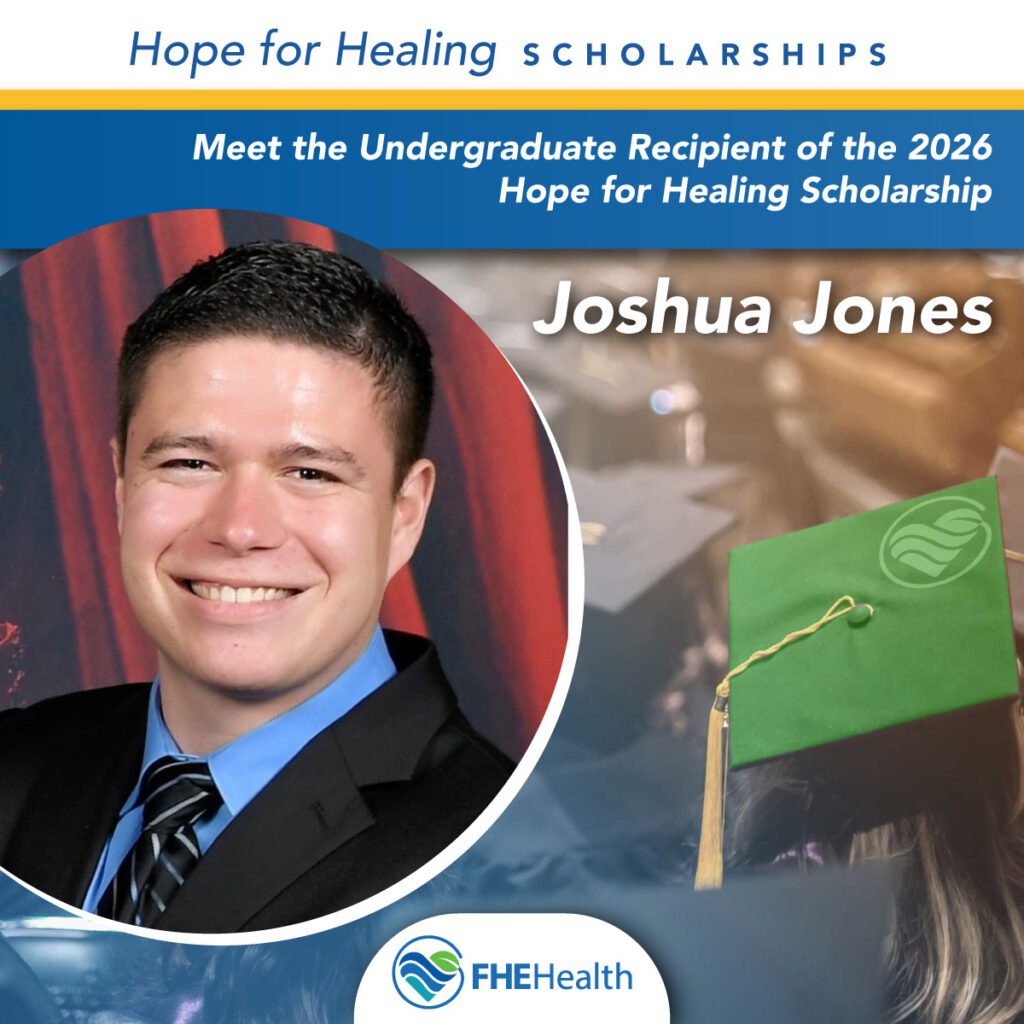 Joshua Jones came to the field of mental and behavioral health through a lifetime of witnessing what happens when people fall through the cracks, in their families, in their communities, and in the healthcare system itself.
Growing up in a multigenerational household, Joshua watched his grandparents navigate serious illness — stroke, diabetes — while also bearing the invisible weight of anxiety, isolation, and uncertainty that chronic disease brings. Those early experiences gave him a foundational understanding of health as something far broader than biology: it is psychological, social, and deeply human.
That understanding only deepened through his undergraduate years at the University of Arizona and the experiences that followed. As an EMT serving rural Arivaca, Arizona, a community with limited access to hospital care, Joshua learned what it means to provide reassurance alongside clinical intervention, and how profoundly fear and trauma shape a patient’s ability to heal. Later, as a medical transporter in Los Angeles, he cared for patients who were alone, anxious, and distrustful of the very system meant to help them. And as a surf instructor with the Jimmy Miller Memorial Foundation, he guided veterans and trauma-affected individuals through therapeutic sessions that reinforced his belief in the power of behavioral interventions to build resilience.
His research has taken him equally deep into the science. Working with professors at the Uniformed Services University, Joshua studied traumatic brain injury in ferrets using advanced neuroimaging techniques, investigating how injury-related changes in brain structure and blood flow connect to cognitive and emotional outcomes. The work sharpened his conviction that neurological injury and mental health are inseparable, and that far too many patients, especially in underserved communities, receive care that addresses only one without the other.
Joshua is now pursuing advanced graduate study with a clear mission: to develop interventions that are evidence-based, culturally sensitive, and accessible, with particular attention to populations that traditional healthcare has too often overlooked. He brings to that work a rare combination, emergency medicine experience, neurological research, and a deep, personal understanding of what it means to advocate for patients whose voices go unheard.
Interested in the Hope for Healing Scholarship? The 2027 application period begins tomorrow. Find everything you need to know to apply here.