
Stress vs. anxiety: When you’re experiencing either, it can feel almost the same. It starts with a tightness in your chest. Then your thoughts speed up, and your body refuses to settle. You call it stress because that feels easier, but a part of you still wonders whether it goes deeper. The goal is not to label yourself, but to understand what you are feeling so you can choose the right kind of support.
What Is Stress?
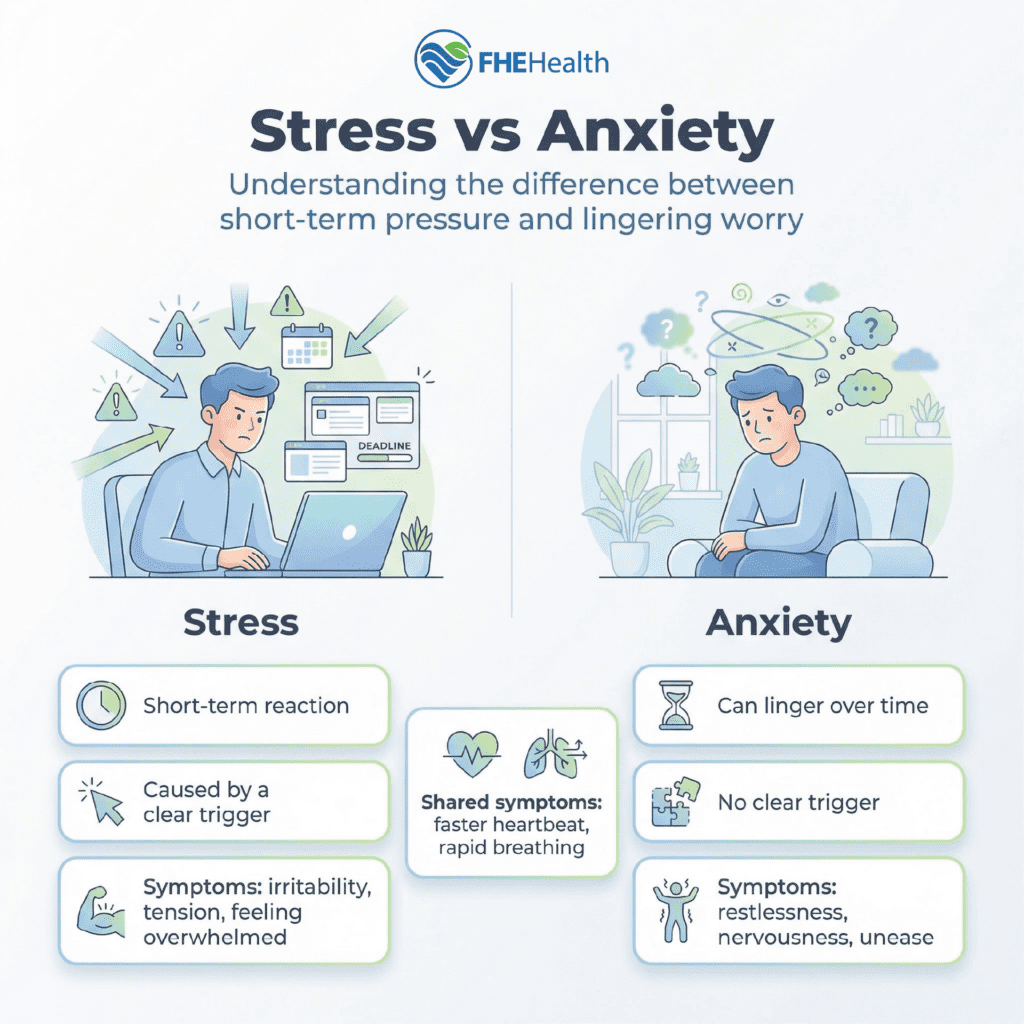
Stress is your body and mind’s response to outside pressure. A heavy workload, a breakup, an illness, financial problems or a major life event can all trigger it. Unlike anxiety, stress usually has a clear cause.
Stress is not always a bad thing. In small amounts, it can sharpen your focus, help you move faster and push you to meet a deadline. The problem starts when it keeps building or never fully lets up. At that point, stress stops helping and starts draining you. From the inside, stress often feels tied to the moment. You may think, “I will feel better when this meeting is over,” or “Once I get through this week, I can breathe again.”
What Is Anxiety?
Anxiety disorder often means feeling worried all the time. According to the Centers for Disease Control, roughly 18.2% of U.S. adults live with an anxiety disorder.
Your body can react to stress with anxiety, but anxiety doesn’t need a current threat to stay active. Anxiety tends to feel more internal than stress. Instead of reacting to one clear problem, it may feel like your mind is permanently on high alert. You may assume the worst, scan for danger or feel unable to calm down even when life looks manageable from the outside.
Where They Overlap
Stress and anxiety can make you feel overwhelmed, snappier with people you love, and physically exhausted. You might find yourself worrying more than usual, carrying tension in your shoulders or chest, and dealing with frequent headaches. Maybe it’s harder to fall asleep or stay asleep, which leaves you mentally foggy the next day. As your sleep and concentration get worse, it becomes even harder to feel calm and in control.
Many people mix up stress and anxiety because the overlap is so strong. What helps separate them is looking at the cause, duration, and whether the symptoms settle down after the stressful event changes or ends.
When Stress Becomes Anxiety
It’s probably anxiety when you still feel “on edge” even after the initial worry has subsided. Maybe it started with a real crisis that evolved into a permanent state of unrest. Ordinary tasks start to feel overwhelming. Even when life is quiet, you still feel tense and uneasy.
Need Help?
Treatment can begin quickly and discreetly, get started now
Self Check: Is It Stress or Anxiety?
These questions aren’t meant to diagnose you, but they can help you figure out what you’re feeling.
- Can you name the main trigger? When your distress clearly ties back to one specific problem, stress is often the more likely explanation.
- Are you avoiding emails, plans, or tasks because they feel too overwhelming? It can be a sign that anxiety is starting to interfere with daily life.
- Has this lasted for weeks or months? Stress is often tied to a hard season, while anxiety is more likely to linger over time.
- Do physical symptoms keep showing up for no obvious reason? If you’re experiencing physical symptoms such as muscle tension, stomach issues or sleep problems without a clear trigger, anxiety is a more likely option.
If your answers point to anxiety, don’t ignore it. You can contact the FHE team before things get harder.
Physical Symptoms: Stress vs. Anxiety Side by Side
- Headaches before or during a deadline
- Trouble sleeping during tough times
- Tension that eases when the situation passes
- Fatigue tied to a specific period or event
- Heart racing even when no threat is present
- Nausea and difficulty focusing
- Persistent sense that something bad is about to happen
- Alarm system that keeps going off after the emergency is over
What Treatment Looks Like for Each
If your symptoms are mostly from stress, treatment often starts with finding relief and using practical coping skills. You might need more sleep, regular meals or time for journaling and mindfulness. Cutting back on caffeine can help as well. It’s also important to know your limits.
When anxiety is the main problem, you may need more than basic stress relief. At FHE Health, we suggest evidence-based therapies like cognitive behavioral therapy (CBT) and, in some cases, medication.
Treatment is about empowering you to better manage disruptive feelings. When you keep telling yourself it is “just stress” while your sleep is wrecked and your body never feels safe, you might need professional care.
Frequently Asked Questions
Feeling Overwhelmed?
If your symptoms are becoming harder to manage, FHE Health can help. We offer individualized care to help you address issues such as chronic stress and anxiety disorders. Get in touch with our compassionate team today.