
When stress continues without relief for long periods, it may cause depression. Signs that stress may be turning into depression include changes in sleep patterns, appetite changes, loss of interest in hobbies and feelings of hopelessness. Getting professional treatment is an effective strategy for managing stress and healing from depression.
For most of us, stress is an unavoidable part of life. Work demands, financial pressures and major life changes can trigger a stress response. Oftentimes, this is short-lived, and feelings of stress pass once the situation improves. However, some people experience chronic stress that lingers for weeks or months, eventually affecting their sleep quality, mood and motivation. This stress can cause depression and may require professional intervention.
What Chronic Stress Does to the Brain and Body
Stress is a natural and healthy response to perceived threats or challenges. When a stressful situation occurs, such as an unexpected financial crisis or a tight deadline at work, the brain releases cortisol and adrenaline. In short bursts, this response can be helpful. It sharpens your focus and increases your energy, making it easier to tackle the challenge.
However, chronic stress keeps this system active for too long. In one study, researchers found that when cortisol remains elevated, it can disrupt brain regions involved in mood, memory and emotional regulation. They suggested that prolonged cortisol exposure and changes in brain function may increase a person’s likelihood of developing depression.
The Bridge Between Stress and Depression
While chronic stress and depression are two distinct conditions, they share a variety of symptoms. Both affect the brain’s ability to regulate mood, motivation and memory. Either condition can lead to emotional depletion, causing the individual to feel overwhelmed and drained. Activities and hobbies that once brought joy may begin to feel like obligations and social interactions may feel exhausting instead of enjoyable.
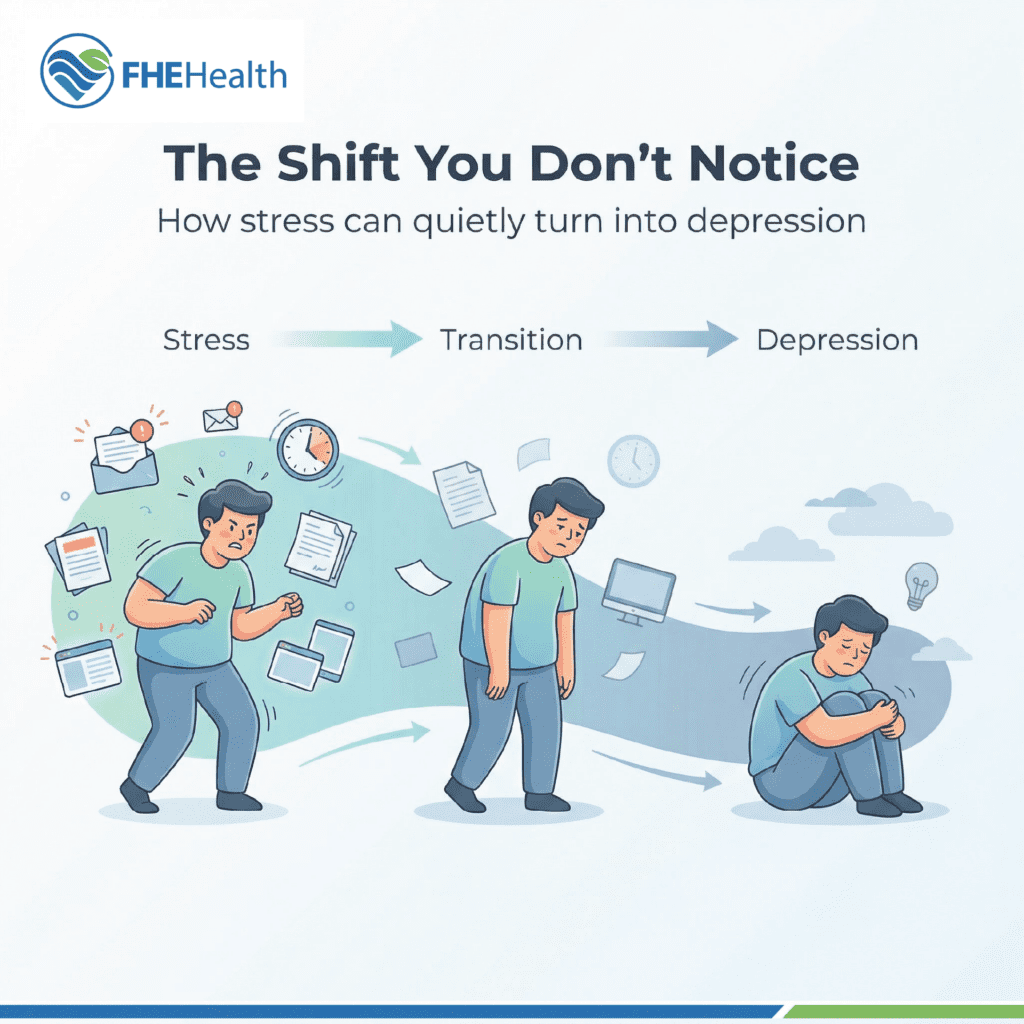
As chronic stress progresses without relief, it may turn into depression. The individual may experience persistent sadness and hopelessness and may have difficulty finding the motivation to handle daily responsibilities.
Warning Signs That Stress Has Caused Depression
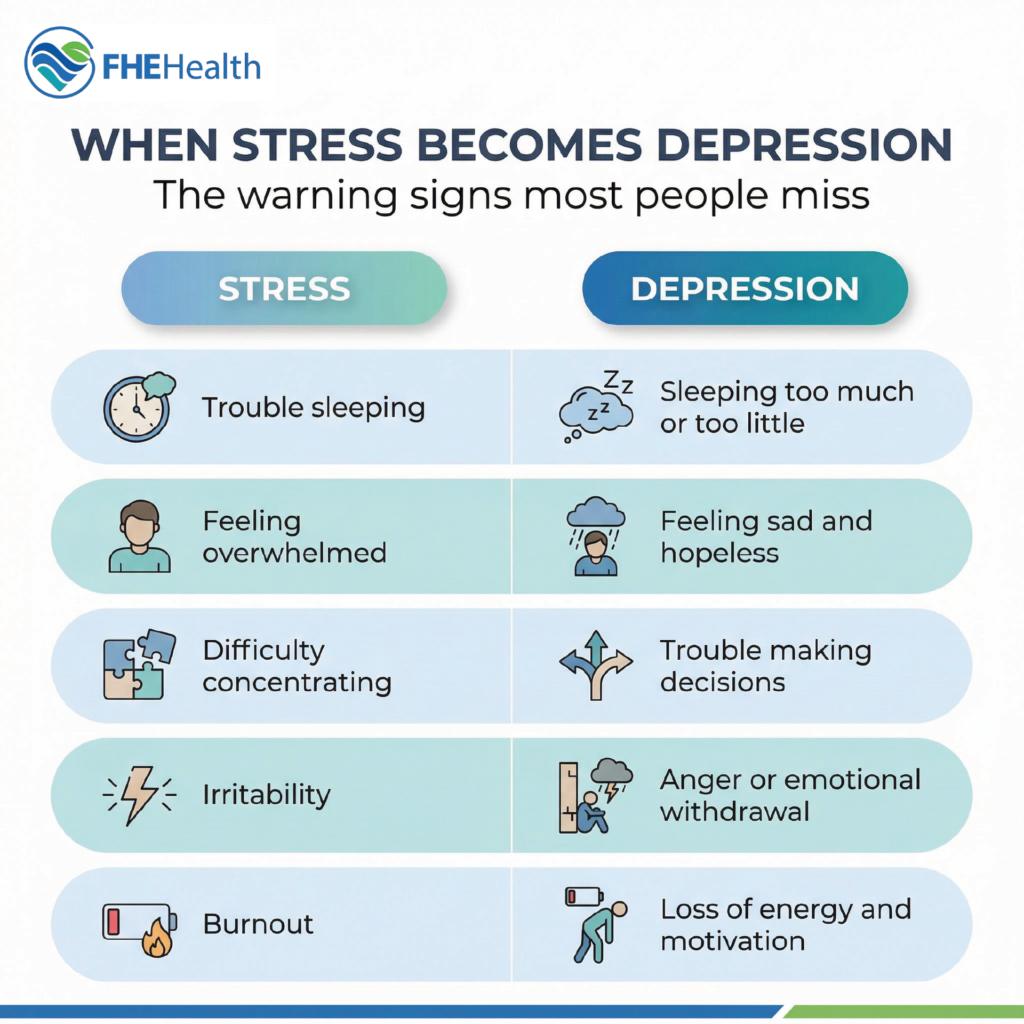
Because stress and depression can mirror one another, it’s often difficult to recognize when one has turned into the other. However, there are several signs stress has become depression. These may include:
- Daytime fatigue
- Loss of interest in activities
- Feelings of numbness or hopelessness
- Withdrawal from others
- Difficulty concentrating or remembering information
- Insomnia or sleep disturbances
- Increased irritability
- Physical symptoms such as headaches, muscle tension or digestive problems
Chronic stress can have a profound impact on a person’s mood and ability to handle day-to-day challenges. These signs may indicate that stress is turning into depression. When they last two weeks or longer or begin interfering with daily life, you should seek professional help.
Why People Normalize These Symptoms
Depression symptoms aren’t always easy to identify, especially for someone who’s become used to living with chronic stress. Symptoms often develop gradually, causing many to miss the transition from stress to depression. Instead of noticing a clearly defined change, many people simply adjust to constantly feeling unmotivated or physically and emotionally drained.
Cultural expectations can also normalize depression symptoms. We’re regularly exposed to messaging around productivity, resilience or powering through feelings of overwhelm. People often dismiss their symptoms as normal responses to busy lives, without recognizing the need for professional intervention.
Other people may worry that seeking help for chronic stress and depression means they haven’t handled the demands of work, school or home effectively. Depression symptoms may feel like an indication of personal weakness or lack of effort. In reality, depression is a medical condition with biological, environmental and psychological factors. Stress is a common trigger that can interact with these factors and increase a person’s vulnerability to depression.
How Stress and Depression Are Treated Differently
Stress and depression may have similar symptoms. However, they are distinct conditions that require tailored treatment and support. For someone living with chronic stress, a variety of stress reduction strategies can be effective. Depression, on the other hand, often requires more structured treatment.
People living with stress often see significant improvement when they incorporate lifestyle changes such as:
- Consistent sleep habits
- Increasing physical activity
- Practicing mindfulness and relaxation techniques
- Adjusting workload or responsibilities when possible
When stress turns into depression, treatment may involve a more comprehensive approach. Mental healthcare providers often use a combination of individual or group therapy, medication management and support for co-occurring conditions such as anxiety or substance use disorder.
Getting Support at FHE
At FHE, we understand that many people live with the effects of chronic stress for a long time before realizing how it’s impacted their mental health. Our team of mental health experts specializes in working with people experiencing depression, stress and co-occurring disorders. We create individualized treatment plans to address the emotional and physiological factors that contribute to depression.
Through evidence-based therapies and personalized treatment plans, our clients learn how to rebuild emotional stability and develop healthy strategies for managing stress. If stress has begun to affect your mental health or daily life, it may be time to get help for depression.
FAQs
- What is the difference between burnout and depression?
Burnout typically comes after a prolonged period of stress related to work, school or caregiving. The individual may experience exhaustion and reduced motivation, along with feeling overwhelmed by responsibilities. Depression affects many areas of life and often brings a persistent sense of hopelessness, changes in sleep or appetite and loss of interest in favorite activities. Burnout often improves when the situation changes, while depression may persist until the individual gets professional treatment. - Is stress-related depression temporary?
Oftentimes, stress-related depression doesn’t resolve on its own without professional treatment. While reducing the source of stress can help, depression symptoms usually require therapy, medication or a combination of both. - How long can stress last before it becomes harmful?
Stress becomes harmful when it persists for weeks or months without relief. Because it affects the body’s physical and cognitive performance, it increases the individual’s risk of developing a mental health condition.
Contact FHE Today for Comprehensive Treatment
If you believe stress is affecting your mental health, help is available. At FHE, our mental health professionals can help you understand what you’re experiencing and identify the right path forward. To learn more about our evidence-based therapies and treatment philosophy, contact us today.