While sobriety and recovery are closely connected, they don’t mean the same thing. Sobriety generally refers to abstaining from alcohol or drugs, while recovery is the broader process of addressing substance use and making changes that support long-term health.
At FHE Health, we help patients understand the difference and treat each as a victory worth marking. There’s no single path for everyone, and what recovery looks like may vary depending on a person’s goals, needs and circumstances.
What Separates Sobriety From Recovery
In the recovery community, “being clean” and “sobriety” get used interchangeably all the time. Each term means something different, though. You can’t be “in recovery” without being sober, but you can be sober without being in recovery.
Being sober means you’re not currently affected by a chemical substance. When we refer to sobriety in terms of alcohol use, it means you aren’t drunk. That could mean you haven’t had a drink in a while, or it may mean you’re not actively living a life where you drink.
Being “clean,” on the other hand, specifically refers to drugs. At FHE Health, we recognize that recovery often looks different for people who use drugs and people who drink. While the experiences overlap in most of the ways that matter, the two groups often separate, and the terms “sober” and “clean” help mark that line. Some people feel the distinction matters for the healing process, because it lets them share their experience with peers who have lived the same version of it.
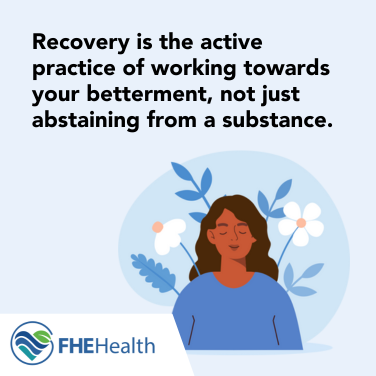
Recovery is the healing process of achieving better emotional, mental and physical health while remaining sober. It’s the active practice of working toward your betterment, not just abstaining from a substance.
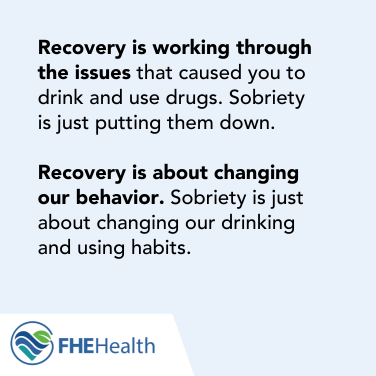
- Recovery is working through the issues that caused you to drink and use drugs. Sober is just putting them down.
- Recovery is realizing that drugs and alcohol were a coping tool for managing a problem, not just the problem itself.
- Recovery is about changing behavior. Sobriety refers to changing alcohol or drug use.
Recovery means healing. Sobriety just means sober. Recovery is learning to love ourselves and others. Recovery is finding peace. Recovery is continually becoming a better person. Recovery is owning up to our actions, right or wrong, and giving up the victim role. Recovery is making amends, not just saying we’re sorry. Recovery is action. Recovery is daily. Recovery isn’t a one-time thing, it’s a lifelong journey.
Recovery is part of a journey toward healing, making amends and improving your quality of life. At FHE Health, we treat sobriety as an important first step toward recovery, and we recognize the courage and commitment it takes to change habits and manage cravings.
Can You Be Sober Without Being in Recovery?
A person can be sober without considering themselves to be in recovery. Someone may stop drinking or using drugs but not participate in treatment, therapy or a structured support program.
While sobriety is an important part of recovery, it doesn’t necessarily address the factors that contributed to substance use. Without developing new coping skills or addressing underlying challenges, many people find it difficult to maintain long-term sobriety.
Recovery provides an opportunity to look beyond abstinence and work on the thinking patterns and behaviors that may have contributed to addiction. For many of our patients, that additional work is what makes sobriety sustainable over time.
Need Help?
Treatment can begin quickly and discreetly, get started now
What Does Recovery Look Like?
Recovery looks different for everyone. Some people benefit from structured residential or outpatient treatment, peer support groups or 12-step programs. Recovery may also involve rebuilding relationships, finding stable housing and employment and learning new ways to manage stress.
There’s no specific point at which someone might feel fully recovered, and many people continue to describe themselves as being in recovery for the rest of their lives. According to SAMHSA’s 2024 National Survey on Drug Use and Health, about 74% of adults who felt they once had a problem with alcohol or drugs now consider themselves in recovery or recovered. That figure is higher than most people expect, though the journey behind it may take months or years depending on the person and their circumstances.
Experiencing challenges doesn’t undo the progress someone has made. At FHE Health, we help patients find strategies for building healthier lives without relying on drugs or alcohol.
There Are Many Paths to Recovery
Whether you get there through therapy, a 12-step program, residential or outpatient treatment, self-help practices like yoga and meditation, or ongoing peer connection through an alumni program, your journey toward recovery involves more than sobriety. None of it would be possible without getting sober first, which makes staying sober one of the most important factors in recovery. It just isn’t the only one.
At FHE Health, our clinical team builds each treatment plan around your history rather than a fixed script. We help you develop the skills you need to achieve sobriety and begin your journey toward recovery. Contact us today to learn more about our treatment programs and how we make care accessible for you or a loved one.