
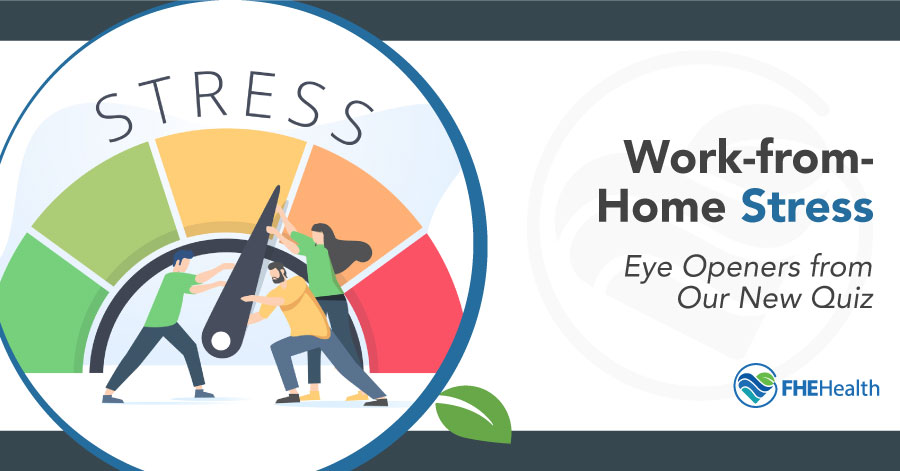
Americans are working from home in record numbers, and remote work now looks like a long-term reality rather than a temporary shift. Before the pandemic, one in 67 jobs was reportedly remote; today one in seven is, and with nearly 50 percent of U.S. workers saying they would take a pay cut to keep working from home, that share may keep climbing. The flexibility is real, but so is the stress, and it often shows up in ways that are easy to overlook: a workday that never quite ends, the blur between professional and personal life, and the pressure of juggling work with everything else under one roof.
We wanted to know what this shift actually means for stress and mental health, so we surveyed 200 people and invited FHE Health Chief Clinical Officer Dr. Beau A. Nelson to weigh in on the results. Below are the more eye-opening findings, his analysis of what they mean, and practical, research-backed ways to bring your stress back down.
What We Asked: Inside the Work-From-Home Stress Quiz
200 men and women took our quiz. The majority were between the ages of 26 and 45. They answered questions like the following:
- Do you feel you have lost motivation or passion for your work since working from home?
- How would you rate your daily stress (both today and before the events of 2020)?
- Do you feel you’ve been working outside of normal hours since you’ve been working from home?
We also asked respondents to rate their level of agreement or disagreement with statements such as:
- I’ve noticed an increase in anxiety, depression or sleeping problems since working from home.
- I’ve noticed a negative change in my mental health since working from home.
- My use of alcohol or substances has increased since working from home.
There were some true and false questions on the quiz as well, like:
- I’ve had a panic attack in the last year.
- I spend more than five hours a day on my Smartphone.
- I wake up at night thinking of work.
- I often eat in the same space where I work.
Key Takeaways: Longer Hours and Heavier Workloads
The quiz revealed some interesting findings. One key takeaway for Dr. Nelson was the fact that people who work from home reported working longer hours in their job. For example, an overwhelming number of respondents said they work more than eight hours a day. This finding seems to align with data from other studies, Dr. Nelson said. He cited a 2020 survey of 2,800 remote workers, 45 percent of whom said they regularly work more hours during the week than they did before.
Working longer hours may be related to a bigger workload. 52.5 percent of our respondents said they agree or strongly agree that their workload has increased since they began working from home. Meanwhile, 68 percent said they agree or strongly agree that they are working outside of normal hours since they’ve been working from home.
Such findings suggest that work-life balance can be elusive for those who work from home, but this challenge is also not new. Here is how Dr. Nelson put it:
Even before the pandemic, working from home presented a unique series of challenges … For some time, we’ve known that working at home presents challenges that most people do not recognize. Work-from-home employees need to address issues regarding communication, work-life balance, relationship-related changes, the stress of multiple commitments, and work-related demands.
All of this is a lot when you are already affected by environmental and societal changes, and this data set shows that in an already trying time with the pandemic, financial issues, school and family disruptions, and the like, there are going to be real challenges—working from home is not easier, nor is it a cure-all for human stresses.
A Cause for Concern: Women Reported More Stress
Our quiz found that a greater proportion of women than of men are adversely impacted by the stresses of work-from-home stress.
“The reporting that women are struggling more raises concerns,” Dr. Nelson said. “Traditionally we know that women are more likely to be primary caregivers, whether to children or older adults in the family. They are also more likely to be the head of household in divorced couples with children. In addition, there is the problem of always taking care of others and then thinking that you can handle it—until you cannot—and that could bring on a crisis.”
That said, while women are more predisposed to stress because of the multiple roles that they fill, they are also “more likely to reach out for mental health services and to utilize relationship supports such as friends and families,” Dr. Nelson said. “So, recognizing the tipping point is important, as well as women making self-care a priority and being aware of their own needs.”
What Makes Work-From-Home Stress Unique
It can be tempting, when interpreting data about stress and working from home, to draw a “cause-and-effect” relationship between the two. Dr. Nelson cautioned against that. A safer conclusion, based on the data, “is really the effect of multiple stressors and factors … Keeping things in context is very important. There are a variety of variables at play in life, and in some ways, working from home may be a protective factor for feeling even worse or more stressed.”
Dr. Nelson gave the example of having children at home when school is closed: “A parent might have difficulty juggling the workday when working from home, but what would be the stress level if they had to arrange childcare while working in the office? That could possibly create more stress.”
In other words, “We just do not have the data to show the positive effects of being at home and working. I think this is important, as the stress people may be experiencing is not just from working at home.”
Dr. Nelson qualified this last statement by referencing the “research that shows that people who work from home feel pressure to work longer hours, are often not able to shut off work, have lost the routines of daily living, and are dealing with multiple disruptions every day … All in all, these are factors that may need to be addressed if working from home (and that may not be part of a traditional workday at the office).”
Negative Mental-Health Changes, Yet a Strong Preference to Stay Remote
What might it mean that a vast majority of respondents said they had noticed negative changes in their mental health since working at home, including increased anxiety, depression, and sleep problems, yet a vast majority also said they “enjoy working from home” and would quit if they were asked to end their remote work? Dr. Nelson viewed the negative changes in mental health as less a reflection of work-at-home stress than of a global trend during the pandemic (“higher rates of substance abuse and negative moods like depression and anxiety” that “the world as a whole” is experiencing).
From this perspective, “working from home may be a protective factor rather than a negative,” which, Dr. Nelson mused, might help to explain the strong preference to “not want to return to an office setting.” Here is how he explained that reasoning:
There is a balance between the positive of being at home and working and stresses that currently exist in the world and the negatives of being in an office and the stresses that brings on. From this point of view, those who have an opportunity to work from home generally see it as a positive, as a perk, and as a good thing. The negative moods may not then be linked directly to working from home, but rather the life that someone has, with all the other variables of finances, relationship, family, work, and other responsibilities. Simply put, people are not getting happier in our world—they are more stressed—but working at home is not the culprit for social ills.
Eating Where You Work: Does It Matter?
More than twice as many people who took our quiz said they eat in the same space that they work. We asked Dr. Nelson for advice for those who have no choice but to eat in the same space where they work.
“Here we want to focus on how we eat, not where we eat,” he said. “For a long time, human beings have lived in huts and one-room enclosures, and this is not a life-defeating behavior. A Western mindset, based on what we think is needed (like a five-bedroom house with 2000+ square feet, etc.) is not actually ideal. In fact, in large spaces humans isolate and have less meaningful social interactions … So, from a scientific standpoint, there is not much to this as a difficulty.”
The more important consideration, according to Dr. Nelson, is whether you view it as bad or have trouble separating yourself from work during a lunch break. He recommended disconnecting from work and focusing on eating, taking a break, or including some quiet time in the day for your mental health.
Managing Workload and Work-Life Balance
If there were one over-arching theme that summed up our quiz findings, it would be the problem of work-life balance. While “this is not something new with working from home,” “it seems to be becoming more and more of a problem,” Dr. Nelson observed, continuing:
Overall, we have poor balance in our lives. This comes out when a big event hits. Most people are living paycheck to paycheck, and financial stresses are huge. Workers are seeing prices climb but not salaries. Routines are disrupted. Employers are not well-tuned to their employees, and access to behavioral health services is limited at best—so stress is really not surprising.
As for how to achieve work-life balance? Dr. Nelson was quick to dispense of the notion that there is a “quick fix.” Instead, “work-life balance is both a thinking and a doing issue … Workload management is about time management, effectiveness, and knowing yourself. To be able to do this, you first need to take care of the basics of self-care: Getting restful sleep, eating healthy, exercising, having healthy ways to cope with stress, and having supports and fun in your life; these all help to keep us at our best.” Dr. Nelson also said that communicating with one’s manager and team can be helpful when one’s workload is high.
Ultimately, work-life balance is “an individual choice, based on many factors.” One person’s stress threshold will look different from another’s, and whereas the body and mind can often rally for deadlines under acute stress, “chronic stress over a long period of time … is just too much.”
Why Managing Work-From-Home Stress Matters
A moderate level of stress can sharpen focus and keep you engaged with your responsibilities. Too much stress, though, isn’t good for your physical or psychological health. Persistent stress correlates with an increased risk of heart disease, poor immune function, and digestive disorders, among other problems. Chronic stress can also contribute to depression, anxiety, and other mental health conditions, and over time it can erode your sleep, energy, and ability to concentrate. If working from home has pushed your stress levels up, the five strategies below can help bring them back down.
1. Take Care of Your Body
You can’t respond to stressful situations effectively if you don’t take care of your physical health. Eating nutritious foods, getting regular exercise, and avoiding tobacco products are all helpful for managing stress when you work at home.
According to the UCLA Center for East-West Medicine, magnesium, complex carbohydrates, omega-3 fatty acids, and foods high in vitamin C can help reduce stress, stabilize your mood, and keep your immune system functioning properly. If you have too many stressors at home, try adding spinach, salmon, citrus fruits, and walnuts to your diet. These foods support both your brain and your body, which makes it easier to stay steady under pressure.
Hydration also plays a role in how you feel throughout the day. Even mild dehydration can lead to fatigue and difficulty concentrating. Keeping a glass of water nearby and drinking consistently can help maintain your energy and prevent unnecessary dips in focus.
In a study published in Frontiers in Physiology, researchers found that regular exercise improves emotional resilience in adults without any major health problems. In the study, regular exercisers and people who didn’t exercise regularly each completed a social stress test.
Although both groups had similar physical responses, the individuals who didn’t exercise regularly experienced a greater decline in their positive affect after completing the test. This indicates that exercise is beneficial for managing stress and elevating your mood. Physical activity helps release built-up tension and gives your mind a break from ongoing demands. Even a short walk outside or a brief stretch between tasks can make a noticeable difference in how you feel.
Sleep is another piece of the puzzle. When you work from home, it is easy to stay up later or blur the line between work time and rest time. Poor sleep increases irritability and makes stress harder to manage. Setting a consistent sleep schedule and limiting screen time before bed can help you recover and reset each day.
2. Eliminate or Reduce Your Stress Triggers
Working at home exposes you to a variety of stress triggers, some of which you can control and others that can’t be eliminated. One of the most common triggers is an environment that makes it difficult to concentrate on your work. If this applies to you, take steps to reduce interruptions and make your work environment as comfortable as possible.
Start with small adjustments. Clear clutter from your workspace, improve lighting, and position your desk in a way that limits distractions. Even minor changes can improve your ability to focus and reduce frustration throughout the day.
If you’ve been dealing with frequent interruptions from your spouse, children, or other family members, talk to them and explain that you can’t be interrupted while you’re working unless there’s an emergency. Turn off the ringer on your home or mobile phone to prevent interruptions from telemarketers and friends who want to chat during the day. You can also set specific times to check messages and return calls so you are not constantly reacting to notifications.
Digital distractions are another major source of stress. Email alerts, messaging apps, and social media updates can pull your attention away from important tasks. Try silencing nonessential notifications and batching your responses at set times during the day. This approach helps you stay focused and reduces the mental strain of constant interruptions.
A noisy work environment also produces stress, especially if you’re the type of person who can’t seem to get things done unless you can work in silence. If you live in a noisy neighborhood, try covering the windows in your work area with thick curtains to block out the noise. Wearing noise-canceling headphones can also help you block out noise from leaky faucets, dripping pipes, noisy pets, and the traffic outside your window. Some people also benefit from white noise or ambient sound, which can mask distractions and create a more consistent background.
3. Set Boundaries With Others
If you have too much working-from-home stress, you may have to start setting boundaries with others. In some cases, working at home forces you to juggle your professional life with child care, cooking, cleaning, caring for elderly parents, and many other responsibilities. You can’t possibly do everything by yourself, so don’t be afraid to set limits and ask your family members for help when needed.
Clear communication is important here. Let the people in your household know your work hours and what you need during that time. When expectations are clear, there is less confusion and fewer interruptions. You can also use simple visual cues, such as closing a door or wearing headphones, to signal that you are focused on work.
People who’ve never worked from home before may assume you can take breaks whenever you want, leading them to ask you for help when you’re supposed to be working. Explain that you need to treat working from home just as seriously as working in an office, and you can’t take time away from work to help them. If this doesn’t work the first time, turn down subsequent requests kindly but firmly.
It is also important to set boundaries with yourself. Without a clear end to your workday, you may continue checking emails or finishing tasks late into the evening. Create a simple routine to signal the end of your workday, such as shutting down your computer, organizing your desk, or taking a short walk. These habits help your brain transition out of work mode and reduce the feeling that you are always on call.
4. Meditate Regularly
Meditation is helpful for managing stress and has even been shown to improve outcomes in people with depression, anxiety, and other mental health conditions. More importantly, it addresses one of the root causes of stress, which is how your mind reacts to pressure, uncertainty, and constant stimulation.
The evidence backs this up. According to the National Center for Complementary and Integrative Health (NCCIH), a 2014 meta-analysis of 47 trials with more than 3,500 participants found moderate evidence that meditation programs can improve anxiety symptoms and depression.
When you are stressed, your thoughts tend to move quickly from one concern to another. This creates a cycle where even small problems feel overwhelming. Meditation helps interrupt that cycle by training your attention. Instead of getting pulled into every thought, you learn to notice them and return your focus to a single point, such as your breathing. Over time, this builds a greater sense of control and reduces reactivity.
Many people assume meditation requires long sessions or a perfectly quiet environment. In reality, short and consistent practice is more effective. Even five to ten minutes a day can produce meaningful changes in how you handle stress. As you build the habit, you may notice improved focus, better emotional control, and a greater ability to stay present during your workday.
Meditation also has physical benefits. Regular practice has been linked to lower heart rate, reduced muscle tension, and improved sleep quality. These changes support your overall well-being and make it easier to manage ongoing stress.
To reduce stress with meditation, follow these steps:
- Sit down in a quiet place that’s free from distractions.
- Focus on your breathing. Listen to the sounds you make when you inhale and exhale.
- If you start thinking about something else, redirect your attention to your breathing.
- When you finish, think about how you feel. Note whether you feel calmer, less stressed, and ready to tackle your next task.
You can also explore variations such as guided meditation, body scan exercises, or mindful walking. The key is consistency. A few minutes each day can help reset your mind and improve how you respond to challenges.
5. Listen to Music
If you have too much stress working from home, listening to relaxing music is an easy and inexpensive way to stay focused. Using your favorite streaming service, look for quiet music with slower tempos. Debussy’s “Clair de Lune” and Chopin’s Nocturnes are excellent examples of classical music that can help you relax and unwind.
Nature sounds are also a welcome addition to any high-stress environment. Look for compilations featuring babbling brooks, thunder, rushing streams, and heavy rains. If you find these sounds distracting, look for musical compositions featuring the flute, the harp, or other instruments known for producing relaxing sounds.
Music works by influencing your nervous system. Slower rhythms can reduce your heart rate and create a sense of calm, while consistent background sound can help you stay focused on repetitive or detailed tasks. Many people find that instrumental music works best because it does not compete for attention the way lyrics can.
Need Help?
Treatment can begin quickly and discreetly, get started now
When to Seek Therapy or Treatment
There are those for whom the stress of working from home may come as a shock. They may feel overwhelmed despite practicing many of the self-care tips suggested above. In these cases, when is it time to seek therapy?
“You do not have to be in a crisis situation such as binge drinking or having suicidal thoughts, in order to see a therapist,” Dr. Nelson said. He compared “therapy with a trusted and competent professional” to massage “as self-care for stressed and tired muscles” (only in this case therapy is like massage for the mind).
“Ask yourself if things are getting better or worse, or if a problem is not resolving and could use the help of additional resources.” Other times when it may be worth considering therapy:
- “If you are struggling with problems and feel you do not have adequate support”
- “If you realize that you need to develop skills and are struggling for answers to your life issues”
- “To help you get back on track, whether the symptoms are small or large”
- And “if you are really at the end of the proverbial rope and just cannot get past a problem”
In the end, work from home may not be the cause of poorer mental and behavioral health outcomes. What these quiz findings do suggest, however, is that self-care and work-life balance remain just as important for full-time remote employees as for anyone else in the workforce.
If work-from-home stress has become unmanageable, or if it’s fueling anxiety, depression, or alcohol or drug use, FHE Health may be able to help. Our experienced team can help you identify your stress triggers and build healthier coping strategies. Reach out today or call us at (833) 596-3502 to take the first step toward a more balanced work-from-home routine.