

People mostly talk about fatherhood in terms of milestones. The first steps, the first day of school, the teenager who suddenly stops talking to you. What comes up far less is what’s happening inside you throughout it, including the emotional weight of fatherhood and what it quietly does to a man’s mental health. When that silence goes unaddressed, it tends to affect not just the father carrying it but everyone around him.
In this article, we’ll look at how hidden emotional struggles surface in daily life and how that distance shapes your children.
- Becoming a father brings real neurobiological and emotional changes, and difficult feelings don’t mean something is wrong with you.
- About 10% of fathers experience depression around the birth of a child, but it often looks like irritability or withdrawal rather than sadness.
- A father’s untreated struggles can quietly shape his children, who absorb the moods and patterns of the adults around them.
- Cultural messages that men should stay stoic keep many fathers from reaching out, sometimes with serious consequences.
- Support exists, from primary care and peer groups to therapy and structured treatment, and asking for it is a strength.
How Becoming a Father Actually Changes You
The shift into fatherhood isn’t just logistical. New fathers go through real hormonal shifts in testosterone, cortisol and prolactin that can affect mood and behavior in ways most doctors never mention. These are hormones tied to stress, drive, and bonding, and their fluctuations during this period are well documented.
As a new father, you might notice:
- A sense of purpose you’ve never felt before, arriving alongside an anxiety that’s hard to put into words
- Protective instincts that seem to come out of nowhere and catch you off guard
- Old memories from your own childhood resurfacing, good ones and painful ones alike
- Your relationship with your partner shifting in ways that feel unsettling, even when the friction is completely normal
Fatherhood is a bigger psychological event than most people acknowledge, and none of what you are feeling means that something is wrong with you.
Depression and Anxiety in New Fathers Are More Common Than You’d Think
About 10% of fathers experience depression during the prenatal or postpartum period. That number climbs significantly when their partner is also struggling. Still, paternal mental health rarely comes up in pediatrician offices or parenting books.
Most people picture depression as sadness, but in fathers, it rarely shows up that way. It’s more likely to look like irritability you can’t trace back to anything specific or a slow drift away from the people closest to you. Some men describe a feeling of being emotionally disengaged without understanding why, while others just work more. This is sometimes because work is easier to control than everything else that’s suddenly out of their hands.
However, with all of this going on, it is important to remember that none of that makes you a bad father. It just means you’re someone who’s struggling, and you can seek help.
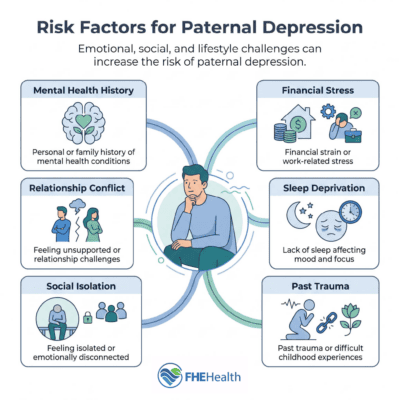
Several factors can also raise the risk of paternal depression and anxiety, including:
- A personal or family history of mental health conditions
- Financial strain or work-related stress
- Relationship conflict or feeling unsupported by your partner
- Sleep deprivation, which affects mood and judgment faster than most people expect
- Social isolation or a lack of people you can be honest with
- Past trauma or adverse childhood experiences that fatherhood may bring back to the surface
Need Help?
Treatment can begin quickly and discreetly, get started now
What Your Kids Pick Up When You Are Struggling
Children are perceptive in ways that catch most parents off guard. They may not understand what depression is, but they feel the mood of a room, and they notice when you’re somewhere else, even while sitting next to them. That awareness shapes them more than most fathers realize.
Research consistently shows that paternal depression has measurable effects on children’s development that surface early and quietly. A father’s emotional state does not stay contained to him. Children do not have the language to process what they are seeing, so they internalize it instead, drawing conclusions about relationships and their own worth from how you respond when something goes wrong and how safe they feel bringing you something hard.
Children rarely inherit emotional habits through words. They build their emotional vocabulary largely from watching the adults closest to them. A father who is withdrawn or overwhelmed teaches something even in his silence. Not out of intention, but simply because that is how children absorb the people around them.
Researchers have linked a father’s untreated depression to a range of effects in children, which can include:
- Higher rates of anxiety and depression, particularly in early childhood
- Difficulty regulating emotions, especially in boys
- Lower self-esteem and a tendency toward self-blame when things go wrong
- Challenges with trust and closeness in relationships later in life
We’re here to tell you that your kids don’t need a perfect father. They just need one who shows up, and sometimes showing up means getting your own house in order first.
Breaking the Cycle of Emotional Unavailability
Many men were raised to believe that being a “real man” means staying stoic, never showing fear, and never asking for help. Those lessons run deep, and they often get passed down from one generation to the next. A father who learned to bury his emotions tends to teach the same thing to his kids, usually without meaning to.
That conditioning carries a real cost. Men are far less likely than women to talk about what they’re feeling or to seek help, and the consequences can be severe. Men in the U.S. die by suicide at nearly four times the rate of women and account for roughly 80% of all suicide deaths, according to the CDC. Staying silent is not the same as being strong.
Breaking the cycle starts with recognizing the pattern and getting support to change it. Therapy gives fathers a place to do that work. Approaches like cognitive behavioral therapy help you notice the beliefs and reactions driving your behavior, while motivational interviewing helps you build the will to change them. Learning to name and express what you feel does not make you weaker as a father. It gives your children a healthier model to grow up with.
How to Stay Present Without Losing Yourself
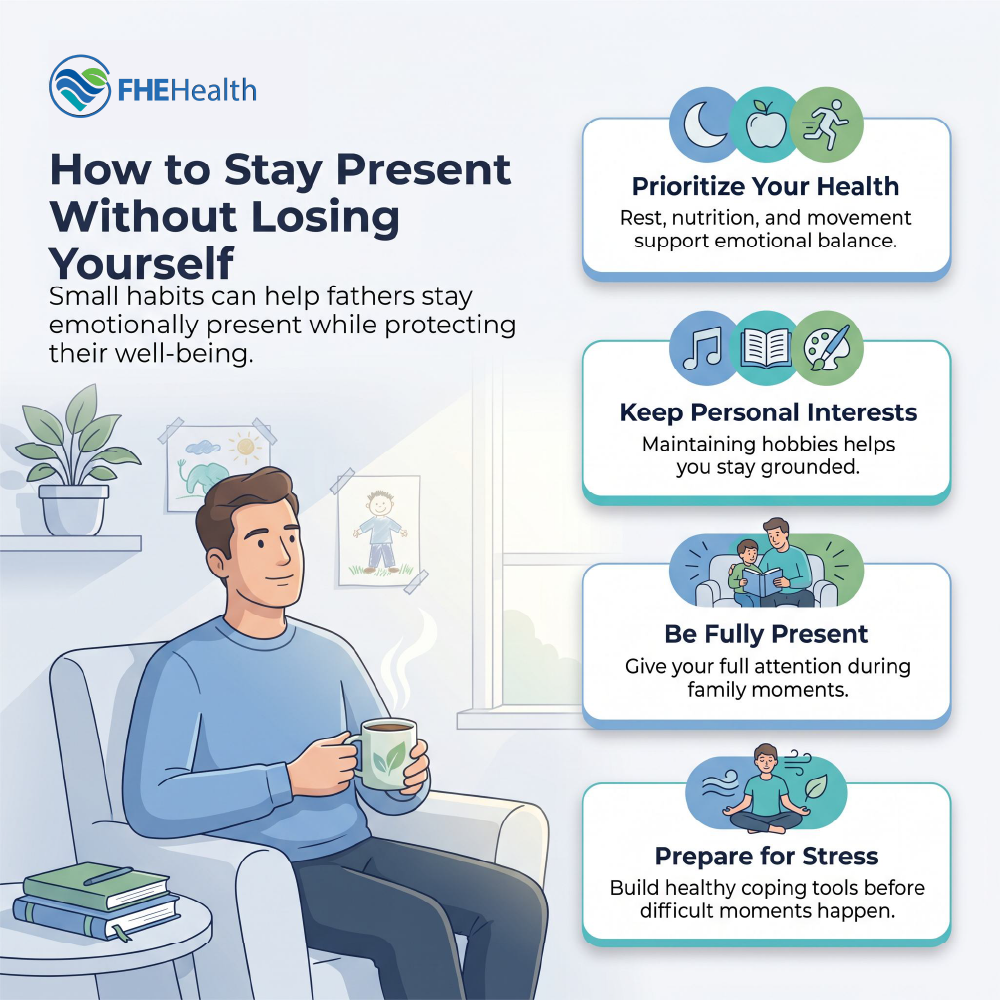
Most advice for fathers focuses on giving more, but giving more from a place of depletion does not help anyone. To stay present, we recommend trying these tips:
- Prioritize your physical health. A tired body leaves you with very little patience. Sleep, solid meals and daily movement build the foundation you need to function well.
- Maintain your outside interests. You abandon a piece of yourself when you drop every personal hobby. Some time away from family duties helps prevent bitterness and keeps you grounded.
- Give your full attention at home. Sitting quietly in the same room rarely counts as a real connection. Your children and your partner notice immediately when your mind wanders away from them.
- Prepare for difficult moments. Parenting brings heavy pressure without warning. You need a clear method to manage your frustration long before a hard day actually arrives.
Where to Go When You Need Support
You do not have to figure this out alone. These are some of the places you can get help today:
- Your primary care doctor. A good starting point if you are not sure where to begin. They can assess what you are experiencing and point you toward the right kind of help.
- Dad to Dad peer support groups. A space to connect with other fathers going through similar stretches, without any clinical pressure.
- Employee Assistance Programs (EAPs). Many employers offer free, confidential counseling sessions that most people never use. Check with your HR department.
- Crisis lines. If things feel urgent, the Suicide and Crisis Lifeline is available by call or text, any time of day.
Frequently Asked Questions About Fathers and Mental Health
FHE Health Is Here When You Are Ready
When the tools above are not enough, a structured treatment program can offer something they cannot: consistent clinical support and a space to actually focus on yourself. Most fathers never get that kind of time. FHE Health works with fathers carrying exactly this kind of weight, and our team meets you where you are. You do not have to have it figured out before you call. Contact us today to get started.