
The 12-step treatment for drug and alcohol abuse recovery began as a component of Alcoholics Anonymous, but it’s become a movement now used by many drug and alcohol rehab centers. One component of this program is faith in a higher power to help sustain recovery efforts. Whether you were previously spiritual or not, you might embrace this component of the recovery process in your own way.
At FHE Health, we utilize the 12-step program as one option in treatment. While faith is a part of that process, it’s not the only solution. During your treatment, individualized care is always the focus, which means you can choose how you embrace your journey toward recovery — whether or not you want to overcome addiction with God.
Is Faith a Part of the 12-Step Program?

The 12 steps defined by the original Alcoholics Anonymous program include faith. At the heart of this program is faith that a higher power is there to help, as spelled out by Step Two. The form of that higher power is unimportant; you define what it means to you.
The 12-step program also focuses on:
- Deciding to hand over control of life to the higher power
- Admitting to the higher power (as well as yourself and others you’ve hurt) that you’ve made mistakes
- Asking the higher power to remove any shortcomings from your life
- Being ready to have a higher power correct those character flaws for you
- Being willing to make amends for those wrongs
- Seeking enlightenment and some type of connection with the higher power, such as through meditation or prayer
While the traditional version of AA and the 12-step program has a strong dependency on belief, faith and religion, you’re able to define what you believe in. Learning how to overcome addiction biblically may be the right approach for some, while relying on a less-defined higher power is better for others.
Why Does Religion Matter in Recovery, and How Can You Overcome Addiction With God?
There are many reasons to put faith at the center of recovery. Many facing addiction experience a sense of failure and even hate toward themselves and the world around them. Addiction thrives on isolation, and even if you’re surrounded by people each day, you can feel alone. It might feel impossible to reach out for help.
Because of this, the ability and willingness to turn to a higher power can be freeing and empowering. For some, that faith connection may be all they’re left with in the depths of addiction and in early recovery, and it can help sustain them through the difficult work ahead. The benefits of faith include:
Providing a Sense of Purpose
Despair and a sense of worthlessness are common feelings in addiction. Faith can offer a sense of purpose again. Your life means more than just day-to-day struggles with money, relationships and drugs. Without this sense of purpose, you may be more likely to relapse.
Offering a Sense of Forgiveness
Sobriety often brings guilt. Improving relationships often requires asking for forgiveness, but rebuilding relationships under these circumstances also creates a sense of defeat. Many people carry guilt for years after addiction as a result of being unable to forgive themselves.
Having the ability to seek forgiveness from a higher power can offer some help with this. It can aid a person’s ability to let go of what they did, knowing they’re forgiven if they seek that type of support.
Enhancing Encouragement and Support
For those battling addiction on their own, without family or friends to support them, religion offers that all-important support network. Having this type of support can be an encouragement to remain on the path toward recovery. It’s humbling and inspiring to know a higher power is working for your benefit.
Practical Ways to Integrate Faith Into Your Recovery Plan
When you enter drug and alcohol treatment, you’ll learn the 12-step program. You’ll also learn more about how faith plays a role in your day-to-day efforts to remain sober. Here are some practical ways to focus on your spirituality:
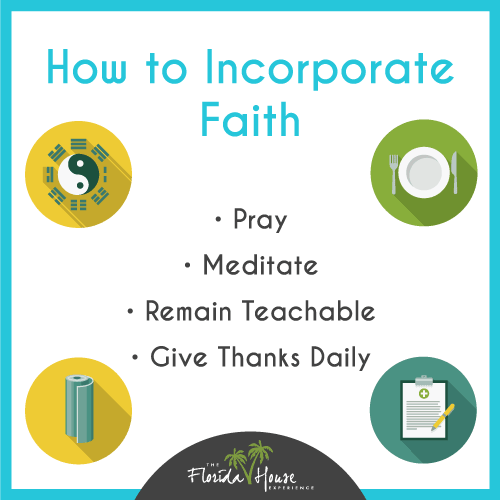
- Making time for daily prayer. You can start by repeating prayers you learn in AA or other programs or at church. Move into more personal prayers as you’re comfortable.
- Meditating on spiritual readings. Choose readings from your chosen faith, especially those about self-control, leaning into the higher power and finding grace and support for your life.
- Remaining teachable. Be willing to grow into and explore your faith, whether it’s new to you or something you’ve had in your life for many years.
- Embracing spiritual groups. Attend church and seek out groups that share your faith and are willing to support you in growing into it, especially as you navigate the realities of life in recovery.
- Sharing your faith with others. Consider how you can inspire others by telling your story and how sharing your experiences with others can spur you on to further sober living.
- Cultivating gratitude. Give thanks daily for what you’ve achieved and for what the higher power is doing in your life to support a more positive future.
What the Research Says About Faith and Recovery
A study that looked at religiosity in individuals in recovery found individuals who developed higher religiosity over time were more likely to abstain from substance abuse in the future. The social nature of faith and religious organizations may account for some of this. For example, individuals in addiction recovery who live with a partner are 21.8% less likely to relapse after treatment than those who live alone.
An inherently religious recovery program may not be right for everyone. If you’re concerned you might not fit into such a program, consider the many nonreligious approaches to recovery, including:
- Evidence-based therapies. Cognitive behavioral therapy (CBT) and other types of talk therapy can help you challenge negative thought and behavior patterns and learn new coping skills.
- Secular support groups. Many post-treatment support groups for addiction take the higher power out of the process.
- Holistic therapies. You can build healthier coping mechanisms and approaches to life with yoga, exercise therapy, art therapy and nutritional support.
- Inpatient or outpatient programs. Many structured treatment programs don’t require a belief in a higher power and treat people with all types of faith backgrounds.
FHE Health Provides a 12-Step Treatment Plan to Help You
With the help of FHE Health, you can step away from the pain of addiction and enter a 12-step program focused on improving your life. This is just one of the treatment options and components of your recovery journey. We encourage you to contact us to learn more about how treatment can change your life and your future.