
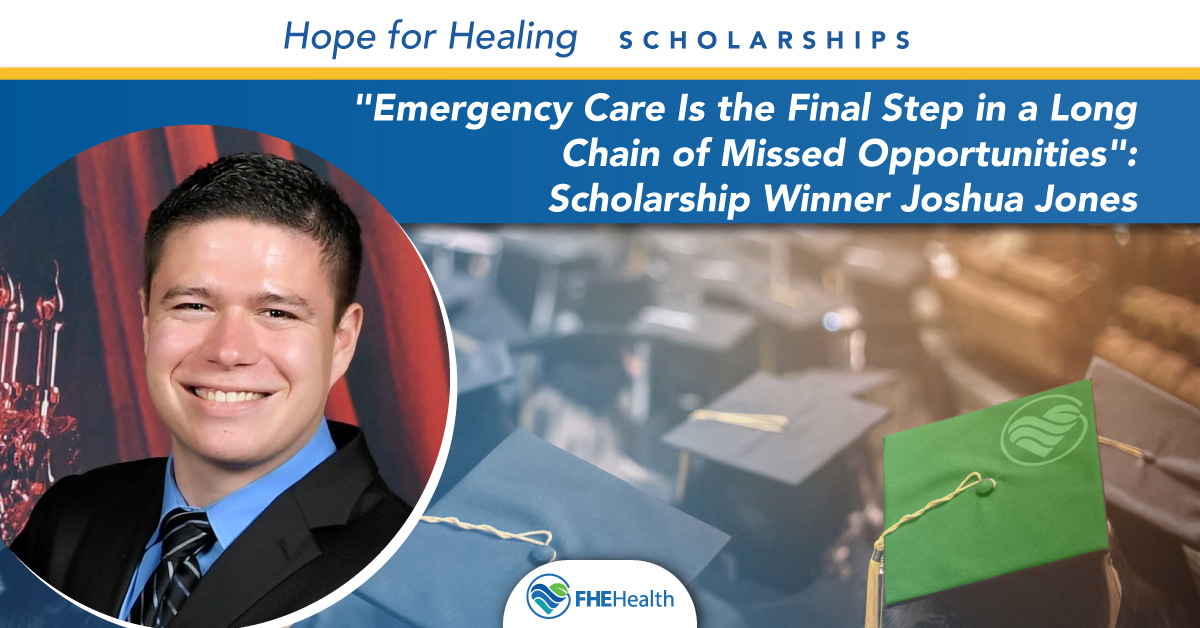
- Joshua Jones is the 2026 Hope for Healing Scholarship undergraduate winner, pursuing advanced graduate study with a focus on equitable, evidence-based care for underserved communities.
- A University of Arizona graduate, Joshua’s hands-on experience spans EMT work in rural Arizona border communities, neuroimaging research on traumatic brain injury at the Uniformed Services University, surf therapy with veterans through the Jimmy Miller Memorial Foundation and medical transport in Los Angeles.
- Joshua’s long-term goal is to practice as a physician in underserved communities, contribute to better diagnostic tools for conditions like TBI and take on leadership roles that advocate for more equitable systems of care.
Joshua Jones has spent his career in positions that hover around the gaps in healthcare. Long before he arrived at medical school, Joshua started accumulating hands-on training in the back of an ambulance, in research labs and in communities where healthcare systems routinely fall short.
His background includes:
- Working as an EMT in Arizona’s rural and border communities
- Conducting research on traumatic brain injury via advanced neuroimaging
- Working as a surf therapist
- Serving as a medical transporter
Joshua’s work has put him in positions to view, first-hand, the gaps current healthcare processes create and who falls into them.
Growing Up With a Front-Row View of Healthcare’s Blind Spots
Joshua first saw how blind spots in healthcare impact vulnerable individuals and families by watching his grandparents. He saw them managing chronic illnesses while trying to navigate a system that felt foreign and frightening to them:
- Language barriers made medical instructions difficult to follow
- Cost concerns caused them to delay getting treatment
- Lack of trust in established systems often meant they didn’t get care until symptoms were so severe that they didn’t feel like they had any choice
“They waited until their symptoms became severe because they didn’t feel comfortable or supported in the system,” explains Joshua. “I saw how confusion, fear and lack of trust can affect health just as much as the illness itself.”
What Work as an EMT Taught Him
Working as an EMT in Arizona placed Joshua at the fringes of a healthcare system that didn’t fully cover rural and border communities. During this time, he noticed a pattern: patients with chronic conditions like diabetes or heart disease were foregoing clinical management due to cost, transportation or trust issues.
By the time Joshua and his coworkers arrived at such situations in an ambulance, diseases that might once have been manageable had become critical.
“Emergency care is often the final step in a long chain of missed opportunities,” Joshua says. He remembers one call that made that truth impossible to ignore.
“It was my first EMT call involving a migrant worker,” he remembers. “He had been working long hours in extreme heat and delayed seeking care because he was worried about cost and unsure where to go for help. By the time we were called, his condition had worsened significantly.”
Joshua says that experience and others like it brought the impact of healthcare disparities into real-life situations and reinforced his commitment to working with underserved communities and addressing these gaps in meaningful ways.
Inside the Brain: TBI Research and What It Taught Him
Joshua’s research on traumatic brain injury (TBI) brought a new dimension to what he’d learned in the field. Working with advanced neuroimaging, he and his team use MRI to track changes in the brain after an injury. They monitor blood flow, tissue alterations and how such changes connect to patient experiences.
He says the work attempts to answer what’s happening in the brain during and after injury and how it shows up in behavior, memory and movement.
“A change in blood flow to a specific region might relate to difficulties with memory, attention or coordination,” says Joshua. The research revealed something he’d already sensed through his hands-on healthcare work. The brain carries the impact of injury forward, and mental health and other factors are connected to physical recovery.
“If care focuses only on physical recovery,” Joshua says, “A large part of the patient’s experience is overlooked.”
The lab also taught Joshua skills and perspectives he wouldn’t have learned in the field. Research helped him develop precision, the ability to interpret data and patience to sit with a problem long enough to understand it deeply. In contrast, clinical work helped him develop speed with in-the-moment decision-making and interpersonal skills.
Together, Joshua says these experiences prepared him with a balanced perspective. Research helps him understand the details behind the medicine, and clinical work ensures he keeps the human stakes in mind.
The Gap Between Emergency and Prevention
From EMT work to lab research, Joshua’s experience has helped him come to the conclusion that one major gap in the healthcare system is that it’s focused on responding to crises instead of preventing them.
“I want to help patients before their conditions escalate and work toward a system that focuses more on prevention and continuity of care,” Joshua says.
Closing the gap, in his view, requires meeting people where they are. “Meeting people where they are and addressing issues early leads to better outcomes over time.”
Building a Better System
Joshua has thought carefully about what closing that gap actually looks like. He points to several concrete steps:
- Expanding mobile clinics to bring care directly into rural and underserved communities
- Increasing access to bilingual education so patients can better understand conditions and treatment plans
- Strengthening connections between emergency services and primary care to ensure crisis care has strong follow-up and doesn’t end at discharge
He notes that community care workers can play critical roles in helping patients navigate systems that weren’t always built with them in mind. In 10 years, Joshua hopes to be practicing as a physician serving underserved communities and staying active in research. He wants to contribute to better diagnostic tools and more targeted treatments for conditions like TBI. One of his long-term goals is to take on leadership positions that let him advocate for more equitable systems.
What Joshua Wants Patients to Know
Joshua has a message for the patients he hopes to serve in the future, particularly those who have felt unheard or who don’t know whether they can trust the system.
“I want patients to know that there are providers who are committed to listening and making a difference. Every patient deserves to feel respected and understood when seeking care, My goal is to be one of those providers.”