• Skip to primary navigation
  • Skip to main content
  • Skip to primary sidebar
  • Skip to footer

FHE Health | Inpatient Rehab & Mental Health Facility in Florida Homepage

Drug, Alcohol and Mental Health Treatment

ContactCareers

Call for Immediate Help (833) 596-3502

  • About
        • About FHE Rehab
          • About FHE Health
          • Our Staff
          • Locations We Serve
          • Testimonials
          • #FHE25
        • Our Campus
          • Gallery
          • Our Videos
          • The Health and Wellness Center at FHE Health
        • Our Locations
          • Alcohol Rehab
          • Detox Center
          • Drug Rehab
          • Mental Health Center
          • Outpatient Rehab
        • Careers at FHE Health
          • Employment Opportunities
        • Our Expertise
          • Accreditations
          • Educational Opportunities
          • Community Impact Award
          • First Responder Families Podcast
          • First Responder Paws
          • Education Scholarship
  • Addiction
        • Treatment Programs
          • Treatment Program Overview
          • Alcohol Addiction
          • Drug Addiction Treatment
          • Behavioral Addiction
        • Levels of Care
          • Continuum of Care
          • Addiction Detox
          • Inpatient Addiction Treatment
          • Outpatient Addiction Treatment
        • What We Treat
          • Alcoholism
          • Amphetamines
          • Benzodiazepines
          • Cocaine
          • Heroin
          • Opioids
          • Sedative
  • Mental Health
        • Mental Health Rehab
          • Mental Health Rehab
          • Onsite Psychiatric Care
          • Dual Diagnosis
        • Levels of Care
          • Residential Mental Health Care
          • Outpatient Mental Health Care
        • What We Treat
          • ADD & ADHD
          • Anxiety Disorders
          • Bipolar Disorder
          • Depression
          • Eating Disorders
          • Personality Disorders
          • PTSD
          • Schizophrenia
          • Substance Use Disorder
          • Trauma
  • Programs
        • FHE Programs
          • Specialty Program Overview
          • Restore (Mental Health)
          • Empower! (Women's Program)
          • Shatterproof FHE Health(First Responders)
          • Compass Program
        • Support Programs
          • Alumni
          • Family Support
        • Therapies
          • Acupuncture
          • Breathwork Therapy
          • CBT (Cognitive Behavioral Therapy)
          • DBT (Dialectical Behavioral Therapy)
          • EMDR Therapy
          • Expressive Arts Therapy
          • Individual Therapy
          • Group Therapy
          • Gambling Therapy
        • Medical Care
          • Medical Integration
          • Ketamine Infusion
          • IV Vitamin
          • Fitness & Nutrition
          • Medication-Assisted Treatment Program
          • Medication Management
        • NeuroRehab Services
          • Neuro Rehabilitation
          • Neurofeedback Training
          • Neurostimulation Therapy
          • EEG Brain Mapping
          • Insomnia Treatment for PTSD
  • Resources
        • FHE Guides
          • Understanding Drug Abuse
          • Signs of Addiction
          • The Disease of Addiction
          • Confronting Addiction
          • Staging an Intervention
          • Rehab Success Rate – Does It Really Work?
          • Withdrawal Timelines
          • Life After Rehab
          • LGBTQ+ Community Resources
          • Veteran Resources
          • FHE Podcasts
          • Remote Resources Toolkit
        • Learning Center
          • Help for You
          • Help For Loved Ones
          • Help For Alcoholism
          • Help With Substance Abuse
          • Behavioral & Mental Health
          • Life in Recovery
          • Rehab Explained
          • Addiction Statistics
          • Our Research Articles
          • View All Articles
        • The Experience Blog
          • Addiction News
          • Alumni
          • Community Events
          • Expert Opinions
          • FHE Commentary
          • FHE News
          • Treatment Legislation
          • View All Articles
  • Admissions
        • Insurance
          • Blue Cross Insurance
          • Beacon Health / Value Options Insurance
          • Cigna Insurance
          • Humana Insurance
          • TRICARE Insurance
        • Admissions
          • Steps to Addiction Help
          • Will Insurance Cover Behavioral Treatment?
          • Self-Pay Rehab
        • FAQ
          • Keeping Your Job in Rehab
          • Example Day in Rehab
        • Contact Admissions
          • Contact Us
          • Secure Payment Form
  • Contact
  •  
Home > Featured in Addiction news > GLP-1 for Drug Addiction

By: Chris Foy | Last Updated: January 27, 2026

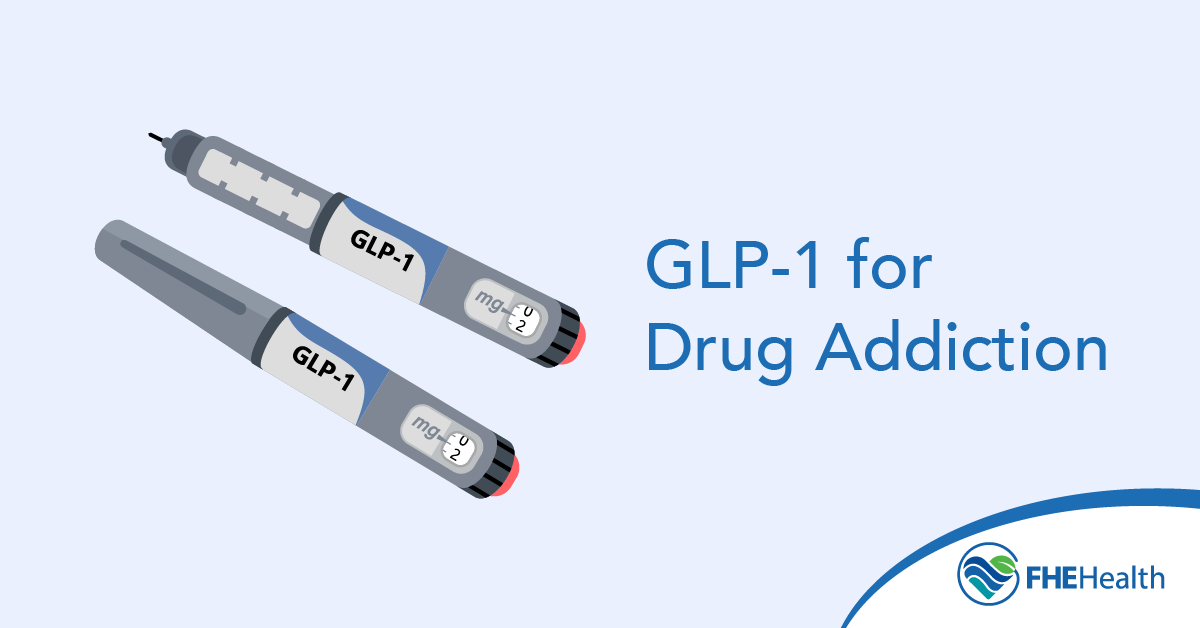
GLP-1 for Drug Addiction

How GLP-1 medication may work for drug addiction

Battling addictive behavior is challenging overall, but can a known solution for one problem lead to lasting help for another? That’s a question both scientists and the mental health professionals at FHE are pondering when it comes to GLP-1 medications. While most popularly known for diabetic treatment and weight loss, early trials suggest this class of medicines may also be a way to break addictions to substances like opioids.

What Are GLP-1 Medications, and How Do They Work?

From news to entertainment articles to your own doctor’s office, you’ve likely heard a lot about glucagon-like peptide-1 medicines, better known as GLP-1s. The two primary variants are the newer tirzepatide (sold under the brand names Zepbound and Mounjaro) and more established semaglutide (sold under the brand names Rybelsus, Ozempic and Wegovy). According to a 2024 report by Harvard Health, the Food and Drug Administration has approved a total of 10 GLP-1 medications for treating diabetes and obesity, with other applications like drug addiction still being studied.

Both variations of GLP-1s work by mimicking a hormone normally produced by the gut after a meal, effectively tricking the hunger impulse and offering support to prevent overeating. On a chemical level, they also encourage the body to release higher levels of insulin during high blood sugar episodes, providing a powerful positive effect for users with Type 2 diabetes.

GLP-1s also work to limit dopamine spikes, a particularly important consideration for their potential use in addiction treatment at facilities like FHE Health. By equalizing the dopamine released when eating a favorite food, for example, they teach the body that the subsequent chemical “reward” is no longer a given result. This leads the body to stop driving the behavior, as the cause-and-effect cycle has been disrupted. Obviously, this functionality will be extremely powerful if it can also be attuned to block the dopamine spikes tied to substance abuse.

Is Using Ozempic for Addiction in the Future?

While GLP-1 medications may seem relatively new to the market, they’ve actually been used for the treatment of Type 2 diabetes since 2005, when Byetta became the first FDA-approved GLP-1 medication. While specific applications like recovery from drug addiction will require more targeted study, the fact that these medicines have been so widely used points to their safety and stability. In fact, a 2024 Centers for Disease Control study noted an impressive 26.5% GLP-1 adoption rate in American adults diagnosed with diabetes.

While a direct prescription relationship between GLP-1s and addiction treatment isn’t in place yet, research trends and medical interest are pointing in that direction. Much like any new medication application, FDA approval will be needed before widespread adoption can safely occur. Even though GLP-1s are currently considered safe for a wide variety of users, substance abuse factors add a unique element that needs to be studied for safety.

Current Research on GLP-1 and Dopamine Regulation

Considering medications like Ozempic for addiction treatment requires more research to achieve the same FDA adoption, but it might be on the horizon. A 2025 Stanford University interview with psychiatrist Anna Lembke touches on positive connections between the dopamine-stabilizing effects of GLP-1 medications on food addictions and the similar needs of patients with other drug addiction issues. With further research and testing, this connection could potentially be used in the future to improve lives and treatment at rehab centers like FHE Health.

In a NewsNation article from November 2025, addiction specialist Dr. Steven Klein reports preclinical success in a trial of 130 patients. Dr. Klein notes that, in the trial, GLP-1s appeared to help with opioid addictions in a similar fashion as food addictions, enabling users to better control resisting cravings and ultimately avoid addiction behaviors. While more rigid clinical controls are obviously needed for long-term study, these early observations point to optimistic outcomes for GLP-1s being successfully used for substance abuse treatment.

Potential Benefits for Treating Substance Use Disorders

While their possible use for drug addiction disorders may be relatively new in their overall history, GLP-1s are already on store shelves and ready for prescribing. Their well-known status as obesity and diabetes drugs also helps remove stigma around requesting them, and their design as a self-injectable medication allows easy at-home use. Additionally, a single treatment can last up to a week, offering more flexibility, discretion and convenience over some daily medications.

Limitations, Side Effects and Unanswered Questions

Some concerns around GLP-1s, notably insurance approval and out-of-pocket cost, will remain a consideration regardless of intended use. However, as research offers more reported links and success stories around using these medications for substance use disorders, a better supply will follow. Additionally, if the FDA approves more uses for these medicines, insurance companies will be less likely to object to prescribing GLP-1s for uses beyond diabetes and weight loss. If you aren’t sure if you’re currently a good candidate for the current FDA-approved usage for this medication, ask your FHE care team if they’d be a good fit for your lifestyle and medical needs.

Some GLP-1 medications — specifically injectable varieties — also require refrigeration, much like insulin. This transport and storage may prove difficult for substance abuse patients without stable housing or ready access to appliances. Thankfully, pill-format varieties are also available, which may help patients who struggle with negative addiction-related associations to injections.

The Future of GLP-1 in Addiction Treatment

Scientists and pharmaceutical companies are already working to determine which variations of GLP-1s may work for those struggling with addiction, and it might not be long before Ozempic for addiction becomes commonplace. The best way to stay informed on new breakthroughs and FDA approvals for these types of medications is to partner with a treatment program that focuses on your health and ongoing well-being.

Discussing potential solutions, whether therapeutic, behavioral or medication-related, with a certified mental health professional is the first step to your best self. If you’ve already been considering GLP-1 medications for usage in treating obesity or diabetes symptoms, ask your care team how they might help support your substance abuse issues as well. Contact the team at FHE Health today to schedule an assessment; we’re ready to help you find the right combination of therapies for your needs.


Filed Under: Featured in Addiction news, Featured in FHE News

More Questions about Treatment?

More Questions about Treatment?

We offer 100% confidential and individualized treatment

Contact Us

About Chris Foy

Chris Foy is a content manager and webmaster for FHE Health with years of experience in the addiction treatment industry...read more

Primary Sidebar

The Experience Blog

  • Addiction News
  • Alumni
  • Community Events
  • Expert Columns
  • FHE Commentary
  • FHE News
  • Treatment Legislation
  • All Articles

Sign up for the Blog

Our Facilities

Take a look at our state of the art treatment center.

View Our Gallery

Learning Center

  • Help for You
  • Help For Loved Ones
  • Help For Alcoholism
  • Help With Substance Abuse
  • Behavioral & Mental Health
  • Life in Recovery
  • Rehab Explained
  • All Articles
Contact Us
  • Call Now:
  • Best Time to Call:

Footer

FHE Health

© 2026 FHE Health

505 S Federal Hwy #2,
Deerfield Beach, Florida 33441
1-833-596-3502
youtube facebook instagram linkedin twitter
  • Contact
  • Careers
  • AI Policy
  • Privacy Policy
  • Sitemap
A+ BBB and Top Places to Work - Sun Sentinel

Copyright © 2026 · FHE Theme On Genesis Framework · WordPress · Log in

Manage Consent
To provide the best experiences, we use technologies like cookies to store and/or access device information. Consenting to these technologies will allow us to process data such as browsing behavior or unique IDs on this site. Not consenting or withdrawing consent, may adversely affect certain features and functions.
Functional Always active
The technical storage or access is strictly necessary for the legitimate purpose of enabling the use of a specific service explicitly requested by the subscriber or user, or for the sole purpose of carrying out the transmission of a communication over an electronic communications network.
Preferences
The technical storage or access is necessary for the legitimate purpose of storing preferences that are not requested by the subscriber or user.
Statistics
The technical storage or access that is used exclusively for statistical purposes. The technical storage or access that is used exclusively for anonymous statistical purposes. Without a subpoena, voluntary compliance on the part of your Internet Service Provider, or additional records from a third party, information stored or retrieved for this purpose alone cannot usually be used to identify you.
Marketing
The technical storage or access is required to create user profiles to send advertising, or to track the user on a website or across several websites for similar marketing purposes.
  • Manage options
  • Manage services
  • Manage {vendor_count} vendors
  • Read more about these purposes
View preferences
  • {title}
  • {title}
  • {title}
Questions?

We’re here to Listen & Help.
Chat with us 24/7

Contact Us
Call (833) 596-3502


The FHE Health team is committed to providing accurate information that adheres to the highest standards of writing. If one of our articles is marked with a ‘reviewed for accuracy and expertise’ badge, it indicates that one or more members of our team of doctors and clinicians have reviewed the article further to ensure accuracy. This is part of our ongoing commitment to ensure FHE Health is trusted as a leader in mental health and addiction care.

If there are any concerns about content we have published, please reach out to us at marketing@fhehealth.com.

833-596-3502

Text/Call Me