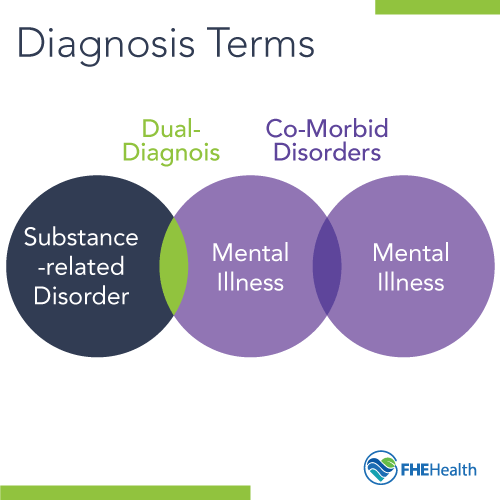
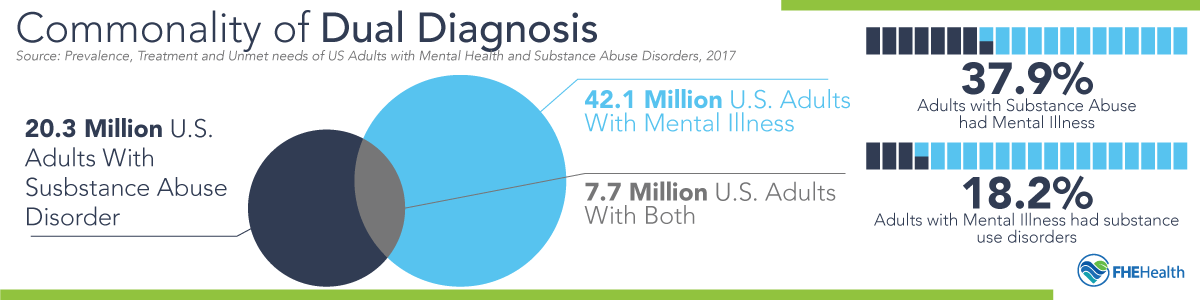
Mental illness and addiction can often overlap, with more than 21 million American adults living with both conditions, according to national survey data. Clinicians call this a dual diagnosis, and treating co-occurring mental health and substance abuse disorders together supports the best outcomes. At FHE Health, our integrated dual diagnosis treatment program lays the foundation for sustainable, long-term recovery.
Located in Deerfield Beach, our South Florida treatment center cares for patients with diverse mental health and addiction issues. This includes substance use tied to depression, anxiety, schizophrenia, bipolar disorder and other mental illnesses. Here, you can find compassionate, coordinated care for co-occurring disorders, and a safe, effective path to sobriety.
What Is a Dual Diagnosis?
Dual diagnosis refers to having a substance use disorder and mental health disorder at the same time. Any combination of addiction and mental health disorders may occur together.
Mental illnesses commonly seen in a dual diagnosis include:
- Anorexia
- Bulimia
- Bipolar disorder
- Obsessive-compulsive disorder
It’s not uncommon for someone to have more than one mental illness, but when substance use is involved, it’s a dual diagnosis.
Are you or a loved one ready for FHE's Dual Diagnosis Treatment Center In Deerfield Beach, FL?
Our compassionate and judgment-free environment has helped many overcome their addictions. Learn more about our Dual Diagnosis Treatment Center In Deerfield Beach, FL.
Why Substance Use and Mental Health Disorders May Overlap
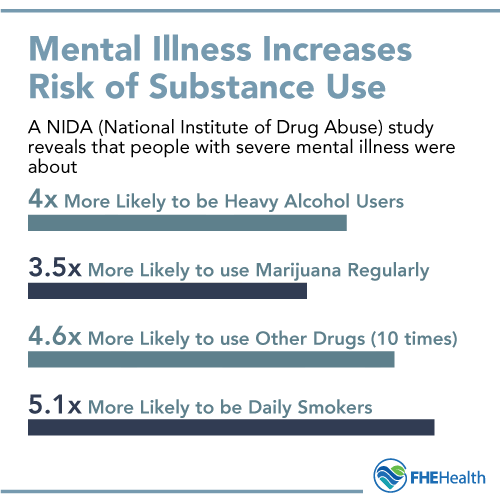
According to the National Institute of Mental Health, substance use and mental health disorders are often interconnected. The presence of one condition can increase the risk of developing or intensifying the symptoms of the other.
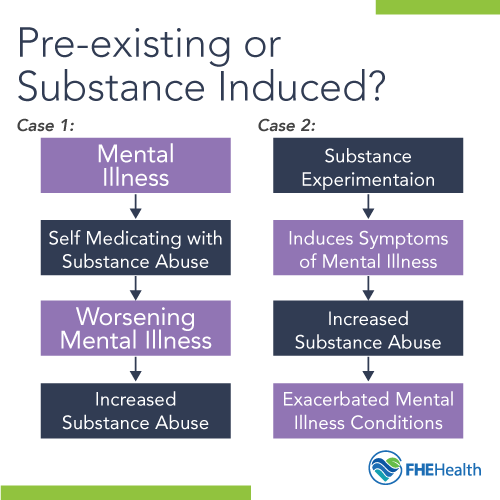
For example, mental illness can lead to the use of addictive substances to self-treat. Some people may find alcohol use can temporarily ease anxiety, or chronic marijuana use alleviates depression symptoms during highs. However, this may lead to a troubling cycle, transforming a coping method into a substance use disorder.
The connection between mental health problems and substance use is well established. More than a third of U.S. adults with any mental illness also had an alcohol or drug addiction in 2024. Among those with a severe mental illness, nearly half had a substance use disorder.
The journey to sobriety can seem longer and more difficult with a dual diagnosis. Quitting substances may worsen mental illness, and managing mental health issues is challenging without also addressing addiction. However, with a treatment plan that addresses both conditions together, recovery and long-term stability are possible.
Signs of a Co-Occurring Disorder
Because addiction can mask underlying psychological and psychiatric issues, diagnosis can be challenging. Our team at FHE Health specializes in identifying co-existing mental health conditions.
If you recognize any of the below signs in yourself or a loved one, it’s worth speaking with a professional who can evaluate both addiction and mental health together:
- Sudden changes in behavior
- Withdrawing from family and friends
- Unusually risky behaviors
- Aggression
- Anger
- Lying
- Stealing
- Mood swings
- High tolerance for drugs or alcohol, with physical pain or distress when not using
- Poor hygiene
Treatment of Co-Occurring Disorders in the United States
Dual diagnosis isn’t uncommon in the United States, but unfortunately many people with co-occurring disorders don’t seek comprehensive care. Only 14.5% of American adults who had both a substance use and mental health disorder in 2024 received treatment for both conditions, according to the Substance Abuse and Mental Health Services Administration (SAMHSA). Among people with co-occurring disorders, about 41% received only mental health care, 3% received only substance use care, and 41% received no care for either condition.
Reasons for avoiding treatment ranged from being worried about what people think to privacy concerns. For many people, the issue is simple: they don’t know where to find appropriate health care for mental health or addiction. Many people who fit a dual diagnosis may not even know there’s a clinical name for what they’re going through.
Dual Diagnosis Recovery: The Advantages of a Combined Approach to Treatment

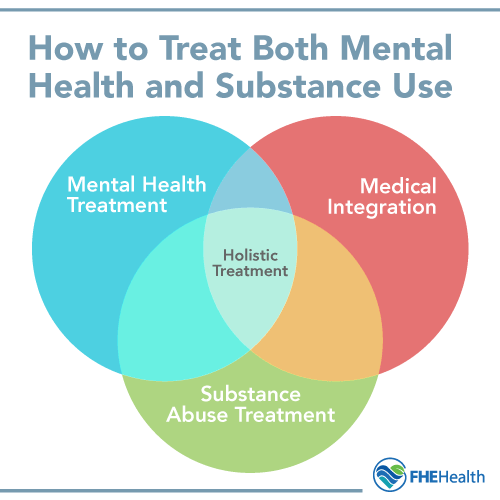
It’s important to treat dual diagnosis at a drug and alcohol treatment center that also incorporates mental health treatment. Many Florida facilities treat substance use, but not all treat mental health in the same program, leaving potential care gaps.
Treating a dual diagnosis is more challenging than addressing a standalone substance use or mental illness disorder because they often reinforce each other. A standard approach to substance use rehabilitation, for example, may result in temporary improvements, but focusing on just one part of co-occurring disorders rarely results in lasting change.
The most effective treatment uncovers and treats the root cause.
- In some situations, medications may help stabilize an underlying mental health disorder. Treating the substance dependency is essential to the treatment plan, but addressing the drug use first isn’t always effective if it’s linked to a mental health issue.
- In other cases, drug use may contribute to depression or anxiety. Doctors may recommend a medical detox and substance use treatment, with a focus on cognitive therapy.
Prioritizing Medical Needs
When you have a dual diagnosis, doctors and psychologists must determine the most pressing concerns and may treat medical conditions first. For example, FHE Health’s on-site doctors perform a full examination and evaluation on everyone entering our facility for residential mental health care or detox.
If you’re experiencing complications as a result of drug use, we work to stabilize your condition by managing dehydration, overdose, toxicity, psychosis and other conditions. Once you’re in a safe medical state, we can approach mental health and substance use issues.
Integrated medical health care is always part of personalized treatment at FHE. Our team supports your health with a comprehensive, whole-person approach. Depending on your needs, care may include medically supervised detox, pain medications, a balanced diet, exercise and a safe, structured environment for your physical and emotional well-being.



Integrated Treatment at FHE Health
If you have a dual diagnosis, you can expect compassionate, personalized care at our welcoming South Florida facility. FHE Health is licensed by the Florida Agency for Health Care Administration (AHCA), meaning we’re equipped to provide a full range of mental health treatments for those with and without addiction.
More Questions about Treatment?
We offer 100% confidential and individualized treatment
Support From Day One
From the moment you step through our doors to begin your recovery, you’re supported by experienced clinical professionals. Highly trained in both addiction medicine and mental health, they work to understand your symptoms and concerns and help you get through even the most challenging periods of withdrawal.
As substance use issues don’t usually exist in isolation, we also support you through all interconnected mental health challenges. Your care plan may include medication, group counseling, individual therapy and other treatments. And as there’s no one-size-fits-all approach to recovery, we will customize your dual diagnosis treatment plan to fit your unique needs.
Individualized Care
Our Florida addiction and mental health treatment facility welcomes individuals with a range of co-occurring disorders, regardless of personal challenges and experiences. Mental illness and substance use disorders affect people in different ways, so we’re committed to finding a path that’s right for you.
To accomplish this, we perform a full medical workup for everyone attending detox and rehabilitation. Our clinicians also work to identify traumatic events, family history of mental health disorders or genetic causes. Insight into your background and experiences can help our team provide the most effective coping methods and therapies.
Mental Health Therapy for Addiction Recovery
If your challenges are primarily related to mental health, your care may include intensive therapy and counseling during detox to give you a solid foundation for addiction recovery. This can help you address both mental health and substance use concerns when living with a dual diagnosis. Our medical staff will help you find the best pathway for your long-term growth and development.
What to Expect During Dual Diagnosis Treatment
At FHE Health, treating dual diagnosis begins with understanding your unique needs. That’s why most people who arrive at our treatment center will work through the following process, as needed:
- Severe chemical dependency usually requires a medically supervised detox to clear toxins from the body.
- Medication and residential care can help bring acute mental health conditions under control.
- After stabilization, a therapist conducts an evaluation for the next stage of care.
- Group sessions, one-on-one therapy and other types of counseling begin.
- Care may include fitness and nutrition, acupuncture, massage therapy and chiropractic services for overall wellness.
- Doctors may adjust medications depending on response to find the most effective regimen for managing mental health conditions.
- FHE Health’s care teams work with you to develop long-term plans for residential and outpatient treatments.
Frequently Asked Questions
Get Mental Health Therapy for Addiction Recovery in South Florida
If you’re struggling with substance abuse and mental illness, FHE Health’s dual diagnosis treatment program provides you with integrated support. Recovery might feel daunting, but you can learn to manage both conditions in a compassionate environment with guidance from our highly trained and experienced clinicians. Contact us today or call (833) 596-3502 to talk with our team about a comprehensive, personalized treatment plan that supports your long-term recovery and wellness.